Results by title
520 books match the query 'Family' and 18 start with d
Daddy’s Money
A Memoir of Farm and FamilyJo McDougall
University of Arkansas Press, 2011
Daisy Turner's Kin
An African American Family SagaJane C. Beck
University of Illinois Press, 2015
In 1983, folklorist Jane Beck began a series of interviews with Turner, then one hundred years old and still relating four generations of oral history. Beck uses Turner's storytelling to build the Turner family saga, using at its foundation the oft-repeated touchstone stories at the heart of their experiences: the abduction into slavery of Turner's African ancestors; Daisy's father Alec Turner learning to read; his return as a soldier to his former plantation to kill his former overseer; and Daisy's childhood stand against racism. Other stories re-create enslavement and her father's life in Vermont--in short, the range of life events large and small, transmitted by means so alive as to include voice inflections. Beck, at the same time, weaves in historical research and offers a folklorist's perspective on oral history and the hazards--and uses--of memory.
Publication of this book is supported by grants from the Andrew W. Mellon Foundation and the L. J. and Mary C. Skaggs Folklore Fund.
Dakotah
The Return of the FutureBy Charles Bowden; foreword by Terry Tempest Williams
University of Texas Press, 2019
“[Dakotah] is about hope, disappointment, impermanence and erasure. . . . This is a meditation Bowden fans will not want to miss.”—Arizona Daily Star
“Bowden’s prose—bleak, fierce, surreal like a swirling sandstorm, like an endlessly ramifying arroyo—provided for me, in its rejection of facile theses and clear-cut answers, an honest mapping of our contemporary predicament.”—Leath Tonino, Lit Hub
The fourth installment in Charles Bowden's acclaimed “Unnatural History of America,” Dakotah uses America’s Great Plains as a lens—sometimes sullied, sometimes shattered, but always sharp—for observing pivotal moments in the lives of anguished figures, including himself.
In scenes that are by turns wrenching and poetic, Bowden describes the Sioux’s forced migrations and rebellions alongside his own ancestors’ migrations from Europe to Midwestern acres beset by unforgiving winters. He meditates on the life of his resourceful mother and his philosophical father, who rambled between farm communities and city life. Interspersed with these images are clear-eyed, textbook-defying anecdotes about Lewis and Clark, Daniel Boone, and, with equal verve, twentieth-century entertainers “Pee Wee” Russell, Peggy Lee, and other musicians. The result is a kaleidoscopic journey that penetrates the senses and redefines the notion of heartland. Dakotah is a powerful ode to loss from one of our most fiercely independent writers.
Damn Near White
An African American Family's Rise from Slavery to Bittersweet SuccessCarolyn Marie Wilkins
University of Missouri Press, 2010
Carolyn Wilkins grew up defending her racial identity. Because of her light complexion and wavy hair, she spent years struggling to convince others that she was black. Her family’s prominence set Carolyn’s experiences even further apart from those of the average African American. Her father and uncle were well-known lawyers who had graduated from Harvard Law School. Another uncle had been a child prodigy and protégé of Albert Einstein. And her grandfather had been America's first black assistant secretary of labor.
Carolyn's parents insisted she follow the color-conscious rituals of Chicago's elite black bourgeoisie—experiences Carolyn recalls as some of the most miserable of her entire life. Only in the company of her mischievous Aunt Marjory, a woman who refused to let the conventions of “proper” black society limit her, does Carolyn feel a true connection to her family's African American heritage.
When Aunt Marjory passes away, Carolyn inherits ten bulging scrapbooks filled with family history and memories. What she finds in these photo albums inspires her to discover the truth about her ancestors—a quest that will eventually involve years of research, thousands of miles of travel, and much soul-searching.
Carolyn learns that her great-grandfather John Bird Wilkins was born into slavery and went on to become a teacher, inventor, newspaperman, renegade Baptist minister, and a bigamist who abandoned five children. And when she discovers that her grandfather J. Ernest Wilkins may have been forced to resign from his labor department post by members of the Eisenhower administration, Carolyn must confront the bittersweet fruits of her family's generations-long quest for status and approval.
Damn Near White is an insider’s portrait of an unusual American family. Readers will be drawn into Carolyn’s journey as she struggles to redefine herself in light of the long-buried secrets she uncovers. Tackling issues of class, color, and caste, Wilkins reflects on the changes of African American life in U.S. history through her dedicated search to discover her family’s powerful story.
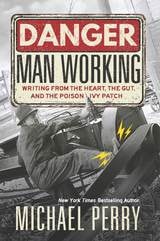
Danger, Man Working
Writing from the Heart, the Gut, and the Poison Ivy PatchArenas
Wisconsin Historical Society Press, 2017
"Every writer has advice for aspiring writers. Mine is predicated on formative years spent cleaning my father’s calf pens: Just keep shoveling until you’ve got a pile so big, someone has to notice. The fact that I cast my life’s work as slung manure simply proves that I recognize an apt metaphor when I accidentally stick it with a pitchfork. . . . Poetry was my first love, my gateway drug—still the poets are my favorites—but I quickly realized I lacked the chops or insights to survive on verse alone. But I wanted to write. Every day. And so I read everything I could about freelancing, and started shoveling."
The pieces gathered within this book draw on fifteen years of what Michael Perry calls "shovel time"—a writer going to work as the work is offered. The range of subjects is wide, from musky fishing, puking, and mountain-climbing Iraq War veterans to the frozen head of Ted Williams. Some assignments lead to self-examination of an alarming magnitude (as Perry notes, "It quickly becomes obvious that I am a self-absorbed hypochondriac forever resolving to do better nutritionally and fitness-wise but my follow-through is laughable.") But his favorites are those that allow him to turn the lens outward: "My greatest privilege," he says, "lies not in telling my own story; it lies in being trusted to tell the story of another."
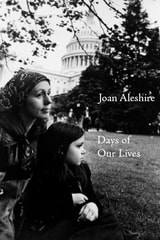
Days of Our Lives
Joan Aleshire
Four Way Books, 2019
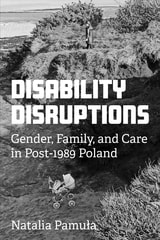
Disability Disruptions
Gender, Family, and Care in Post-1989 PolandNatalia Pamula
University of Illinois Press, 2026
Polish politicians regularly idealize the family. But, as Pamula illustrates such rhetoric coerces people into a state of violent intimacy that forces the burden of care onto family members bound by love, dependence, and responsibility. As the narratives show, disability destabilizes national myths, challenges heteronormative and patriarchal family ideals, and exposes continuities between socialist and capitalist regimes in their treatment of disabled citizens.
A rich blend of activism and analysis, Disability Disruptions ventures outside Anglophone notions of disability to highlight how Poland’s disabled people and caregivers overcome lack of recognition, resist social death, and rewrite public memory.

Do Babies Matter?
Gender and Family in the Ivory TowerMason, Mary Ann
Rutgers University Press, 2013
Do Babies Matter? is the first comprehensive examination of the relationship between family formation and the academic careers of men and women. The book begins with graduate students and postdoctoral fellows, moves on to early and mid-career years, and ends with retirement. Individual chapters examine graduate school, how recent PhD recipients get into the academic game, the tenure process, and life after tenure. The authors explore the family sacrifices women often have to make to get ahead in academia and consider how gender and family interact to affect promotion to full professor, salaries, and retirement. Concrete strategies are suggested for transforming the university into a family-friendly environment at every career stage.
The book draws on over a decade of research using unprecedented data resources, including the Survey of Doctorate Recipients, a nationally representative panel survey of PhDs in America, and multiple surveys of faculty and graduate students at the ten-campus University of California system..
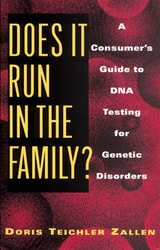
Does It Run in the Family?
A Consumer's Guide to DNA Testing for Genetic DisordersZallen, Dorris Teichler
Rutgers University Press, 1997
1999 Al Sturm Award for Excellence in Faculty Research of the Phi Beta Kappa chapter at Virginia Tech
What if your father had Alzheimer's disease? And what if there was a test to tell you if, as you grew older, you might develop it, too? Would you have the test? And if you did, how would the results affect the way you live your life? How would they affect your family? Your job? Your medical insurance?
Breast cancer, sickle-cell anemia, Huntington disease, muscular dystrophy--every day, people have to face the fact that a hereditary disorder runs in their family. The painful knowledge that they or their children might be at risk for a genetic disorder influences all their decisions about the future. They ask, "Is there a genetic test to let us know if we are really at risk? If there is such a test, do we really want to have it done?"
For an ever-growing number of disorders, testing is possible--but the existence of a test can raise new and troubling questions. In this book, geneticist and science policy expert Doris Teichler Zallen explains clearly and sympathetically how genetic disorders are passed along in families; which hereditary disorders can be tested for using genetic technology; how the new DNA tests for genetic disorders work; what genetic tests can and can't reveal, and why the tests often do not give clear-cut answers; what questions one should ask doctors and genetic counselors; how the health care system, government policies, and insurance companies influence our options; and what the resources are for obtaining more information and counseling.
Through the stories of real families and the choices they made about genetic testing, Zallen helps readers think through their own alternatives and discuss them with relatives. Does it Run in the Family? is essential reading for every family coping with inherited medical conditions and for the medical and genetics professionals involved in their decisions. It will also interest all readers who seek a clear explanation of the new DNA tests and the issues surrounding them.
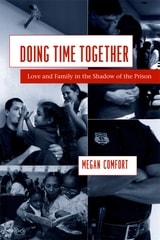
Doing Time Together
Love and Family in the Shadow of the PrisonMegan Comfort
University of Chicago Press, 2008
Megan Comfort spent years getting to know women visiting men at San Quentin State Prison, observing how their romantic relationships drew them into contact with the penitentiary. Tangling with the prison’s intrusive scrutiny and rigid rules turns these women into “quasi-inmates,” eroding the boundary between home and prison and altering their sense of intimacy, love, and justice. Yet Comfort also finds that with social welfare weakened, prisons are the most powerful public institutions available to women struggling to overcome untreated social ills and sustain relationships with marginalized men. As a result, they express great ambivalence about the prison and the control it exerts over their daily lives.
An illuminating analysis of women caught in the shadow of America’s massive prison system, Comfort’s book will be essential for anyone concerned with the consequences of our punitive culture.
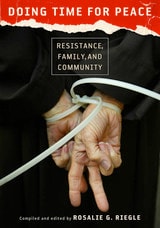
Doing Time for Peace
Resistance, Family, and CommunityRosalie G. Riegle
Vanderbilt University Press, 2013
In their own words, the narrators describe their motivations and their preparations for acts of resistance, the actions themselves, and their trials and subsequent jail time. We hear from those who do their time by caring for their families and managing communities while their partners are imprisoned. Spouses and children talk frankly of the strains on family ties that a life of working for peace in the world can cause.
The voices range from a World War II conscientious objector to those protesting the recent war in Iraq. The book includes sections on resister families, the Berrigans and Jonah House, the Plowshares Communities, the Syracuse Peace Council, and Catholic Worker houses and communities.
The introduction by Dan McKanan situates these activists in the long tradition of resistance to war and witness to peace.
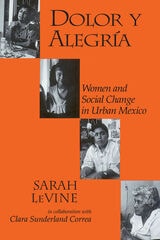
Dolor y Alegria
Women and Social Change in Urban MexicoSarah LeVine; In Collaboration with Clara Sunderland Correa
University of Wisconsin Press, 1993
While many earlier publications have focused on the poor of Latin America who live at the margins of urban life, Dolor y Alegría explores the experiences of ordinary working and lower-middle class women, most of them transplants from villages and small towns to a densely populated city neighborhood. In their early years, many experienced family disruption, emotional deprivation, and economic hardship; but steadily increasing educational opportunities, improved health care, and easily available contraception have significantly altered how the younger women relate to their families and the larger society.
Today’s Mexican schoolgirl, LeVine shows, is encouraged to apply herself to her studies for her own benefit, and the longer she remains in school, the greater the self-confidence she will carry with her into the world of work and later into marriage and motherhood. Hard economic times have forced many married women into the workplace where their sense of personal efficacy is enhanced; at the same time, in the domestic sphere, their earnings allow them greater negotiating power with husbands and male relatives. Changes are not confined to the younger generation. Older women are enjoying better health and living longer; but with adult children either less able or willing to accept responsibility for aged parents than they were in the past, anxiety runs high and family relations are often strained.
Dolor y Alegría takes a close look at the efforts of three generations of Mexican women to redefine themselves in both family and workplace; it shows that today’s young woman has very different expectations of herself and others from those that her grandmother or even her mother had.
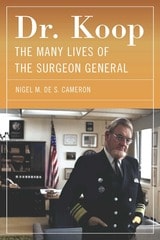
Dr. Koop
The Many Lives of the Surgeon GeneralNigel M. de S. Cameron
University of Massachusetts Press, 2025
The first full biography of Reagan's famous Surgeon General, who put science before politics—cutting smoking by 25%, leading the fight against AIDS, and shocking both liberals and conservatives on abortion.
When Ronald Reagan chose C. Everett Koop to be Surgeon General of the United States in 1981, liberal politicians, women's groups, and even the public health community opposed the nomination because of his conservative social views and strong anti-abortion beliefs. By the time he left office in 1989, the same people who had vilified him as “Dr. Kook” were singing his praises, and many conservative politicians and activists who had championed his nomination were criticizing him as a traitor. He had also become “the only surgeon general [who was] a household name,” according to the Associated Press, because of his ubiquitous media exposure around the HIV/AIDS crisis, his unique look, and his savvy with the press. How had Koop remade himself and this once major government office, which sounded grand but in the 1960s had been stripped to a minor advisory role?
As Nigel M. de S. Cameron shows, Koop was, above all, guided in his decisions by his unwavering physician’s commitment to saving lives. Even in the face of political pressures and what many expected to be his personal beliefs, he focused on science and public health. On smoking, abortion, and AIDS he openly defied Republican politicians and alienated New Right conservatives because his reading of the science did not support their ideologies. It was this adherence to science, health, and office that led him to refuse to campaign on abortion, seek compromise on the disabled “Baby Doe” case, relentlessly go after Big Tobacco, and finally reach out to the gay community as AIDS and fear of AIDS exploded. Both supporters and detractors consistently misjudged him.
This first full biography of Koop draws on thousands of documents and hundreds of interviews with family, friends, and colleagues to tell the story of the precocious boy from Brooklyn who was already the world’s most celebrated pediatric surgeon when he became Surgeon General and one of the most recognizable public figures in late-20th century America. Koop remains a sterling example—to both left and right—of how public officials should conduct themselves.
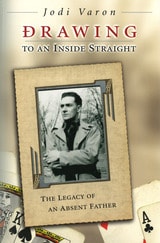
Drawing to an Inside Straight
The Legacy of an Absent FatherJodi Varon
University of Missouri Press, 2006

Dreamworlds of Alabama
Allen Shelton
University of Minnesota Press, 2007
“I speak in what others often hear as a strange accent. My past can’t be located. I live in Buffalo, New York, an exile from the South. But these aren’t Yankee dreams, even though my past seems like a fabrication, a dreamworld in which I’m a paper character and not a historical participant, with scars from barbed wire ripping under the pressure and flying through the air like a swarm of bees, or a horse rearing up and banging its head into mine from within, exploding my forehead.” —from the Preface
Wisteria draped on a soldier’s coffin, sent home to Alabama from a Virginia battlefield. The oldest standing house in the county, painted gray and flanked by a pecan orchard. A black steel fence tool, now perched atop a pile of books like a prehistoric bird of prey. In Dreamworlds of Alabama, Allen Shelton explores physical, historical, and social landscapes of northeastern Alabama. His homeplace near the Appalachian foothills provides the setting for a rich examination of cultural practices, a place where the language of place and things resonates with as much vitality and emotional urgency as the language of humans.
Throughout the book, Shelton demonstrates how deeply culture is inscribed in the land and in the most intimate spaces of the person—places of belonging and loss, insight and memory.
Born and raised in Jacksonville, Alabama, Allen Shelton is associate professor of sociology at Buffalo State College.
Driving the Body Back
Mary Swander
University of Iowa Press, 1998
Dulce
PoemsMarcelo Hernandez Castillo
Northwestern University Press, 2018
The poems in Dulce are at once confession and elegy that admit the speaker’s attempt and possible failure to reconcile intimacy toward another and toward the self. The collection asks: what’s the point in any of this?—meaning, what’s the use of longing beyond pleasure; what’s the use of looking for an origin if we already know the ending?
Surreal and deeply imagistic, the poems map a parallel between the landscape of the border and the landscape of sexuality. Marcelo Hernandez Castillo invites the reader to confront and challenge the distinctions of borders and categories, and in doing so, he obscures and negates such divisions. He allows for the possibility of an and in a world of either/or.
These poems enact a prescient anxiety of what is to come, “I want to say all of this is true / but we both know it isn’t. . . . We already know what’s at the other end of this.” Dulce is truly a lyrical force rife with the rich language of longing and regret that disturbs even the most serene quiet.
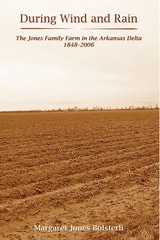
During Wind and Rain
The Jones Family Farm in the Arkansas Delta 1848-2006Margaret Jones Bolsterli
University of Arkansas Press, 2008