Results by title
329 books match the query 'Folklore & Mythology' and 12 start with d
Dall Sheep Dinner Guest
Inupiaq Narratives of Northwest AlaskaWanni Anderson
University of Alaska Press, 2023
The Dall Sheep Dinner Guest includes a new version of the Qayaq cycle, one of the best-known legends from the region, as well as stories such as “The Fast Runner.” A major contribution to the Native literature of Alaska, this collection includes two introductory essays by Wanni W. Anderson that provide historical background and a foundation for understanding gender, age, and regional differences and the narrative context of storytelling. Stories include The Girl Who Had No Wish to Marry by Willie Goodwin, Sr., The Goose Maiden by Nora Norton, The Last War with the Indians by Wesley Woods, The Orphan with No Clothes by Emma Skin, The Qayaq Cycle by Nora Norton, and Raven Who Brought Back the Land by Robert Cleveland (selected Iñupiaq Storyteller by the Inupiat of Northwest Alaska).
Additional storytellers include John Brown, Leslie Burnett, Flora Cleveland, Lois Cleveland, Maude Cleveland, Kitty Foster, Sarah Goode, Minnie Gray, Beatrice Mouse, Nellie Russell, and Andrew Skin.
Dance of the Dolphin
Transformation and Disenchantment in the Amazonian ImaginationCandace Slater
University of Chicago Press, 1994
Candace Slater examines these stories in Dance of the Dolphin, both as folk narratives and as representations of culture and conflict in Amazonia. Her engaging study discusses the tales from the viewpoints of genre, performance, and gender, but centers on them as responses to the great changes sweeping the Amazon today. According to Slater, these surprisingly widespread tales reflect Amazonians' own mixed reactions to the ongoing destruction of the rainforest and the resulting transformations in the social as well as physical landscape. Offering an informed view of Brazilian culture, this book crosses the boundaries of folklore, literature, anthropology, and Latin American studies. It is one of the very few studies to offer an overview of the changes taking place in Amazonia through the eyes of ordinary people.
"This book is a rich collection of stories about the transformation of dolphins in the city of enchantment. . . . The joy in this book is not just its vibrant analysis and careful relating of tradition and lore, but also its uncanny accurateness in capturing the very essence of Amazonia."-Darrell Posey, Journal of Latin American Studies
"Slater's fluid prose reads like a novel for those interested in Amazonian culture and folklore, while her integrated approach makes this a must read for those interested in innovative methodology."-Lisa Gabbert, Western Folklore
Dante in Deutschland
An Itinerary of Romantic MythDaniel DiMassa
Bucknell University Press, 2022
Decoding Andean Mythology
Margarita Marín-Dale
University of Utah Press, 2016
Decoding Andean Mythology is a comprehensive analysis of Native Andean oral tradition spanning five centuries. Based on twenty years of research and a wide range of scholarship, this book departs from the Cuzco-centered focus of many published Andean narratives and includes myths, stories, and folktales from diverse regions and ethnic groups. Among them are full translations of thirty-two ancient and modern Native Andean stories. Colorful illustrations and a comprehensive glossary of Quechua, Aymara, and Spanish loan words supplement the text.
In an accessible and engaging discussion suitable for students, the author explores a number of recurring themes and characters in Andean stories. These include shape-shifting animals, the inversion of time-space (pachacuti), anthropomorphic and supernatural beings, and conflicting attitudes toward sexuality. The text also presents a fresh perspective on traditional, non-Western concepts such as huacas (sacred objects and places), suggesting some act as portals or mediating spaces between the natural and supernatural worlds. Of particular significance for current events is a lengthy chapter on social protest, explaining the rise of indigenous movements in the Andes and highlighting the contemporary use of Native Andean folktales as an avenue for social and political dissent.
Winner of the 2018 Wayland D. Hand Prize by the American Folklore Society.
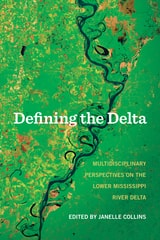
Defining the Delta
Multidisciplinary Perspectives on the Lower Mississippi River DeltaJanelle Collins
University of Arkansas Press, 2015
Here are essays examining the Delta’s physical properties, boundaries, and climate from a geologist, archeologist, and environmental historian. The Delta is also viewed through the lens of the social sciences and humanities—historians, folklorists, and others studying the connection between the land and its people, in particular the importance of agriculture and the culture of the area, especially music, literature, and food.
Every turn of the page reveals another way of seeing the seven-state region that is bisected by and dependent on the Mississippi River, suggesting ultimately that there are myriad ways of looking at, and defining, the Delta.
Different Drummers
Military Culture and Its DiscontentsTad Tuleja
Utah State University Press, 2020
This multidisciplinary collection brings in the perspectives of scholars from folklore, literary studies, psychology, and media studies, as well as the first-person perspectives of veterans. It includes chapters on the vernacular genres of bodylore, folksong, personal narrative, and legend; literary items like soldiers’ memoirs and poetry; the artwork of soldier cartoonists; and accounts of defying the chain of command in the field. Ideally, the goal of military basic training is to replace recruits’ focus on their own individuality with an unquestioned devotion to group solidarity. In reality, unit cohesion is constantly challenged by humans clinging obstinately to their non-collective personalities. Different Drummers focuses on those in uniform who feel themselves to be both of the military culture and at odds with it. It shows how these loyal “discontents” find ways of communicating and interacting with others that sometimes defy institutional expectations.
Contributors:
Ron Ben-Tovim, Carol Burke, Richard Allen Burns, Catherine Calloway, James I. Deutsch, Ronald Fry, Angus Kress Gillespie, Christina M. Knopf, Jay Mechling, Matthew David Perry, Mark C. Russell, John Paul Wallis

Digital Legend and Belief
The Slender Man, Folklore, and the MediaAndrew Peck
University of Wisconsin Press, 2023
Peck argues that the story of the Slender Man is really a story about the changing nature of belief in the age of the internet. Widely adopted digital technologies, from smartphones to social media, offer vast potential for extending traditional and expressive social behaviors in new ways. As such, understanding the online landscape of contemporary folklore is crucial for grasping the formation and circulation of belief in the digital age. Ultimately, Peck argues that advancing our comprehension of legends online can help us better understand how similar belief genres—like fake news, conspiracy theories, hoaxes, rumors, meme culture, and anti-expert movements—are enabled by digital media.

Dirty Jokes and Bawdy Songs
The Uncensored Life of Gershon LegmanSusan G. Davis
University of Illinois Press, 2019
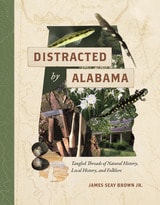
Distracted by Alabama
Tangled Threads of Natural History, Local History, and FolkloreJames Seay Brown Jr.
University of Alabama Press, 2022
Where rivers, railroads, and redhorse fish tell the story of Alabama’s soul.
A gateway to Alabama for the omnivorous mind, Distracted by Alabama is a collection of twelve captivating essays about Alabama and the South by Samford University writer and scholar Jim Brown, a former president of the Alabama Folklife Association.
During his decades living and teaching in Alabama, Brown followed his curiosity down myriad pathways about Alabama and the region, including the state’s majestic landscape, plants and animals found nowhere else, history, and rich folkways. In the tapestry of Alabama culture, Brown traces the threads of Native American, African slave, and European settler influences, woven over the centuries into novel patterns that surprise and fascinate.
Writing in the voice of a learned companion, Brown reveals insights and stories about unforgettable facets of Alabama culture, such as Sacred Harp singers and African American railroad callers, the use of handmade snares and stationary fishtraps to catch river redhorse and freshwater drum, white oak basketmaking and herbal medicine traditions, the evolution of the single-pen log cabin into the impressive two-story I-house, and a wealth of other engrossing stories.
An instant classic, Distracted by Alabama is a keepsake that readers who love, visit, or are curious about Alabama and Southern culture will return to again and again.
Dog Ghosts and The Word on the Brazos
Negro Preacher Tales from the Brazos Bottoms of TexasBy J. Mason Brewer
University of Texas Press, 1976
This book contains two volumes of African American folk tales collected by J. Mason Brewer.
The stories included in Dog Ghosts are as varied as the Texas landscape, as full of contrasts as Texas weather. Among them are tales that have their roots deeply imbedded in African, Irish, and Welsh mythology; others have parallels in pre-Columbian Mexican tradition, and a few have versions that can be traced back to Chaucer's England. All make delightful reading. The title Dog Ghosts is drawn from the unique stories of dog spirits which Dr. Brewer collected in the Red River bottoms and elsewhere in Texas.
The Word on the Brazos is a delightful collection of "preacher tales" from the Brazos River bottom in Texas. J. Mason Brewer worked side by side with field hands in the Brazos bottoms; he lived in their homes, worshipped in their churches, and shared the moments of relaxation in which laughter held full sway.
Many of the tales these people told were related to religion—both "good religion" and "bad religion." Some of them concerned preachers and their families, while others were stories told in pulpits. Mr. Brewer has set all of these stories down in authentic yet easily readable dialect. They will delight all who are interested in the historic culture of rural African-American Texans, as well as those who simply enjoy fine humorous stories skillfully told.
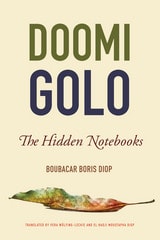
Doomi Golo—The Hidden Notebooks
Boubacar Boris Diop
Michigan State University Press, 2016
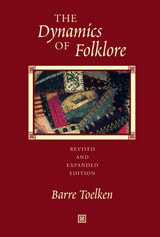
Dynamics Of Folklore
Revised and Expanded EditionBarre Toelken
Utah State University Press, 1996
One of the most comprehensive and widely praised introductions to folklore ever written. Toelken's discussion of the history and meaning of folklore is delivered in straightforward language, easily understood definitions, and a wealth of insightful and entertaining examples.
Toelken emphasizes dynamism and variety in the vast array of folk expressions he examines, from "the biology of folklore," to occupational and ethnic lore, food ways, holidays, personal experience narratives, ballads, myths, proverbs, jokes, crafts, and others. Chapters are followed by bibliographical essays, and over 100 photographs illustrate the text. This new edition is accessible to all levels of folklore study and an essential text for classroom instruction.