Results by title
130 books match the query 'Gender identity' and 2 start with d

Dictates of Conscience
From Mormon High Priest to My New Life as a WomanLaurie Lee Hall
Signature Books, 2024
Laurie Lee Hall’s growing-up years were defined by the conflict between her physical condition as a boy and her inherent identity as a girl. Unable to explain or resolve her gender dysphoria, she committed to living her adult life as a male. She joined the Church of Jesus Christ of Latter-day Saints, eventually becoming chief architect of its temples and an ecclesiastical leader. In her church and community, rigid adherence to gender roles is not only the norm, but the defining issue of a faith that doctrinally declares one’s gender as an “eternal identity.” Against this traditional backdrop, Hall finally received spiritual confirmation and personally accepted that she was transgender and always had been. In this remarkable memoir, Laurie Lee details how she risked everything to live true to her long-suppressed gender identity.
Through the power of lived experience, Laurie Lee’s story affirms the reality of gender identity and the strength and joy of self-acceptance.
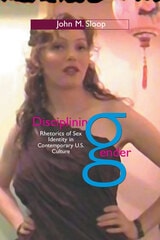
Disciplining Gender
Rhetorics of Sex Identity in Contemporary U.S. CultureJohn M. Sloop
University of Massachusetts Press, 2004
An expert on the rhetoric of the mass media, John M. Sloop has written several books on how the spoken and written word can influence political and cultural debate. In Disciplining Gender, he turns his attention to a topic that has attracted widespread public discussion—the treatment of gender ambiguity in American culture. He offers critical readings of five cases, showing the extent to which, in each instance, public discourse and media representations have served to reinforce dominant norms and constrain or “discipline” any behavior that blurs or subverts conventional gender boundaries.
The five cases include John/Joan or David Reimer, Brandon Teena, k.d. lang, Janet Reno, and Barry Winchell/Calpernia Addams. Sloop draws on queer theory and research in the field of critical rhetoric to examine representations of “gender trouble” in these much-publicized stories. In each case, he provides a comprehensive analysis of the public discussions of their significance. In short, rather than simply study the people and circumstances involved in each case, he examines the public meanings attached to them and the implications of those meanings for how contemporary culture comes to understand what “man” and “woman” mean and which sexual behaviors are appropriate and inappropriate.
In highlighting the ideological constraints imposed by our society, Sloop also suggests the ways that these constraints might be loosened and understandings of gender and sexuality diversified.