Results by title
884 books match the query 'Historical' and 26 start with d
DANCE UNTO THE LORD
GEORGE DELL
The Ohio State University Press, 2001
George Dell’s Dance unto the Lord is a compelling fusion of history and fiction. Set in 1848 to 1852, when Ohio was considered to be the West, Dance unto the Lord transports the readers to Union Village, a Shaker community in southwestern Ohio. The novel traces the coming of age of Richard and Ruth, young people who wish to marry but are forbidden to do so by Richard’s parents. In desperation, Richard runs away to Cincinnati. Ruth, too, leaves her family. She settles in Union Village and eventually becomes a teacher at the Shaker school. Torn between her desire for freedom and the security of life with the Shakers, Ruth becomes increasingly more immersed in the Shaker society while dreaming of Richard and a life outside the community. Meanwhile, through his experiences with an ill-fated blacksmith’s shop and its owners, Richard learns that life in the city can be complicated and painful.
As he traces Richard’s and Ruth’s experiences, Dell vividly re-creates the texture of rural and city life in mid-nineteenth-century Ohio, providing a fascinating, well-researched account of a long-gone era. Dance unto the Lord provides wonderfully detailed descriptions of a Shaker community and life style. This book will be compelling reading for anyone interested in the time period, the Shakers, or simply a good story.

Dale L. Morgan
Mormon and Western Histories in TransitionRichard L. Saunders
University of Utah Press, 2023
This is the first biography of Dale L. Morgan, preeminent Western historian of the fur trade, historic trails, and the Latter Day Saint movement. The book explores how, despite personal struggles, Morgan committed his life to tracking down sources and interpreting the past on the strength of documentary evidence. Connecting Morgan’s life with some of the broad cultural changes that shaped his experiences, this book engages with methodological shifts in the historical profession, the mid-twentieth-century collision of interpretations within Latter Day Saint history, and the development of a descriptive, scholarly approach to that history.
Morgan’s body of work and commitment to serious scholarship signaled the start of new ways of understanding, studying, and retelling history, and he motivated a generation of historians from the 1930s to the 1970s to transform their historical approaches. Sounding board, mentor, and close friend to Nels Anderson, Fawn Brodie, Juanita Brooks, Bernard DeVoto, Wallace Stegner, and Leonard Arrington, Dale Morgan is the common factor linking this influential generation of mid-twentieth-century historians of western America.

Daleká cesta / Distant Journey
By Jirí Anger
Lever Press, 2026
This volume in the film|minutes series focuses on Alfréd Radok’s Daleká cesta (Distant Journey, 1948), a pioneering Czechoslovak film admired by figures such as André Bazin and Alain Resnais. Renowned for its bold experiments in cinematic montage, the film combines fictional scenes with newsreel footage, Nazi propaganda, and images of liberated concentration camps. Produced shortly after the war, Daleká cesta remains one of the earliest and most formally daring cinematic attempts to grapple with the Holocaust. Drawing on the creators’ ideas of editing as a means of rescuing victims of atrocity—at least momentarily—from historical determinism, the book explores how a montage-like experiment in film analysis can challenge not only deterministic narratives of history, but also the conventions of established theoretical frameworks and academic writing.
Volumes in the film|minutes series cut up films into segments of exactly one minute and transform each minute into an innovative tool for thinking with the film. Each volume works rigorously with the concept of “the minute” as a non-cinematic scale/quantity, a means to zoom in on (dis)orderly fragments that do not necessarily respect the confinements of cinematic form or meaning. As a critical practice, the focus on minutes causes disruptions and displacement that create novel connections and perspectives, and uncovers hidden traces, making it possible to watch each film anew.

Darktown Strutters
A NovelWesley Brown
University of Massachusetts Press, 2000
Day of Days
John Smolens
Michigan State University Press, 2020
Days and Memory
Charlotte Delbo
Northwestern University Press, 2001
This definitive translation is by Delbo's close friend, the author and theater critic Rosette Lamont, an expert on the works of Ionesco and Beckett. Lamont wrote that Delbo was, like Beckett, "a minimalist of infinite pain, a voice of conscience."
Dead Man's Rapids
William Durbin
University of Minnesota Press, 2018
When 13-year-old Ben Ward left school to work with his Pa in a logging camp, a winter of peeling potatoes and setting tables wasn’t the adventure he had in mind. Still, come spring, he signs up for the log drive with his friend Nevers, wishing the head cook on the wanigan (the floating cook shack) could be someone other than his crabby Pa. Fate, with a wink, complies, and Pa quits—only to be replaced by someone far worse: Pete Sardman, aka Old Sard, a cantankerous character complete with a greasy apron, an eye patch, one deaf ear, and plenty to say.
Luckily, there’s also the rest of the crew—a colorful, sometimes outrageous company of men. Together Ben and Nevers endure freezing weather, dangerous rapids, logjams, storms and floods, and a number of gripping tall tales, along the way learning about logging on the river and a whole lot more about life.
Taking up where Blackwater Ben left off, Dead Man’s Rapids returns to the north woods of Minnesota in the late nineteenth century, and with warmth, humor, and attention to historical detail engages readers both young and old.

Death Before Compline
Short Stories by Sharan NewmanSharan Newman
Arizona Center for Medieval and Renaissance Studies, 2012
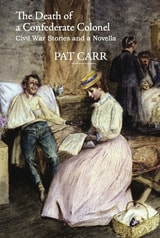
Death of a Confederate Colonel
Civil War Stories and a NovellaPat Carr
University of Arkansas Press, 2007

Derzhavin
A BiographyVladislav Khodasevich, Translated and with an introduction by Angela Brintlinger
University of Wisconsin Press, 2007
“Khodasevich’s light narrative touch (as translated by Brintlinger) lends a novelistic quality to the biography, making it a genuine tour de force. All students and scholars – of history, literature, poetry, biography – will find something of interest here.”—Choice
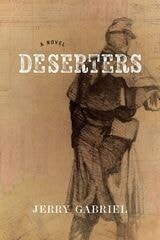
Deserters
A NovelJerry Gabriel
Acre Books, 2026
It is fall 1864, and Robert Riley has deserted his Army of the Potomac unit outside Petersburg, Virginia. Exhausted from years of war and worried about his motherless sons in Ohio, he returns to collect thirteen-year-old Michael and Sean, three years older, and flees to the Western territories. Along the way, he encounters Janey, an orphan at sixteen, who is also eager to go West. When Riley sees in her a quickness of mind, a brand of cunning that mirrors his own, he is persuaded to take her along.
Crossing the lower Midwest on horseback with little money and few possessions, the four are pursued by a wily private detective after the reward for turning in Riley. He manages to thwart the ragtag group, who abandon their plan of crossing the plains. They slip away by train to Chicago, and there, in that cold, stinking, dangerous metropolis, just before the 1864 election, they meet with problems beyond Riley’s ability to resolve. All four find themselves alone, at the mercy of fortune . . . and the fortune hunter, who finally gets the chance to face down his nemesis.
Deserters alternates between the perspectives of the four major characters as their relationships grow and shift, and as each of them strives to forge their way forward in the late war’s murky upheaval. A book whose antecedents include Charles Portis’s True Grit and Paulette Jiles’s News of the World, Gabriel’s immersive novel is an adventure story with psychological intricacy, emotional intensity, and historical heft.
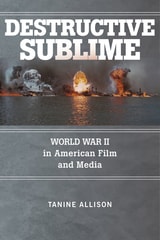
Destructive Sublime
World War II in American Film and MediaAllison, Tanine
Rutgers University Press, 2018
Destructive Sublime traces a new aesthetic history of the World War II combat genre by looking back at it through the lens of contemporary video games like Call of Duty. Allison locates some of video games’ glorification of violence, disruptive audiovisual style, and bodily sensation in even the most canonical and seemingly conservative films of the genre. In a series of case studies spanning more than seventy years—from wartime documentaries like The Battle of San Pietro to fictional reenactments like The Longest Day and Saving Private Ryan to combat video games like Medal of Honor—this book reveals how the genre’s aesthetic forms reflect (and influence) how American culture conceives of war, nation, and representation itself.
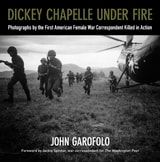
Dickey Chapelle Under Fire
Photographs by the First American Female War Correspondent Killed in ActionJohn Garofolo
Wisconsin Historical Society Press, 2026
Striking photographs and stories from more than two decades on the frontlines by a groundbreaking photojournalist—and the first female American war correspondent to be killed in action.
In 1941, twenty-two-year-old Georgette "Dickey" Chapelle sold her first photo essay to Look magazine. A year later, with World War II underway, she was photographing American soldiers in combat training in Panama. By the end of the war, she had captured the devastation at Iwo Jima and Okinawa, and in the ensuing decades, Dickey and her camera were on the scene at many of the world’s hotspots—from Cuba and the Dominican Republic to Algeria and Lebanon to Vietnam and Laos. Dickey Chapelle Under Fire exposes her remarkable story and shares over 150 stunning images from her extraordinary career as a photojournalist.
In the male-dominated world of war journalism, Chapelle fought to be taken seriously. She eventually earned the respect of many of her male colleagues and broke down barriers for future generations of female journalists. She embedded herself with military units on frontlines around the globe, capturing not only the horrors of war but also the camaraderie and everyday routines of service men and women.
Always one to follow the action, Chapelle traveled with Algerian rebels across the North African desert and with Fidel Castro through the jungles of Cuba. She spent two months in a Hungarian prison after being caught smuggling aid to refugees fleeing a Soviet invasion. Beginning in 1961, Chapelle set her lens and viewfinder on Southeast Asia, capturing the growing conflict there, until she was killed while on patrol with marines in Vietnam in April 1965—making her the first female American war correspondent to be killed in action.
For twenty-five years, Chapelle's photographs graced the pages of National Geographic, the National Observer, Life, and other major publications. Despite her tragic end, Chapelle’s tenacity, courage, and compassion shine throughout her work, highlighting the human impact of war while revealing the larger stories beyond the battlefield. Her legacy lives on through this powerful collection.
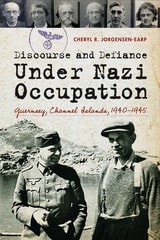
Discourse and Defiance under Nazi Occupation
Guernsey, Channel Islands, 1940–1945Cheryl R. Jorgensen-Earp
Michigan State University Press, 2013
Captured by German forces shortly after Dunkirk, and not relinquished until May of 1945, nearly a year after the Normandy invasion, the British Channel Islands (Guernsey, Jersey, Alderney, Sark, and Herm) were characterized during their occupation by severe deprivation and powerlessness. The Islanders, with few resources to stage an armed resistance, constructed a rhetorical resistance based upon the manipulation of discourse, construction of new symbols, and defiance of German restrictions on information. Though much of modern history has focused on the possibility that Islanders may have collaborated with the Germans, this eye-opening history turns to secret war diaries kept in Guernsey. A close reading of these private accounts, written at great risk to the diarists, allows those who actually experienced the Occupation to reclaim their voice and reveals new understandings of Island resistance. What emerges is a stirring account of the unquenchable spirit and deft improvisation of otherwise ordinary people in extraordinary circumstances. Under the most dangerous of conditions, Guernsey civilians used imaginative methods in reacting to their position as a subjugated population, devising a covert resistance of nuance and sustainability. Violence, this book and the people of Guernsey demonstrate, is not at all the only means with which to confront evil.
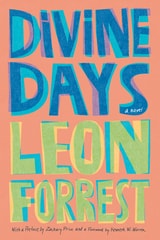
Divine Days
A NovelLeon Forrest; Foreword by Kenneth W. Warren, Preface by Zachary Price
Northwestern University Press, 2023
“I have an awful memory for faces, but an excellent one for voices,” muses Joubert Jones, the aspiring playwright at the center of Divine Days. A kaleidoscopic whorl of characters, language, music, and Black experience, this saga follows Jones for one week in 1966 as he pursues the lore and legends of fictional Forest County, a place resembling Chicago’s South Side. Joubert is a veteran, recently returned to the city, who works for his aunt Eloise’s newspaper and pours drinks at her Night Light Lounge. He wants to write a play about Sugar-Groove, a drifter, “eternal wunderkind,” and local folk hero who seems to have passed away. Sugar-Groove’s disappearance recalls the subject of one of Joubert’s earlier writing attempts—W. A. D. Ford, a protean, diabolical preacher who led a religious sect known as “Divine Days.” Joubert takes notes as he learns about both tricksters, trying to understand their significance.
Divine Days introduces readers to a score of indelible characters: Imani, Joubert’s girlfriend, an artist and social worker searching for her lost siblings and struggling to reconcile middle class life with her values and Black identity; Eloise, who raised Joubert and whose influence is at odds with his writerly ambitions; (Oscar) Williemain, a local barber, storyteller, and founder of the Royal Rites and Righteous Ramblings Club; and the Night Light’s many patrons. With a structure inspired by James Joyce and jazz, Leon Forrest folds references to African American literature and cinema, Shakespeare, the Bible, and classical mythology into a heady quest that embraces life in all its tumult and adventure.
This edition brings Forrest’s masterpiece back into print, incorporating hundreds of editorial changes that the author had requested from W. W. Norton, but were not made for their editions in 1993 and 1994. Much of the inventory from the original printing of the book by Another Chicago Press in 1992 had been destroyed in a disastrous warehouse fire.

Dongola
A Novel of NubiaIdris Ali
University of Arkansas Press, 1998
The University of Arkansas Press Award for Arabic Literature in Translation, 1997
In this, the first Nubian novel ever translated, Awad Shalali, a Nubian worker in modern Egypt, dreams of Dongola—the capital of medieval Nubia, now lost to the flood waters of the Aswan High Dam. In Dongola, the Nubians reached their zenith. They defeated and dominated Upper Egypt, and their archers, deadly accurate in battle, were renowned as “the bowman of the glance.
Helima, Awad’s wife, must deal with the reality of today’s Nubia, a poverty-stricken bottomland. Men like Awad now work in Cairo for good wages while the women remain at home in squalor, dominated by the Islam of their conquerors and ignorant of the glory now covered by the Nile’s water. Left to tend Awad’s sick mother and his dying country, Halima grows despondent and learns the truths behind the Upper Egyptian lyric: “Time, you are a traitor—what have you done with my love?
Through his characters’ pain and suffering, Idris Ali paints in vibrant detail, with wit and a keen sense of history’s absurdities, the story of cultures and hearts divided, of lost lands, impossible dreams, and abandoned lives.
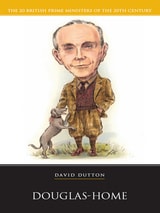
Douglas Home
David Dutton
Haus Publishing, 2006
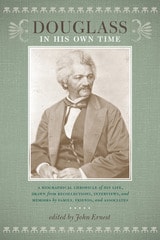
Douglass in His Own Time
A Biographical Chronicle of His Life, Drawn from Recollections, Interviews, and Memoirs by Family, Friends, and AssociatesJohn Ernest
University of Iowa Press, 2014
As valuable as these writings are in illuminating the man, the story Douglass told in 1845 has become rather too easy to tell, obscuring as much as it reveals. Less a living presence than an inspiring tale, Frederick Douglass remains relatively unknown even to many of those who celebrate his achievements. Douglass in His Own Time offers an introduction to Douglass the man by those who knew him. The book includes a broad range of writings, some intended for public viewing and some private correspondence, all of which contend with the force of Douglass’s tremendous power over the written and spoken word, his amazing presence before crowds, his ability to improvise, to entertain, to instruct, to inspire—indeed, to change lives through his eloquent appeals to righteous self-awareness and social justice. In approaching Douglass through the biographical sketches, memoirs, letters, editorials, and other articles about him, readers will encounter the complexity of a life lived on a very public stage, the story of an extraordinary black man in an insistently white world.

Dr. Kate’s Courageous Calling
Rebecca Hogue Wojahn
Wisconsin Historical Society Press, 2027
Meet the trailblazing doctor whose determination, compassion, and vision helped to save lives and inspired a generation to make history.
As a child in the late 1800s, young Kate Pelham knew she wanted to have a career when she grew up, even though that wasn’t expected of women at the time. After losing her mother and then her fiancée at a young age, she decided to dedicate her life to becoming a doctor—a career path then largely closed to women. But Kate would not be deterred, and before long she was known throughout the Wisconsin Northwoods as, simply, Dr. Kate.
Written for ages 8–11, Dr. Kate’s Courageous Calling shares the remarkable story of a woman who challenged expectations, transformed her community, and inspired thousands through a lifetime of service. Readers will journey alongside Kate Pelham-Newcomb as she traverses snowy back roads—sometimes on snowshoes—to care for patients. They will discover how, as the local health officer, she established community health standards and helped improve water and milk sanitation throughout the Northwoods region.
The story reaches an unforgettable climax with the extraordinary Million Penny Campaign, led by local high school students—many of whom Dr. Kate had delivered as babies—to raise money for a desperately needed hospital. Their efforts attracted contributions from tens of thousands of people around the world, bringing in more than enough to build the Lakeland Memorial Hospital in Woodruff, Wisconsin.
Dr. Kate’s Courageous Calling is a story of perseverance, leadership, sacrifice, and a community that joined together to make a difference. Combining women’s history, local history, and a remarkable true story of civic engagement, this book celebrates a pioneering physician who healed her neighbors and inspired the world.

Dr. Martha Hughes Cannon
Suffragist, Senator, Plural WifeConstance L. Lieber
Signature Books, 2022
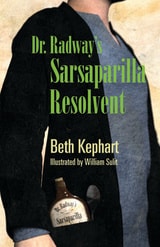
Dr. Radway's Sarsaparilla Resolvent
Beth Kephart
Temple University Press, 2013
Flavored by the oddities of historic personalities and facts, Dr. Radway’s Sarsaparilla Resolvent is set in Bush Hill, Philadelphia, 1871—home to the Baldwin Locomotive Works and a massive, gothic prison. Acclaimed writer Beth Kephart captures the rhythms and smells of an extraordinary era as William Quinn and his Ma, Essie, grapple with life among terrible accidents, miraculous escapes, and shams masquerading as truth.

Dream City
A NovelDouglas Unger
University of Nevada Press, 2024
As the story progresses, C. D. comes to understand how his personal losses and the losses of his cohort of hard driving executives on the make—especially the tragic life of his work partner, Greta Olsson, the only woman to break through into their male dominated world—are a result of the make-believe environment he has helped to create, a world where representation replaces reality. Hoping to piece together his faltering marriage and family relationships, C. D. must find a new path as he struggles to hold onto his dreams.
In this fictionalized version of the city of glittering lights, author Douglas Unger pits the ideologies of marketing and consumerism in the casino economy of America against the erosion of individual and humane values that success in that world demands. Unger reveals the hard truth that Las Vegas, a blue-collar town considered by many to be “the most honest city,” can be a temple for self-deceptions, emblematic of a service economy that knows the price of everything and too often the value of little else. Dream City becomes both a love song and an elegy for Las Vegas that sets it apart from any other literary novel previously written about this global entertainment attraction that in so many ways represents postmodern America. Sooner or later, the challenge that faces everyone is to discover what matters most, and to learn how to bet on the better angels of our natures.
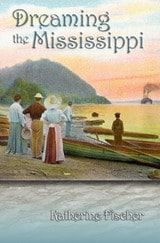
Dreaming the Mississippi
Katherine Fischer
University of Missouri Press, 2006
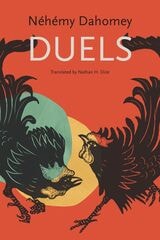
Duels
Néhémy Dahomey
Seagull Books, 2025
Set in 1842, this novel foregrounds a Haiti that is grappling with the weight of an onerous debt imposed by France, forcing its citizens to pay reparations to French colonists in exchange for diplomatic recognition of the first Black republic of the Americas. In the town of Boën, a prosperous notary, Ludovic Possible, decides to take a bold step to secure the future of his community. He opens a schoolhouse where local children can learn both artisanal skills and the essential ability to read and write. For Ludovic, education represents the best chance for the people of Boën to rise above their hardships and build a prosperous future—especially for Aïda, a quiet and enigmatic girl whose mother’s marvelous stories captivate him.
The tranquility of Boën is soon shattered, however, by a series of duels that pit families, neighbors, and even animals against each other. As tensions rise, Ludovic’s vision for a better future is threatened by the escalating violence. In Duels, Néhémy Pierre-Dahomey introduces readers to a rich and unforgettable cast of characters—Aïda, Ludovic, Balthazar Possible, Pépé the Tempest, and many others—who find themselves at the crossroads of a nation on the brink of transformative change.
Duncan Upshaw Fletcher
Dixie’s Reluctant ProgressiveWayne Flynt
University of Alabama Press, 2026
A Southern senator at the crossroads of change.
Duncan Upshaw Fletcher: Dixie’s Reluctant Progressive is the definitive portrait of one of Florida’s most influential yet overlooked political figures. Serving in the U.S. Senate from 1909 to 1936, Fletcher bridged the gap between Wilsonian progressivism and Roosevelt’s New Deal, shaping landmark legislation such as the Federal Farm Loan Act, the Shipping Act, and major banking reforms. Far from a demagogue, Fletcher was a methodical, pragmatic leader who championed moderation, urban progressivism, and economic development while resisting racial and religious extremism.
Wayne Flynt’s deeply researched biography illuminates Fletcher’s paradoxical career—a Unitarian in a fundamentalist state, a reformer who later embraced conservatism, and a Southern Democrat who became a loyal New Dealer. Through vivid analysis of Florida’s turbulent political landscape, the book explores themes of coalition-building, economic modernization, and the South’s evolving role in national politics. This work will captivate readers interested in Southern history, political biography, and the roots of modern progressivism. Scholars of the New Deal, reform movements, and Florida history will find it indispensable, while general readers will appreciate its lucid style and insights into a leader whose story resonates with today’s debates over moderation, governance, and social change.

Dutton's Dirty Diggers
Bertha P. Dutton and the Senior Girl Scout Archaeological Camps in the American Southwest, 1947–1957Catherine S. Fowler
University of Utah Press, 2020
Catherine Fowler chronicles a significant yet little-known program for Girl Scouts in post–WWII America. At a time when women were just beginning to enter fields traditionally dominated by men, these two-week camping caravans and archaeological excavations introduced teenage girls not only to the rich cultural and scientific heritage of the American Southwest but to new career possibilities. Dr. Bertha Dutton, curator at the Museum of New Mexico, served as trip leader.
While on the road and in camp, Dutton and other experts in anthropology, archaeology, geology, natural history, and more helped the campers appreciate what they were seeing and learning. This book details the history of the program, sharing trip itineraries and selected memories from the nearly three hundred girls who attended the camps. It also serves as a mini-biography and tribute to Bertha Dutton, who, through her knowledge, teaching, and strong persona, provided a role model for these young women, many of whom later pursued careers in anthropology and related fields.