131 books match the query 'History, Local' and 6 start with d
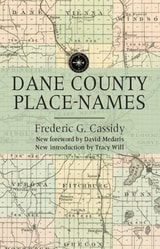
cover of Dane County Place-Names

Dane County Place-Names

Frederic G. Cassidy; New introduction by Tracy Will; New foreword by David Medaris

University of Wisconsin Press, 2009
Dane County Place-Names is an entertaining record of the heritage of Dane County, Wisconsin’s capital region, from its earliest days through the 1940s. This classic work by the late lexicographer Frederic G. Cassidy is back in print for new generations to enjoy. Cassidy applied his insightful eye to the origins and evolution of local names that reveal a colorful history: Whiskey Creek, Brag Hollow, Marxville, Pancake Valley, Halunkenburg, Skunk Hollow, and Tipple School. This edition features a new introduction by local historian Tracy Will and a foreword by Isthmus journalist David Medaris.
[more]
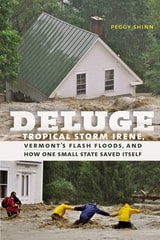
cover of Deluge: Tropical Storm Irene, Vermont’s Flash Floods, and How One Small State Saved Itself

Deluge

Tropical Storm Irene, Vermont’s Flash Floods, and How One Small State Saved Itself

Peggy Shinn

University Press of New England, 2013
On August 28, 2011, after pounding the Caribbean and the U.S. Eastern seaboard for more than a week, Hurricane Irene finally made landfall in New Jersey. As the storm headed into New England, it was quickly downgraded to a tropical storm. And by Sunday afternoon, national news outlets were giving postmortems on the damage. Except for some flooding in low-lying areas, New York City—Irene’s biggest target—had escaped its worst-case scenario. Story over. But the story wasn’t over. As Irene’s eye drifted north, its bands of heavy rains twisted westward over Vermont’s Green Mountains. The mountains forced these bands upward, wringing the rain out of them like water from a sponge. Streams and rivers were transformed into torrents of brown water and debris, gouging mountainsides, reshaping valleys, washing out roads, pulling apart bridges, and carrying away homes, livestock, and automobiles. For weeks, mountain towns were isolated, with no way in or out, and thousands of people were left homeless. In the immediate aftermath of the disaster, it fell on the shoulders of ordinary Vermonters to help victims and rebuild the state. Deluge is the complete story of the floods, the rescue, and the recovery, as seen through the eyes of the people who lived through them: Wilmington’s Lisa Sullivan, whose bookstore was flooded, and town clerk Susie Haughwout, who saved the town records; Tracy Payne, who lost her home in Jamaica—everything in it, and the land on which it sat; Geo Honigford in South Royalton, who lost his crops, but put his own mess on hold to help others in the town; the men who put U.S. Route 4 back together at breakneck speed; and the entire village of Pittsfield, completely isolated after the storm, and its inspirational story of real community.
[more]
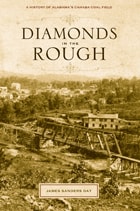
cover of Diamonds in the Rough: A History of Alabama's Cahaba Coal Field

Diamonds in the Rough

A History of Alabama's Cahaba Coal Field

James Sanders Day

University of Alabama Press, 2013

Diamonds in the Rough reconstructs the historical moment that defined the Cahaba Coal Field, a mineral-rich area that stretches across sixty-seven miles and four counties of central Alabama.
 
Combining existing written sources with oral accounts and personal recollections, James Sanders Day’s Diamonds in the Rough describes the numerous coal operations in this region—later overshadowed by the rise of the Birmingham district and the larger Warrior Field to the north.
 
Many of the capitalists are the same: Truman H. Aldrich, Henry F. DeBardeleben, and James W. Sloss, among others; however, the plethora of small independent enterprises, properties of the coal itself, and technological considerations distinguish the Cahaba from other Alabama coal fields. Relatively short-lived, the Cahaba coal-mining operation spanned from discovery in the 1840s through development, boom, and finally bust in the mid-1950s.
 
Day considers the chronological discovery, mapping, mining, and marketing of the field’s coal as well as the issues of convict leasing, town development, welfare capitalism, and unionism, weaving it all into a rich tapestry. At the heart of the story are the diverse people who lived and worked in the district—whether operator or miner, management or labor, union or nonunion, white or black, immigrant or native—who left a legacy for posterity now captured in Diamonds in the Rough. Largely obscured today by pine trees and kudzu, the mining districts of the Cahaba Coal Field forever influenced the lives of countless individuals and families, and ultimately contributed to the whole fabric of the state of Alabama.
 

Winner of the 2014 Clinton Jackson Coley Award for Best Work on Alabama Local History from the Alabama Historical Association
[more]
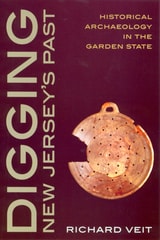
cover of Digging New Jersey's Past: Historical Archaeology in the Garden State

Digging New Jersey's Past

Historical Archaeology in the Garden State

Veit, Richard F

Rutgers University Press, 2002

When people think of archaeology, they commonly think of unearthing the remains of ancient civilizations in Egypt, Greece, Rome, Central or South America. But some fascinating history can be found in your own New Jersey backyard ¾ if you know where to look.

Richard Veit takes readers on a well-organized guided tour through four hundred years of Garden State development as seen through archaeology in Digging New Jerseys Past. This illustrated guidebook takes readers to some of the states most interesting discoveries and tells us what has been learned or is being learned from them. The diverse array of archaeological sites, drawn from all parts of the state, includes a seventeenth-century Dutch trading post, the site of the Battle of Monmouth, the gravemarkers of freed slaves, and a 1920s railroad roundhouse, among others.

Veit begins by explaining what archaeologists do: How do they know where to dig? What sites are likely to yield important information? How do archaeologists excavate a site? How are artifacts cataloged, stored, and interpreted? He then moves through the states history, from the contact of first peoples and explorers, to colonial homesteads, Revolutionary War battlefields, cemeteries, railroads, and factories. Veit concludes with some thoughts about the future of archaeological research in New Jersey and with suggestions on ways that interested individuals can become involved in the field.

[more]
cover of Down The Jersey Shore

Down The Jersey Shore

Russell Roberts and Rich Youmans

Rutgers University Press, 1993

Summer visitors and year-round residents alike are sure to discover Jersey Shore lore that captures their fancy in this entertaining account of the people, places, and events that have shaped New Jersey’s famous shoreline.

From ghost stories and the comic misadventures of the early Miss America Pageant to the dynamics of the changing coastline and poignant portraits of traditional crafts workers, Russell Roberts and Rich Youmans have chronicled the fascinating history and heritage of the New Jersey Shore. In this book you’ll meet the luminaries who’ve frequented the Shore—from President Ulysses Grant strolling through Long Branch to Grace Kelly learning to surf at Ocean City. You’ll find out why the boardwalk was invented, and also why early ones were removable. Join the authors as they pay tribute to the Shore’s forgotten inventors, including Simon Lake, who some consider the true father of the modern submarine. Relive the Jersey Shore’s role in wartime and learn  the story of the mysterious Nazi submarine sunken off of Point Pleasant Beach. Read about Lucy the Margate Elephant, as a well as her two long-gone “cousins.”

Discover all this and more as Roberts and Youmans explore the vast uncharted heritage of the New Jersey Shore.
[more]
cover of Dry River: Stories of Life, Death, and Redemption on the Santa Cruz

Dry River

Stories of Life, Death, and Redemption on the Santa Cruz

Ken Lamberton

University of Arizona Press, 2011

Poet and writer Alison Deming once noted, “In the desert, one finds the way by tracing the aftermath of water . . . ”

Here, Ken Lamberton finds his way through a lifetime of exploring southern Arizona’s Santa Cruz River. This river—dry, still, and silent one moment, a thundering torrent of mud the next—serves as a reflection of the desert around it: a hint of water on parched sand, a path to redemption across a thirsty landscape.

With his latest book, Lamberton takes us on a trek across the land of three nations—the United States, Mexico, and the Tohono O’odham Nation—as he hikes the river’s path from its source and introduces us to people who draw identity from the river—dedicated professionals, hardworking locals, and the author’s own family. These people each have their own stories of the river and its effect on their lives, and their narratives add immeasurable richness and depth to Lamberton’s own astute observations and picturesque descriptions.

Unlike books that detail only the Santa Cruz’s decline, Dry River offers a more balanced, at times even optimistic, view of the river that ignites hope for reclamation and offers a call to action rather than indulging in despair and resignation. At once a fascinating cultural history lesson and an important reminder that learning from the past can help us fix what we have damaged, Dry River is both a story about the amazing complexity of this troubled desert waterway and a celebration of one man’s lifelong journey with the people and places touched by it.
[more]