Results by title
174 books match the query 'Indigenous peoples' and 7 start with d

Dammed
The Politics of Loss and Survival in Anishinaabe TerritoryBrittany Luby
University of Manitoba Press, 2020
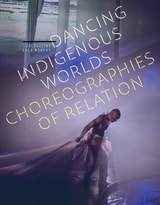
Dancing Indigenous Worlds
Choreographies of RelationJacqueline Shea Murphy
University of Minnesota Press, 2023
The vital role of dance in enacting the embodied experiences of Indigenous peoples
In Dancing Indigenous Worlds, Jacqueline Shea Murphy brings contemporary Indigenous dance makers into the spotlight, putting critical dance studies and Indigenous studies in conversation with one another in fresh and exciting new ways. Exploring Indigenous dance from North America and Aotearoa (New Zealand), she shows how dance artists communicate Indigenous ways of being, as well as generate a political force, engaging Indigenous understandings and histories.
Following specific dance works over time, Shea Murphy interweaves analysis, personal narrative, and written contributions from multiple dance artists, demonstrating dance’s crucial work in asserting and enacting Indigenous worldviews and the embodied experiences of Indigenous peoples. As Shea Murphy asserts, these dance-making practices can not only disrupt the structures that European colonization feeds upon and strives to maintain, but they can also recalibrate contemporary dance.
Based on more than twenty years of relationship building and research, Shea Murphy’s work contributes to growing, and largely underreported, discourses on decolonizing dance studies, and the geopolitical, gendered, racial, and relational meanings that dance theorizes and negotiates. She also includes discussions about the ethics of writing about Indigenous knowledge and peoples as a non-Indigenous scholar, and models approaches for doing so within structures of ongoing reciprocal, respectful, responsible action.
Daniels v. Canada
In and Beyond the CourtsNathalie Kermoal
University of Manitoba Press, 2021
Decolonial Conversations in Posthuman and New Material Rhetorics
Edited by Jennifer Clary-Lemon and David M. Grant
The Ohio State University Press, 2022
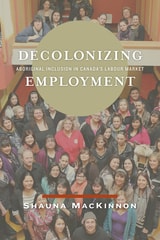
Decolonizing Employment
Aboriginal Inclusion in Canada's Labour MarketShauna MacKinnon
University of Manitoba Press, 2015

Divided Peoples
Policy, Activism, and Indigenous Identities on the U.S.-Mexico BorderChristina Leza
University of Arizona Press, 2019
Divided Peoples addresses the impact border policies have on traditional lands and the peoples who live there—whether environmental degradation, border patrol harassment, or the disruption of traditional ceremonies. Anthropologist Christina Leza shows how such policies affect the traditional cultural survival of Indigenous peoples along the border. The author examines local interpretations and uses of international rights tools by Native activists, counterdiscourse on the U.S.-Mexico border, and challenges faced by Indigenous border activists when communicating their issues to a broader public.
Through ethnographic research with grassroots Indigenous activists in the region, the author reveals several layers of division—the division of Indigenous peoples by the physical U.S.-Mexico border, the divisions that exist between Indigenous perspectives and mainstream U.S. perspectives regarding the border, and the traditionalist/nontraditionalist split among Indigenous nations within the United States. Divided Peoples asks us to consider the possibilities for challenging settler colonialism both in sociopolitical movements and in scholarship about Indigenous peoples and lands.
Drugs, Labor and Colonial Expansion
William Jankowiak
University of Arizona Press, 2003
This book explores how Europeans introduced and used drugs in colonial contexts for the exploitation and placation of indigenous labor. Combining history and anthropology, it examines the role of drugs in trade and labor during the age of western colonial expansion. From considering the introduction of alcohol in the West African slave trade to the use of coca as a labor enhancer in the Andes, these original contributions examine both the encouragement of drug use by colonial powers and the extent to which local peoples' previous experience with psychoactive substances shaped their use of drugs introduced by Europeans.
The authors show that drugs possessed characteristics that made them a particularly effective means for propagating trade or increasing the extent and intensity of labor. In the early stages of European expansion, drugs were introduced to draw people, quite literally, into relations of dependency with European trade partners. Over time, the drugs used to intensify the amount and duration of labor shifted from alcohol, opium, and marijuana—which were used to overcome the drudgery and discomfort of physical labor—to caffeine-based stimulants, which provided a more alert workforce.
Valuable not only for its ethnographic detail but also for its broader insight into the nature of capitalist expansion, this collection reveals the surprising consistency of drug use in the colonial process. Drugs, Labor and Colonial Expansion is a book rich with cross-cultural insights that ranges widely across disciplines to provide a new and needed look at the colonial experience.