Results by title
448 books match the query 'Interviews' and 15 start with d
D-Passage
The Digital WayTrinh T. Minh-ha
Duke University Press, 2013

Danish Directors
Dialogues on a Contemporary National CinemaEdited by Mette Hjort and Ib Bondebjerg
Intellect Books, 1995
Each interview is preceded by a photograph of the director, biographical information, and a filmography. Frame enlargements are used throughout to help clarify particular points of discussion and the book as a whole is contextualised by an informative general introduction. A valuable addition to the growing library of books on Scandinavian film, national cinema and minority cinema.
Dario Argento
L. Andrew Cooper
University of Illinois Press, 2012
Commanding a cult following among horror fans, Italian film director Dario Argento is best known for his work in two closely related genres, the crime thriller and supernatural horror, as well as his influence on modern horror and slasher movies. In his four decades of filmmaking, Argento has displayed a commitment to innovation, from his directorial debut with 1970's suspense thriller The Bird with the Crystal Plumage to 2009's Giallo. His films, like the lurid yellow-covered murder-mystery novels they are inspired by, follow the suspense tradition of hard-boiled American detective fiction while incorporating baroque scenes of violence and excess.
While considerations of Argento's films often describe them as irrational nightmares, L. Andrew Cooper uses controversies and theories about the films' reflections on sadism, gender, sexuality, psychoanalysis, aestheticism, and genre to declare the anti-rational logic of Argento's oeuvre. Approaching the films as rhetorical statements made through extremes of sound and vision, Cooper places Argento in a tradition of aestheticized horror that includes De Sade, De Quincey, Poe, and Hitchcock. Analyzing individual images and sequences as well as larger narrative structures, he reveals how the director's stylistic excesses, often condemned for glorifying misogyny and other forms of violence, offer productive resistance to the cinema's visual, narrative, and political norms.
Deaf Adolescents
Inner Lives and Lifeworld DevelopmentMartha Sheridan
Gallaudet University Press, 2008
In her landmark book Inner Lives of Deaf Children: Interviews and Analysis, Martha A. Sheridan explored the lifeworlds — the individual and collective elements and realities that are present within the participants’ existential experiences, their relationships, and their truths — of seven deaf and hard of hearing children between the ages of seven and ten. What she discovered were deaf children with strengths, positive experiences, and positive relationships. Sheridan’s new book Deaf Adolescents: Inner Lives and Lifeworld Development returns to these seven individuals, now between the ages of 13 and 17, to see how their lives have progressed since their first interviews.
Establishing an identity is said to be a primary and necessary task of adolescence. Deaf Adolescents reveals how these young adults all have begun to deal with tasks and situations that lead them to rely more on themselves and others outside of their families. Many of them talk about the athletic challenges that they face, and how their success depends upon their own efforts. They also think about the future while biding their time, taking “a break” from the furious growth that they are experiencing and also enjoying time spent with other deaf friends.
In this volume, Sheridan examines the similarities and differences that these deaf young adults reveal in their views at two developmental points in their lives. Her renewed study has advanced the quest to determine what pathways and spaces can foster productive, healthy, satisfying, actualized deaf lives.
Death to the Death of Poetry
Essays, Reviews, Notes, InterviewsDonald Hall
University of Michigan Press, 1994
Donald Hall believes that American poetry, at the present moment, thrives both in quality and in leadership. In his latest collection of essays, reviews, and interviews, Hall counters the increasingly publicized view that poetry has an ever-diminishing importance in contemporary American culture. He resents the endlessly repeated cliché that finds poetry unpopular and losing popularity. Thus: Death to the Death of Poetry.
Throughout the pages of this latest offering in the Poets on Poetry series, Hall returns again and again to the theme of poetry's health, and offers essays praising contemporary poets, who serve as examples of poetry's thriving condition. In addition, Death to the Death of Poetry collects interviews in which Hall discusses the work of poetry--revisions, standards, the psychology and sociology of the poet's life.
The collection will be warmly received by Donald Hall's large readership, enhanced in 1993 by publication of two exemplary volumes: The Museum of Clear Ideas, his eleventh book of poetry; and his essay Life Work, which brought him both new and returning readers.
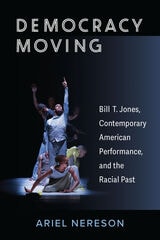
Democracy Moving
Bill T. Jones, Contemporary American Performance, and the Racial PastAriel Nereson
University of Michigan Press, 2022
The project addresses how different communities choose to commemorate historical figures, events, and places through art—whether performance, oratory, song, statuary, or portraiture—and in particular, Black US American counter-memorial practices that address histories of slavery. Advancing the theory of oscillation as Black aesthetic praxis, author Ariel Nereson celebrates Bill T. Jones as a public intellectual whose practice has contributed to the project of understanding America’s relationship to its troubled past. The book features materials from Bill T. Jones/Arnie Zane Company’s largely unexplored archive, interviews with artists, and photos that document this critical stage of Jones’s career as it explores how aesthetics, as ideas in action, can imagine more just and equitable social formations.

Detroit Lives
Robert Mast
Temple University Press, 1994
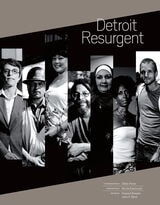
Detroit Resurgent
Howard Bossen
Michigan State University Press, 2014

Diary of a Poem
Andrew Hudgins
University of Michigan Press, 2011
Praise for Andrew Hudgins
"Hudgins . . . [is] one of the few poets of the American South who can be both solemn and sidesplitting in a single poem."
---Publishers Weekly
"Andrew Hudgins is a natural storyteller . . . The surface[s] of Hudgins's poems---their quirky economy, the sheer music of his prosody---are so right because he goes so deep."
---Washington Post
A volume in the Poets on Poetry series, which collects critical works by contemporary poets, gathering together the articles, interviews, and book reviews by which they have articulated the poetics of a new generation.
Andrew Hudgins's Diary of a Poem is an engaging collection of essays that offers pleasure and profit to its readers. The title essay discusses the author's amusing travails as he attempts to write an ode about intestines, while other pieces explore the poetry of James Agee, Donald Justice, Allen Tate, and other poets, as well as the musician Johnny Winter, who is the subject of a rollicking segment about rock 'n' roll. More seriously, Hudgins writes with lively good humor about his tomato garden, the unread books piled up precipitously around his bed, and the emotional problems that led to an embarrassingly intimate, yet funny encounter with his father-in-law.
Diary of a Poem is lively, charming, often humorous, and a pleasurable read for the general reader and the poetry specialist alike.
Author photo by Jo McCulty
Divergent Trajectories
Interviews with Innovative Fiction WritersFlore Chevaillier
The Ohio State University Press, 2017
Including interviews with R. M. Berry, Debra Di Blasi, Percival Everett, Thalia Field, Renee Gladman, Bhanu Kapil, Lance Olsen, Michael Martone, Carole Maso, Joseph McElroy, Christina Milletti, Alan Singer, and Steve Tomasula, Divergent Trajectories provides a framework that allows innovative authors to discuss in some depth their works, backgrounds, formal research, thematic preferences, genre treatment, aesthetic philosophies, dominant linguistic expressions, cultural trends, and the literary canon. Through an examination of these concepts, writers ask what “traditional” and “innovative” writing is, and most of all, what fiction is today.
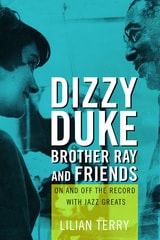
Dizzy, Duke, Brother Ray, and Friends
On and Off the Record with Jazz GreatsLillian Terry
University of Illinois Press, 2017
Drawing on Terry’s long friendships and professional associations, Dizzy, Duke, Brother Ray, and Friends offers readers a rare opportunity to hear intimate conversations with some of the world’s greatest musical figures. Dizzy Gillespie offers his thoughts on playing with “sanctified” rhythm and the all-important personal touch in performance. Duke Ellington discourses on jazz history and concludes an interview to sing a self-written ditty in Italian. Ray Charles gives candid thoughts on race and politics while taking charge of Terry’s tape recorder. Abbey Lincoln, Max Roach, Horace Silver, Bill Evans—all provide Terry and her readers with unforgettable encounters. The result is a collection of profiles, some stretching over a decade or more, that reveal these performers in ways that illuminate their humanity and expand our appreciation of their art.
Don't Ask
Philip Levine
University of Michigan Press, 1981
Don't Send Me Flowers When I'm Dead
Voices of Rural ElderlyEva J. Salber
Duke University Press, 1983
"They are men and women, blacks and whites, Dr. Salber's teachers. The North Carolinians in this book have no trouble giving us a good measure of open-eyed social comment, not to mention intelligent self-scrutiny and astute moral reflection. These pages glow with all that. . . . This book represents an intense and unyielding ethical as well as medical and literary commitment by a most impressive physician."—Robert Coles

Dreaming of a Mail-Order Husband
Russian-American Internet RomanceEricka Johnson
Duke University Press, 2007
Each chapter presents one woman’s story and then links it to a discussion of gender roles, the mail-order bride industry, and the severe economic and social constraints of life in Russia. The transitional economy has often left people, after a month’s work, either unpaid or paid unexpectedly with a supply of sunflower oil or toilet paper. Women over twenty-three are considered virtually unmarriageable in Russian society. Russia has a large population of women who are single, divorced, or widowed, who would like to be married yet feel that they have no chance finding a Russian husband. Grim realities such as these motivate women to seek better lives abroad. For many of those seeking a mail-order husband, children or parents play significant roles in the search for better lives, and they play a role in Johnson’s account as well. In addition to her research in the former Soviet Union, Johnson conducted interviews in the United States, and she shares the insights—about dating, marriage, and cross-cultural communication—of a Russian-American married couple who met via the Internet.
Dropping In
What Skateboarders Can Teach Us about Learning, Schooling, and Youth DevelopmentRobert Petrone
University of Massachusetts Press, 2023
The die-hard local skateboarders of Franklin Skatepark—a group of working-class, Latino and white young men in the rural Midwest—are typically classified by schools and society as “struggling,” “at-risk,” “failing,” and “in crisis.” But at the skatepark, they thrive and succeed, not only by landing tricks but also by finding meaning and purpose in their lives.
In Dropping In, Robert Petrone draws from multiple years of ethnographic research to bring readers into this rich environment, exploring how and why these young men engage more with skateboarding and its related cultural communities than with school. For them, it is in these alternative communities and spaces that they meet their intellectual, literate, and learning needs; cultivate meaningful and supportive relationships; and develop a larger understanding of their place in the world. By looking at what these skateboarders can teach us about what is right and working in their lives, Petrone asks educators and others committed to youth development to rethink schooling structures and practices to provide equitable education for all students.