Results by title
328 books match the query 'Islam' and 6 start with d
Debating Moderate Islam
The Geopolitics of Islam and the WestM A Muqtedar Khan
University of Utah Press, 2007
After 9/11, many Americans took the view that the attacks on the World Trade Center and the Pentagon were the leading edge of a new war: Islam versus the West. Yet the attacks were also part of the current struggle within Islam between fundamentalist and moderate approaches and were staged for maximum effect in the Muslim world.
This book is based on a special-topic issue of the American Journal of Islamic Social Sciences (Fall 2005), and brings together prominent Muslim voices from the policy and academic communities to debate the nature of moderate Islam and what moderation means in both a theological and a geopolitical sense. Participants reflect on the future of political Islam, its role in Muslim politics, western policies in the Muslim world, and the future of American-Muslim relations. This book and the debate it presents are vital to understanding these complex issues.
Debating Muslims
Cultural Dialogues in Postmodernity and TraditionMichael M. J. Fischer and Mehdi Abedi
University of Wisconsin Press, 1990
In a world of multinational commerce, satellite broadcasting, migration, terrorism, and global arms dealing, what is said and how it is said in one society can no longer be isolated from what is said and how it is said in another. Debating Muslims focuses on Iranian culture, Shi’ite Islam, and Iranians in the United States, offering an experiment in postmodern ethnography and an invitation to think in a multifaceted way about Islam in the contemporary world.
Democratic Criticism
Poetics of Incitement and the Muslim SacredMasood Raja
Lever Press, 2023
After the publication of Salman Rushdie’s The Satanic Verses (1988), the poetics of incitement— found in texts originating in the West containing themes and representations of Islam hurtful to Muslims—became an accepted method of textual production in the West. Production of such texts intensified after the attacks of 9/11. Democratic Criticism: Poetics of Incitement and the Muslim Sacred by Masood Ashraf Raja urges a new mode of reading, one that permits Western readers to transcend local reading practices in order to, as best as one can, read from the point of view of the Other.
Raja argues that the lack of understanding of Muslim responses to the poetics of incitement in the West is the result of a lack of cross-cultural knowledge. He claims metropolitan universities often do not teach the proper social, historical, and religious context required for effectively reading these texts with any form of cultural knowledge. To remedy this, Raja offers and theorizes “democratic reading practices” and new ways for students to engage with texts. A genealogy of the Muslim Sacred is included, thereby giving readers the history and specific knowledge that constitutes an average Muslim reader of these texts, a subject who should be imagined and empathized with when those in the West read works of the poetics of incitement.
Democratic Criticism encourages Western readers to develop a deeper understanding of the meaning-making processes of the Islamic world while at the same time encouraging the Muslim readers to read representations of the Islamic world with a more expansive understanding. It will be a helpful tool in creating reading practices that allow both teachers and students of literature to transcend their mode of reading as universal and to read from the perspective of the Other, and allow readers to engage meaningfully with these texts. Students and scholars of world literature, history, and religious studies will find this book insightful and valuable.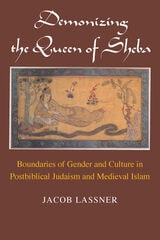
Demonizing the Queen of Sheba
Boundaries of Gender and Culture in Postbiblical Judaism and Medieval IslamJacob Lassner
University of Chicago Press, 1993
The Bible presents the Queen of Sheba's encounter with King Solomon as a diplomatic mission: the queen comes "to test him with hard questions," all of which he answers to her satisfaction; she then praises him and, after an exchange of gifts, returns to her own land. By the Middle Ages, Lassner demonstrates, the focus of the queen's visit had shifted from international to sexual politics. The queen was now portrayed as acting in open defiance of nature's equilibrium and God's design. In these retellings, the authors humbled the queen and thereby restored the world to its proper condition.
Lassner also examines the Islamization of Jewish themes, using the dramatic accounts of Solomon and his female antagonist as a test case of how Jewish lore penetrated the literary imagination of Muslims. Demonizing the Queen of Sheba thus addresses not only specialists in Jewish and Islamic studies, but also those concerned with issues of cultural transmission and the role of gender in history.

Dictionary of Indonesian Islam
Mis Sea#94Howard M. Federspiel
Ohio University Press, 1994
This dictionary will be indispensable to English–speaking students and researchers working in Indonesian or Southeast Asian studies. It will also be useful for scholars working in Bahasa Indonesian, reading texts written about Islam by Indonesian Muslims, as well as for Southeast Asia area scholars generally who are using sources in Western languages.
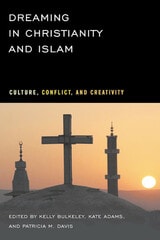
Dreaming in Christianity and Islam
Culture, Conflict, and CreativityEdited and with an Introduction by Kelly Bulkeley, Kate Adams, and Patricia M. Davis
Rutgers University Press, 2009
Dreaming in Christianity and Islam, the first book to explore dreaming in these religions through original essays, fills this void. The editors reach a plateau by focusing on how studying dreams reveals new aspects of social and political reality. International scholars document the impact of dreams on sacred texts, mystical experiences, therapeutic practices, and doctrinal controversies.