477 books match the query 'Italy' and 8 start with d
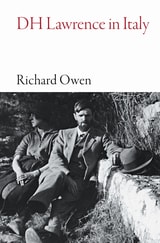
cover of DH Lawrence in Italy

DH Lawrence in Italy

Richard Owen

Haus Publishing, 2014

November 1925: In search of health and sun, the writer D. H. Lawrence arrives on the Italian Riviera with his wife, Frieda, and is exhilarated by the view of the sparkling Mediterranean from his rented villa, set amid olives and vines. But over the next six months, Frieda will be fatally attracted to their landlord, a dashing Italian army officer. This incident of infidelity influenced Lawrence to write two short stories, “Sun” and “The Virgin and the Gypsy,” in which women are drawn to earthy, muscular men, both of which prefigured his scandalous novel Lady Chatterley’s Lover. 

In DH Lawrence in Italy, Owen reconstructs the drama leading up to the creation of one of the most controversial novels of all time by drawing on the unpublished letters and diaries of Rina Secker, the Anglo-Italian wife of Lawrence’s publisher. In addition to telling the story of the origins of Lady Chatterley, DH Lawrence in Italy explores Lawrence’s passion for all things Italian, tracking his path to the Riviera from Lake Garda to Lerici, Abruzzo, Capri, Sicily, and Sardinia.
[more]
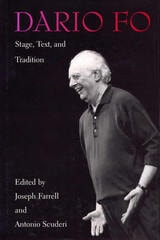
cover of Dario Fo: Stage, Text, and Tradition

Dario Fo

Stage, Text, and Tradition

Edited by Joseph Farrell and Antonio Scuderi

Southern Illinois University Press, 2000

Joseph Farrell and Antonio Scuderi present an international collection of essays reevaluating the multifaceted performance art of Nobel laureate Dario Fo.

The contributors, all of whom either have previously published on Fo or have worked with him, are the major Dario Fo scholars of three continents. Going beyond the Marxist criticism of the 1970s and 1980s, the editors and contributors try to establish an appropriate language in which to debate Fo’s theater. They seek to identify the core of Fo’s work, the material that will be of lasting value. This involves locating Fo in history, examining the nature of his development through successive phases, incorporating his politics into a wider framework of radical dissent, and setting his theatrical achievements in a context and a tradition.

The essays cover every aspect of Dario Fo: as actor, playwright, performer, and songwriter. They also provide the historical background of Fo’s theater, as well as an in-depth analyses of specific works and the contribution of Franca Rame.
[more]
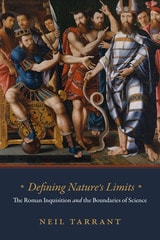
cover of Defining Nature's Limits: The Roman Inquisition and the Boundaries of Science

Defining Nature's Limits

The Roman Inquisition and the Boundaries of Science

Neil Tarrant

University of Chicago Press, 2022

A look at the history of censorship, science, and magic from the Middle Ages to the post-Reformation era.
 
Neil Tarrant challenges conventional thinking by looking at the longer history of censorship, considering a five-hundred-year continuity of goals and methods stretching from the late eleventh century to well into the sixteenth.
 
Unlike earlier studies, Defining Nature’s Limits engages the history of both learned and popular magic. Tarrant explains how the church developed a program that sought to codify what was proper belief through confession, inquisition, and punishment and prosecuted what they considered superstition or heresy that stretched beyond the boundaries of religion. These efforts were continued by the Roman Inquisition, established in 1542. Although it was designed primarily to combat Protestantism, from the outset the new institution investigated both practitioners of “illicit” magic and inquiries into natural philosophy, delegitimizing certain practices and thus shaping the development of early modern science. Describing the dynamics of censorship that continued well into the post-Reformation era, Defining Nature's Limits is revisionist history that will interest scholars of the history science, the history of magic, and the history of the church alike.
 
[more]
cover of Dialogues

Dialogues

Saint Gregory the Great

Catholic University of America Press, 1959
No description available
[more]
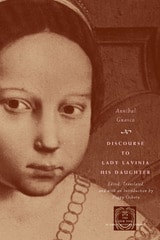
cover of Discourse to Lady Lavinia His Daughter

Discourse to Lady Lavinia His Daughter

Annibal Guasco

University of Chicago Press, 2003

When eleven-year-old Lavinia Guasca began her new life as a lady-in-waiting at the court of Turin, she brought with her a parting gift from her father Annibal (1540-1619): a detailed guidebook he wrote to help steer her through the many pitfalls of court life. Lavinia had her father's Discourse published in 1586; this English translation is the first version published in any form since that time.

The Discourse displays an incredibly far-sighted view of women's education. Annibal thought gifted young girls should develop their talents and apply them to careers outside the home. In the Discourse, he details the unique and extremely rigorous educational program to which he had subjected Lavinia almost from the cradle with this end in mind. To complete Lavinia's education, Annibal filled the Discourse with advice on spirituality and morality, health and beauty, and how to behave at court—everything a well-bred lady-in-waiting would need to know. This edition also includes an appendix that traces the later events of Lavinia's life through excerpts from her father's letters.
[more]
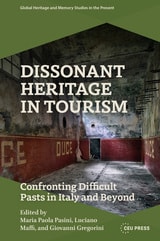
cover of Dissonant Heritage in Tourism: Confronting Difficult Pasts in Italy and Beyond

Dissonant Heritage in Tourism

Confronting Difficult Pasts in Italy and Beyond

Maria Paola Pasini

Central European University Press, 2026
Interest in dissonant heritage has grown significantly in recent years. Difficult legacies, such as monuments and urban and artistic works, as well as intangible personal and communal experiences are linked to dictatorships, regimes, wars, slavery, and exploitation. In some places, a dissonant heritage creates tension. In other places, difficult histories are cancelled or ignored. But forgetting is not the solution. Critical analysis can help us ‘face the past’ and process it in order to move forward. This applies to tourism as well: ‘Difficult’ places, monuments and experiences become opportunities for gaining and creating knowledge for a public interested in historical issues. At the same time, tourist presence is an incentive for communities to better comprehend their contested past(s). This volume contains contributions by scholars from various countries and different backgrounds, such as historians, architects, and anthropologists, who deal with this topic from different angles. The volume is divided into two parts: the first part concentrates on Italy, while the second part covers other countries in the world.
[more]
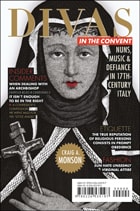
cover of Divas in the Convent: Nuns, Music, and Defiance in Seventeenth-Century Italy

Divas in the Convent

Nuns, Music, and Defiance in Seventeenth-Century Italy

Craig A. Monson

University of Chicago Press, 2012

When eight-year-old Lucrezia Orsina Vizzana (1590–1662) entered one of the preeminent convents in Bologna in 1598, she had no idea what cloistered life had in store for her. Thanks to clandestine instruction from a local maestro di cappella—and despite the church hierarchy’s vehement opposition to all convent music—Vizzana became the star of the convent, composing works so thoroughly modern and expressive that a recent critic described them as “historical treasures.” But at the very moment when Vizzana’s works appeared in 1623—she would be the only Bolognese nun ever to publish her music—extraordinary troubles beset her and her fellow nuns, as episcopal authorities arrived to investigate anonymous allegations of sisterly improprieties with male members of their order.
           
Craig A. Monson retells the story of Vizzana and the nuns of Santa Cristina to elucidate the role that music played in the lives of these cloistered women. Gifted singers, instrumentalists, and composers, these nuns used music not only to forge links with the community beyond convent walls, but also to challenge and circumvent ecclesiastical authority. Monson explains how the sisters of Santa Cristina—refusing to accept what the church hierarchy called God’s will and what the nuns perceived as a besmirching of their honor—fought back with words and music, and when these proved futile, with bricks, roof tiles, and stones. These women defied one Bolognese archbishop after another, cardinals in Rome, and even the pope himself, until threats of excommunication and abandonment by their families brought them to their knees twenty-five years later. By then, Santa Cristina’s imaginative but frail composer literally had been driven mad by the conflict.
           
Monson’s fascinating narrative relies heavily on the words of its various protagonists, on both sides of the cloister wall, who emerge vividly as imaginative, independent-minded, and not always sympathetic figures. In restoring the musically gifted Lucrezia Orsina Vizzana to history, Monson introduces readers to the full range of captivating characters who played their parts in seventeenth-century convent life.
 
[more]
cover of Doctors, Ambassadors, Secretaries: Humanism and Professions in Renaissance Italy

Doctors, Ambassadors, Secretaries

Humanism and Professions in Renaissance Italy

Douglas Biow

University of Chicago Press, 2002

In this book, Douglas Biow traces the role that humanists played in the development of professions and professionalism in Renaissance Italy, and vice versa. For instance, humanists were initially quite hostile to medicine, viewing it as poorly adapted to their program of study. They much preferred the secretarial profession, which they made their own throughout the Renaissance and eventually defined in treatises in the late sixteenth and early seventeenth centuries.

Examining a wide range of treatises, poems, and other works that humanists wrote both as and about doctors, ambassadors, and secretaries, Biow shows how interactions with these professions forced humanists to make their studies relevant to their own times, uniting theory and practice in a way that strengthened humanism. His detailed analyses of writings by familiar and lesser-known figures, from Petrarch, Machiavelli, and Tasso to Maggi, Fracastoro, and Barbaro, will especially interest students of Renaissance Italy, but also anyone concerned with the rise of professionalism during the early modern period.
[more]