Results by title
279 books match the query 'Management' and 13 start with d

Data Management for Libraries
Carly A. Strasser
American Library Association, 2013
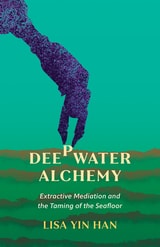
Deepwater Alchemy
Extractive Mediation and the Taming of the SeafloorLisa Yin Han
University of Minnesota Press, 2024
How underwater mediation has transformed deep-sea spaces into resource-rich frontiers
Green energy technologies such as windmills, solar panels, and electric vehicles may soon depend on material found at the seabed. How did a space once imagined to be empty and unfathomable come to be thought of as a treasure trove of resources? Lisa Yin Han traces how contemporary developments in underwater sensing and imaging materially and imaginatively transmogrify the ocean bottom into a resource frontier capable of sustaining a digitally connected global future.
Set against the backdrop of climate change, energy transition, and the expansion of industrial offshore extractions, Deepwater Alchemy looks at oceanic media and its representation of the seabed in terms of valuable resources. From high-tech simulations to laboratories and archives that collect and analyze sediments, Han explores the media technologies that survey, visualize, and condition the possibility for industrial resource extraction, introducing the concept of extractive mediation to describe the conflations between resource prospecting and undersea knowledge production. Moving away from anthropocentric frameworks, she argues that we must equalize access to deep ocean mediation and include the submerged perspectives of multispecies communities.
From the proliferation of petroleum seismology to environmental-impact research on seabed mining to the development of internet-enabled seafloor observatories, Deepwater Alchemy shows us that deepwater mediation is entangled in existential hopes and fears for our planetary future. As the ocean bottom becomes increasingly accessible to people, Han prompts us to ask not whether we can tame the seafloor, but, rather, why and for whom are we taming it?

Democracy's Hidden Heroes
Fitting Policy to People and PlaceDavid C. Campbell
Temple University Press, 2024
David Campbell recounts compelling stories of the workarounds, sidesteps, informal agreements, and grantor–grantee negotiations that help policy initiatives succeed as intended. The settings include schools, human services departments, workforce development agencies, and community-based organizations. He explains why it is difficult, though necessary, to translate locally attuned implementation dynamics into accountability metrics for distant funders.
Drawing on 2,000 interviews, Democracy’s Hidden Heroes is the culmination of decades spent talking to people who must reconcile bureaucratic and community cultures. Campbell’s grounded approach and balanced perspective bring fresh insights to the analysis of policy implementation, public management, and results accountability, while offering both cautionary advice and a hopeful prognosis.

Designing Businesses
How to develop and lead a high technology companyGeorge Young
The Institution of Engineering and Technology, 1997
Developing Effective Engineering Leadership
Ray Morrison
The Institution of Engineering and Technology, 2003
Developing and Managing Electronic Collections
The EssentialsPeggy Johnson
American Library Association, 2013
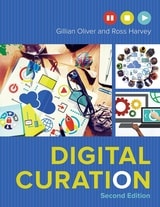
Digital Curation
Gillian Oliver
American Library Association, 2016
As an in-depth explanation of the entire digital curation lifecycle, from creation to appraisal to preservation to organization/access to transformation, the first edition of this text set a benchmark for both thoroughness and clarity. Boasting the expert guidance of international authorities Oliver and Harvey, this revamped and expanded edition widens the scope to address continuing developments in the strategies, technological approaches, and activities that are part of this rapidly changing field. In addition to current practitioners, those pursuing a career as librarian, archivist, or records manager will find this definitive survey invaluable. Filled with up-to-date best practices, it covers such important topics as
- the scope and incentives of digital curation, detailing Digital Curation Centre's (DCC) lifecycle model as well as the Data Curation Continuum;
- key requirements for digital curation, from description and representation to planning and collaboration;
- the value and utility of metadata;
- considering the needs of producers and consumers when creating an appraisal and selection policy for digital objects;
- the paradigm shift by institutions towards cloud computing and its impact on costs, storage, and other key aspects of digital curation;
- the quality and security of data;
- new and emerging data curation resources, including innovative digital repository software and digital forensics tools;
- mechanisms for sharing and reusing data, with expanded sections on open access, open data, and open standards initiatives; and
- processes to ensure that data are preserved and remain usable over time.
Useful as both a teaching text and day-to-day working guide, this book outlines the essential concepts and techniques that are crucial to preserving the longevity of digital resources.
Digital Curation
A How-To-Do-It Manual for LibrariansPam Hackbart-Dean
American Library Association, 2010
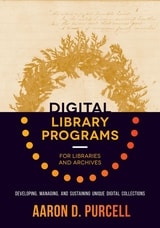
Digital Library Programs for Libraries and Archives
Developing, Managing, and Sustaining Unique Digital CollectionsAaron D. Purcell
American Library Association, 2016

Digital Preservation Essentials
Christopher Prom
Society of American Archivists, 2016
Disney Culture
Wills, John
Rutgers University Press, 2017
Disney Culture proposes that there is still a unifying Disney ethos, one that can be traced back to the corporate philosophy that Walt Disney himself developed back in the 1920s. Yet, as cultural historian John Wills demonstrates, Disney’s values have also adapted to changing social climates. At the same time, the world of Disney has profoundly shaped how Americans view the world.
Wills offers a nuanced take on the corporate ideologies running through animated and live-action Disney movies from Frozen to Fantasia, from Mary Poppins to Star Wars: The Force Awakens. But Disney Culture encompasses much more than just movies as it explores the intersections between Disney’s business practices and its cultural mythmaking. Welcome to “the Disney Way.”
Doing Meritocracy Right
How Business Leaders Can Turn an American Aspiration into Reality (and Why They Should)Thomas A. Cole
University of Chicago Press, 2025
As America’s most vaunted cultural value, meritocracy is celebrated by some as an institution and derided by others as a myth—or even a trap. Thomas A. Cole argues in Doing Meritocracy Right that if meritocracy is to persist as an institution—and it must—it requires structural support in the private sector. For America to achieve a version of meritocracy that more closely matches our aspirations, our business leaders must first offer equity of opportunity for individuals to demonstrate and develop their talents on equal terms.
Drawing on his decades of experience in advising CEOs and corporate boards, personally serving on the boards of major not-for-profits, and leading a large global law firm, Cole cites elite professional-service institutions—consultancies and law firms especially—as improbable laboratories for equity of opportunity. These workplaces, out of self-interest, are laser-focused on the quality of their professionals, seeking out talent and representation and then judging these individuals on (ideally) equal terms once they’re in place. Here, Cole sees an opportunity that no public initiative or platitudes can deliver: if workplaces seek out representational diversity by applying, with thought and care, a single standard of merit—one that emphasizes character—and by providing training and mentoring on an equitable basis, then they will offer a ladder to social and economic mobility that serves both individuals and society.
Cole argues that a meritocratic society is achieved in two interrelated stages: access to education; and post-education promotion to membership in the elite. The latter, he says, is the domain of business. Cole argues that the private sector is better positioned to effect reform and he encourages leaders in the private sector to pursue reform both in their organizations, in government, and in the universities and communities where they have influence.
Meritocracy in the private sector can’t control the many American inequities that exist on the ground of American society. But it can do social good by serving as a reliable, merit-determined path to the highest echelons of business and industry. Cole sets the stage for the discussion of reforms with a “brief history of our imperfect meritocracy,” and rounds out the book with a to-do list for business leaders.
Dynamic Management of Growing Firms
A Strategic ApproachLorraine Uhlaner Hendrickson and John Psarouthakis
University of Michigan Press, 1998