Results by title
120 books match the query 'Marketing' and 3 start with d

Developing Successful Sport Marketing Plans
Fifth EditionDavid K. Stotlar
FiT Publishing, 2018
With an abundance of goods and services available to consumers in the sport industry, it can be difficult for products or organizations to stand out from the competition. Combining theoretical foundation with real-world examples, the updated fifth edition of Developing Successful Sport Marketing Plans guides readers through the sequential process of creating and implementing a winning marketing strategy—including understanding the market environment, defining target markets, developing marketing objectives and strategies, and evaluating the plan.
Esteemed scholar and author Mark S. Nagel joins internationally recognized academician David Stotlar in writing the revised fifth edition that includes updated information and examples, interviews with sport marketing professionals to provide insight into the industry, and worksheets to provide a hands-on guide to assist students in crafting a sport marketing plan.
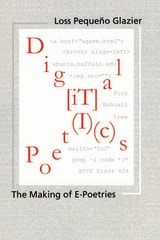
Digital Poetics
Hypertext, Visual-Kinetic Text and Writing in Programmable MediaLoss Pequeño Glazier
University of Alabama Press, 2001
Glazier investigates the ways in which computer technology has influenced and transformed the writing and dissemination of poetry.
In Digital Poetics, Loss Pequeño Glazier argues that the increase in computer technology and accessibility, specifically the World Wide Web, has created a new and viable place for the writing and dissemination of poetry. Glazier’s work not only introduces the reader to the current state of electronic writing but also outlines the historical and technical contexts out of which electronic poetry has emerged and demonstrates some of the possibilities of the new medium.
Glazier examines three principal forms of electronic textuality: hypertext, visual/kinetic text, and works in programmable media. He considers avant-garde poetics and its relationship to the on-line age, the relationship between web “pages” and book technology, and the way in which certain kinds of web constructions are in and of themselves a type of writing. With convincing alacrity, Glazier argues that the materiality of electronic writing has changed the idea of writing itself. He concludes that electronic space is the true home of poetry and, in the 20th century, has become the ultimate “space of poesis.”
Digital Poetics will attract a readership of scholars and students interested in contemporary creative writing and the potential of electronic media for imaginative expression.
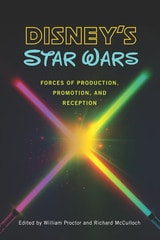
Disney's Star Wars
Forces of Production, Promotion, and ReceptionWilliam Proctor and Richard McCulloch
University of Iowa Press, 2019
Covering the period from Disney’s purchase through the release of The Force Awakens, the book reveals how fans anticipated, interpreted, and responded to the steady stream of production stories, gossip, marketing materials, merchandise, and other sources in the build-up to the movie’s release. From fears that Princess Leia would be turned into a “Disney princess” to collaborative brand management, the authors explore the shifting relationship between fans, texts, and media industries in the context of a crucial rebranding campaign. The result is a fascinating examination of a critical moment in the iconic series’ history.