Results by title
167 books match the query 'Masculinity' and 3 start with d
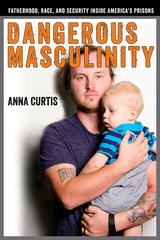
Dangerous Masculinity
Fatherhood, Race, and Security Inside America's PrisonsAnna Curtis
Rutgers University Press, 2019
For incarcerated fathers, prison rather than work mediates access to their families. Prison rules and staff regulate phone privileges, access to writing materials, and visits. Perhaps even more important are the ways in which the penal system shapes men’s gender performances. Incarcerated men must negotiate how they will enact violence and aggression, both in terms of the expectations placed upon inmates by the prison system and in terms of their own responses to these expectations. Additionally, the relationships between incarcerated men and the mothers of their children change, particularly since women now serve as “gatekeepers” who control when and how they contact their children. This book considers how those within the prison system negotiate their expectations about “real” men and “good” fathers, how prisoners negotiate their relationships with those outside of prison, and in what ways this negotiation reflects their understanding of masculinity.
[more]

Desire Work
Ex-Gay and Pentecostal Masculinity in South AfricaMelissa Hackman
Duke University Press, 2018
In postapartheid Cape Town—Africa's gay capital—many Pentecostal men turned to "ex-gay" ministries in hopes of “curing” their homosexuality in order to conform to conservative Christian values and African social norms. In Desire Work Melissa Hackman traces the experiences of predominantly white ex-gay men as they attempt to forge a heterosexual masculinity and enter into heterosexual marriage through emotional, bodily, and religious work. These men subjected themselves to daily self-surveillance and followed prescribed behaviors such as changing how they talked and walked. Ex-gay men also saw themselves as participating in the redemption of the nation, because South African society was perceived as suffering from a crisis of masculinity in which the country lacked enough moral heterosexual men. By tying the experience of ex-gay men to the convergence of social movements and public debates surrounding race, violence, religion, and masculinity in South Africa, Hackman offers insights into the construction of personal identities in the context of sexuality and spirituality.
[more]

Dismembering the Male
Men's Bodies, Britain, and the Great WarJoanna Bourke
University of Chicago Press, 1996
Some historians contend that femininity was "disrupted, constructed and reconstructed" during World War I, but what happened to masculinity? Using the evidence of letters, diaries, and oral histories of members of the military and of civilians, as well as contemporary photographs and government propoganda, Dismembering the Male explores the impact of the First World War on the male body.
Each chapter explores a different facet of the war and masculinity in depth. Joanna Bourke discovers that those who were dismembered and disabled by the war were not viewed as passive or weak, like their civilian counterparts, but were the focus of much government and public sentiment. Those suffering from disease were viewed differently, often finding themselves accused of malingering.
Joanna Bourke argues convincingly that military experiences led to a greater sharing of gender identities between men of different classes and ages. Dismembering the Male concludes that ultimately, attempts to reconstruct a new type of masculinity failed as the threat of another war, and with it the sacrifice of a new generation of men, intensified.
[more]