Results by title
80 books match the query 'Medical (incl. Patients)' and 7 start with d

Dizzy
A MemoirRachel Weaver
West Virginia University Press, 2026
Gold Medal Winner, Living Now Book Awards, Inspirational Memoir (Female)
“An arresting new memoir….”
– Maureen Corrigan, NPR’s Fresh Air
Beverly Donofrio, author of Riding in Cars with Boys, says “Dizzy is a testament to the power of hope. Weaver’s courage and strength are so inspiring they encourage the same in the reader. If all of that isn’t enough, the beauty and agility of the prose may make you regret reaching the last page.”
In her early thirties, Rachel Weaver woke up dizzy and unable to function. She spent the next ten years seeing more than thirty medical practitioners before receiving a diagnosis, and then another eight years before finding relief from her condition. Dizzy is amedical mystery and a cautionary tale about our broken healthcare system. It is a story about learning to live with life's uncertainty, persevering in the pursuit of answers, and striving to find joy in an imperfect yet beautiful world.

Do My Heart Good
My Odyssey Through Country Music, Medicine, and HistoryCleve Francis
University of Illinois Press, 2026
Francis’s account follows his “multidimensional life” through two milieus that rarely welcome Black men: country music and medicine. Merging rich storytelling with thoughtful insights, Francis shares the obstacles and triumphs he experienced through his lifelong love of performing music and writing songs, his abiding interest in science and medicine, and his determination to overcome racial barriers. He also offers an insider’s view of the 1990s country music world—the discipline of finding songs and recording in Nashville, the fight to get his music on the radio, and a whirlwind of shows and encounters with country music legends.
Engaging and inspiring, Do My Heart Good is the story of how resolve, hard work, and joy composed a uniquely American success story.
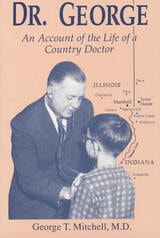
Doctor George
An Account of the Life of a Country DoctorGeorge T. Mitchell, M.D. Foreword by Glen W. Davidson
Southern Illinois University Press, 1993
Dr. George T. Mitchell of Marshall, Illinois, shares with humor and compassion stories and reflections about his medical practice of fifty years.
Having grown up in Marshall, Dr. Mitchell writes of his early experiences in midwestern America: basketball rivalries, school-boy pranks, and the traditions passed down through a family of doctors. Dr. Mitchell tells of his brief detour to obtain a degree in mechanical engineering, his decision to pursue a career in medicine, and his medical school experiences at the George Washington School of Medicine before the days of antibiotics and sophisticated medical technology. He vividly describes his subsequent service in World War II as a young surgeon at a military hospital helping injured soldiers resume normal lives while enduring the frustrations and occasional horrors of military life.
After the war, Dr. Mitchell joined his father’s practice in Marshall, where, he observes, he was among sixteen physicians in a rural county with a population of less than twenty thousand people. Within twenty-five years, the number of doctors had dropped to only four. In this memoir Dr. Mitchell conveys his unwillingness to just sit by and watch the health needs of his community increase while medical and other services decline. He, instead, became a community activist, representing rural concerns to the state medical society, organizing the first emergency medical technician teams in the county, masterminding the planning of a regional medical center, campaigning successfully for improved highway safety, and spurring the extension of reliable telephone service throughout his area.
As Dr. Mitchell recounts the house calls, farm accidents, emergency surgeries, and family counseling that comprised the life of this country doctor, he offers the keen insights of a clinician trained to look beyond what others only see.

Doctor Jim
A Community, a Commune, and a Clinic in the Oregon WoodsJim Shames
Oregon State University Press, 2027
In 1973 Jim Shames, a young doctor questioning life in a country divided by the Vietnam War, learned of a counterculture community in Southern Oregon interested in establishing its own medical clinic. A recent graduate from medical school, with limited hands-on experience as a doctor, Jim found the promise and opportunity of a community in the woods, far from the turmoil of the times, appealing. In a leap of faith, he joined the back-to-the-earth movement and became a country doctor.
In the impoverished Illinois River Valley of Southern Oregon, Shames moved to Takilma and the Mystic Mountain commune. There Shames found a home, family, and fulfilling work at the Takilma People’s Clinic. It was a different world, offering an alternative journey and self-reflection. Surrounded by uninhibited friendliness, joy, and music, Doctor Jim cared for the patients of the community. Collectively the clinic treated rattlesnake bites, gunshot wounds, obstetrical complications, meningitis, cancer, and more for the residents of Southern Oregon.
Doctor Jim offers a window into communal life and the challenges of healthcare in rural Oregon. Shames highlights the struggles and rewards to be found in simple daily activities with like-minded souls sharing emotional and physical work. In reflecting on his unique medical career, Shames teaches that healing is about the intimate interaction between the patient and the doctor rather than medications or procedures. What started as an experiment evolved into a medical practice caring for a broader community beyond its counterculture brethren.
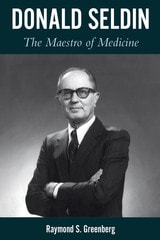
Donald Seldin
The Maestro of MedicineBy Raymond S. Greenberg
University of Texas Press, 2020
No one would have blamed Donald Seldin for running away. When he arrived at Southwestern Medical College in 1951, it was a collection of hastily repurposed military shacks creaking in the wind. On practically day one he became chair of the department of medicine—when the only other full-time professors departed.
By the time he stepped down thirty-six years later, Seldin had transformed a sleepy medical college into the University of Texas Southwestern Medical Center—a powerhouse of research and patient care and an anchor of the city of Dallas. Raymond Greenberg, a physician-scholar, tells Seldin's story of perseverance and intellectual triumph. Drawing on interviews with Seldin's trainees and colleagues—and on Seldin's own words—Greenberg chronicles the life of the Brooklyn boy who became one of Texas's foremost citizens and taught decades of men and women to heal. A pioneering nephrologist, Seldin devoted his career to developing the specialty; educating students, residents, and fellows; caring for patients; and nurturing basic research.
Seldin was a wildcatter in the best sense. He declined the comfortable prestige of Harvard and Yale and instead embraced a worthy challenge with an unflagging sense of mission. Graceful and richly detailed, The Maestro of Medicine captures an inspiring life of achievement and service.
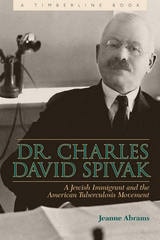
Dr. Charles David Spivak
A Jewish Immigrant and the American Tuberculosis MovementJeanne Abrams
University Press of Colorado, 2009
Born in Russia in 1861, Spivak immigrated to the United States in 1882 and received his medical degree from Philadelphia's Jefferson Medical College by 1890. In 1896, his wife's poor health brought them to Colorado. Determined to find a cure, Spivak became one of the most charismatic and well-known leaders in the American Tuberculosis Movement. His role as director of Denver's Jewish Consumptives' Relief Society sanatorium allowed his personal philosophies to strongly influence policies. His unique blend of Yiddishkeit, socialism, and secularism - along with his belief in treating the "whole" patient - became a model for integrating medical, social, and rehabilitation services that was copied across the country.
Not only a national leader in the crusade against tuberculosis but also a luminary in the American Jewish community, Dr. Charles Spivak was a physician, humanitarian, writer, linguist, journalist, administrator, social worker, ethnic broker, and medical, public health, and social crusader. Abrams's biography will be a welcome addition to anyone interested in the history of medicine, Jewish life in America, or Colorado history.
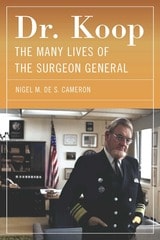
Dr. Koop
The Many Lives of the Surgeon GeneralNigel M. de S. Cameron
University of Massachusetts Press, 2025
The first full biography of Reagan's famous Surgeon General, who put science before politics—cutting smoking by 25%, leading the fight against AIDS, and shocking both liberals and conservatives on abortion.
When Ronald Reagan chose C. Everett Koop to be Surgeon General of the United States in 1981, liberal politicians, women's groups, and even the public health community opposed the nomination because of his conservative social views and strong anti-abortion beliefs. By the time he left office in 1989, the same people who had vilified him as “Dr. Kook” were singing his praises, and many conservative politicians and activists who had championed his nomination were criticizing him as a traitor. He had also become “the only surgeon general [who was] a household name,” according to the Associated Press, because of his ubiquitous media exposure around the HIV/AIDS crisis, his unique look, and his savvy with the press. How had Koop remade himself and this once major government office, which sounded grand but in the 1960s had been stripped to a minor advisory role?
As Nigel M. de S. Cameron shows, Koop was, above all, guided in his decisions by his unwavering physician’s commitment to saving lives. Even in the face of political pressures and what many expected to be his personal beliefs, he focused on science and public health. On smoking, abortion, and AIDS he openly defied Republican politicians and alienated New Right conservatives because his reading of the science did not support their ideologies. It was this adherence to science, health, and office that led him to refuse to campaign on abortion, seek compromise on the disabled “Baby Doe” case, relentlessly go after Big Tobacco, and finally reach out to the gay community as AIDS and fear of AIDS exploded. Both supporters and detractors consistently misjudged him.
This first full biography of Koop draws on thousands of documents and hundreds of interviews with family, friends, and colleagues to tell the story of the precocious boy from Brooklyn who was already the world’s most celebrated pediatric surgeon when he became Surgeon General and one of the most recognizable public figures in late-20th century America. Koop remains a sterling example—to both left and right—of how public officials should conduct themselves.