Results by title
164 books match the query 'Medical care' and 14 start with d
Death Foretold
Prophecy and Prognosis in Medical CareNicholas A. Christakis
University of Chicago Press, 2000
"Highly recommended for everyone from patients wrestling with their personal prognosis to any medical practitioner touched by this bioethical dilemma."—Library Journal, starred review
"[T]he first full general discussion of prognosis ever written. . . . [A] manifesto for a form of prognosis that's equal parts prediction-an assessment of likely outcomes based on statistical averages-and prophecy, an intuition of what lies ahead."—Jeff Sharlet, Chicago Reader
"[S]ophisticated, extraordinarily well supported, and compelling. . . . [Christakis] argues forcefully that the profession must take responsibility for the current widespread avoidance of prognosis and change the present culture. This prophet is one whose advice we would do well to heed."—James Tulsky, M.D., New England Journal of Medicine
Demanding Medical Excellence
Doctors and Accountability in the Information AgeMichael L. Millenson
University of Chicago Press, 2000
"If you read only one book this year, read Demanding Medical Excellence. It's that good, and the revolution it describes is that important."—Health Affairs
"Millenson has done yeoman's work in amassing and understanding that avalanche of data that lies beneath most of the managed-care headlines. . . . What he finds is both important and well-explained: inconsistency, overlap, and inattention to quality measures in medical treatment cost more and are more dangerous than most cost-cutting measures. . . . [This book] elevates the healthcare debate to a new level and deserves a wide readership."—Library Journal
"An involving, human narrative explaining how we got to where we are today and what lies ahead."—Mark Taylor, Philadelphia Inquirer
"Read this book. It will entertain you, challenge, and strengthen you in your quest for better accountability in health care."—Alex R. Rodriguez, M.D., American Journal of Medical Quality
"Finally, a health-care book that doesn't wring its hands over the decline of medicine at the hands of money-grubbing corporations. . . . This is a readable account of what Millenson calls a 'quiet revolution' in health care, and his optimism makes for a refreshing change."—Publishers Weekly
"With meticulous detail, historical accuracy, and an uncommon understanding of the clinical field, Millenson documents our struggle to reach accountability."—Saty Satya-Murti, M.D., Journal of the American Medical Association
Diabetes among the Pima
Stories of SurvivalCarolyn Smith-Morris
University of Arizona Press, 2006
Click here for a Facilitator’s Guide to Diabetes among the Pima

Diary of Our Fatal Illness
Charles Bardes
University of Chicago Press, 2017
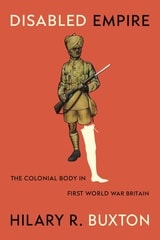
Disabled Empire
The Colonial Body in First World War BritainHilary R. Buxton
University of Chicago Press, 2026
Disabled Empire examines how imperial precedents and racial ideologies shaped the medical treatments that the British state offered to several million Black and brown servicemen during World War I. In recovering the voices and experiences of these soldiers, Hilary R. Buxton illustrates how they navigated the institutional culture of the imperial military and how they helped to shape health and welfare systems well beyond the interwar period.
The Great War was the first time that troops and volunteers from nearly all reaches of the Empire participated in the war effort side-by-side. Despite official attempts at segregation, colonial troops met in trenches, mobile camps, casualty clearing stations, hospital ships, and convalescent homes. Just as importantly, those organizing treatment encountered men of different ethnicities, religions, and cultures from across and beyond the British Empire. For British officials, this moment offered an opportunity to remake colonial efficiency and medical knowledge. Yet, as Buxton shows, colonial servicemen were not passive subjects in a wartime laboratory: they were vocal participants who demanded a say in the therapies prescribed to them, the rations they required, the psychiatric care they received, and the prosthetics with which they were fitted. Together, these encounters profoundly remade colonial relations, reshaping imperial science, administration, and colonial understandings of subjecthood.
Disabled Empire pushes literature on the war and medicine outside its national, Eurocentric focus to confront the colonial logic of global health inequity.

Disease And Medical Care In The Mountain West
Essays On Region, History, And PracticeMartha L. Hildreth
University of Nevada Press, 1998
This collection of eight essays examines the health, disease, and medical care of the American West—an area flanked by the Rocky Mountains, Sierra Nevada, and Cascade Mountains. Topics include Mormons and the Thomsonian Movement in the nineteenth century, the silicosis epidemic in hardrock mining, Native American health, frontier nursing, and Chinese medicine.
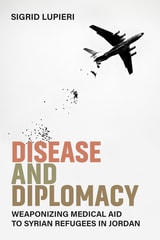
Disease and Diplomacy
Weaponizing Medical Aid to Syrian Refugees in JordanSigrid Lupieri
University of Michigan Press, 2026
When millions of Syrians fled civil war after 2011, international donors and humanitarian organizations mobilized to provide assistance to neighboring countries. Focusing on Jordan—one of the world’s largest refugee hosting states—Disease and Diplomacy investigates how medical aid to refugees operates as an instrument of diplomacy and control within the global refugee system. It argues that health, far from being an apolitical humanitarian good, is a bargaining tool that states commodify to extract resources and concessions.
Drawing on years of field research, interviews, and policy analysis, the book shows how the Jordanian government, international donors, and humanitarian agencies turned healthcare for refugees into a tool for negotiating power, resources, and responsibility. In these cases, refugees, caught within these negotiations, often found their access to care determined not by medical need, but by political calculation. Developing the concept of the weaponization of medical aid, the book extends theories of migration diplomacy and refugee rentierism to show how global power dynamics shape who receives healthcare. The analysis identifies a self-reinforcing “crisis loop” that privileges short-term, highly visible responses while neglecting chronic and long-term needs. Disease and Diplomacy advances an interdisciplinary framework for understanding how humanitarian practices reinforce global inequalities and argues for more equitable approaches to refugee health and responsibility-sharing in the international system.

Disease, War, and the Imperial State
The Welfare of the British Armed Forces during the Seven Years' WarErica Charters
University of Chicago Press, 2014
In Disease, War, and the Imperial State, Erica Charters demonstrates how disease played a vital role in shaping strategy and campaigning, British state policy, and imperial relations during the Seven Years’ War. Military medicine was a crucial component of the British war effort; it was central to both eighteenth-century scientific innovation and the moral authority of the British state. Looking beyond the traditional focus of the British state as a fiscal war-making machine, Charters uncovers an imperial state conspicuously attending to the welfare of its armed forces, investing in medical research, and responding to local public opinion. Charters shows military medicine to be a credible scientific endeavor that was similarly responsive to local conditions and demands.
Disease, War, and the Imperial State is an engaging study of early modern warfare and statecraft, one focused on the endless and laborious task of managing manpower in the face of virulent disease in the field, political opposition at home, and the clamor of public opinion in both Britain and its colonies.
Doctors and Their Workshops
Economic Models of Physician BehaviorMark V. Pauly
University of Chicago Press, 1980
Doctors are obviously influential in determining the costs of their services. But even more important, many believe, is the influence physicians have over the use and cost of nonphysician health-care resources and services. Doctors and Their Workshops is the first comprehensive attempt to use economic analysis to understand some of the physician effects on nonphysician aspects of health care.

Dr. Mary Walker
An American Radical, 1832-1919Harris, Sharon M
Rutgers University Press, 2009
Perhaps more telling about her life are the words of an 1866 London Anglo-American Times reporter, "Her strange adventures, thrilling experiences, important services and marvelous achievements exceed anything that modern romance or fiction has produced. . . . She has been one of the greatest benefactors of her sex and of the human race."
In this biography Sharon M. Harris steers away from a simplistic view and showcases Walker as a Medal of Honor recipient, examining her work as an activist, author, and Civil War surgeon, along with the many nineteenth-century issues she championed:political, social, medical, and legal reforms, abolition, temperance, gender equality, U.S. imperialism, and the New Woman.
Rich in research and keyed to a new generation, Dr. Mary Walker captures its subject's articulate political voice, public self, and the realities of an individual whose ardent beliefs in justice helped shape the radical politics of her time.
Drum and stethoscope
integrating ethnomedicine and biomedicine in BoliviaJoseph William Bastien
University of Utah Press, 1992

Duty to Serve, Duty to Conscience
The Story of Two Conscientious Objector Combat Medics during the Vietnam WarJames C. Kearney
University of North Texas Press, 2023
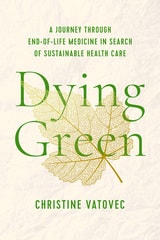
Dying Green
A Journey through End-of-Life Medicine in Search of Sustainable Health CareChristine Vatovec
Rutgers University Press, 2023
In Dying Green, award-winning educator Christine Vatovec offers an engaging study that asks us to consider the broader environmental sustainability of health care. Through a comparative analysis of the care provided to terminally ill patients in a conventional cancer ward, a palliative care unit, and an acute-care hospice facility, she shows how decisions made at a patient’s bedside govern the environmental footprint of the healthcare industry. Likewise, Dying Green offers insights on the many opportunities that exist for reducing the ecological impacts of medical practices in general, while also enhancing care for the dying in particular. By envisioning a more sustainable approach to care, this book offers a way forward that is better for both patients and the planet.
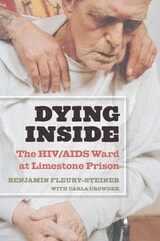
Dying Inside
The HIV/AIDS Ward at Limestone PrisonBenjamin Fleury-Steiner
University of Michigan Press, 2008
"The HIV+ men incarcerated in Limestone Prison's Dorm 16 were put there to be forgotten. Not only do Benjamin Fleury-Steiner and Carla Crowder bring these men to life, Fleury-Steiner and Crowder also insist on placing these men in the middle of critical conversations about health policy, mass incarceration, and race. Dense with firsthand accounts, Dying Inside is a nimble, far-ranging and unblinking look at the cruelty inherent in our current penal policies."
---Lisa Kung, Director, Southern Center for Human Rights
"The looming prison health crisis, documented here at its extreme, is a shocking stain on American values and a clear opportunity to rethink our carceral approach to security."
---Jonathan Simon, University of California, Berkeley
"Dying Inside is a riveting account of a health crisis in a hidden prison facility."
---Michael Musheno, San Francisco State University, and coauthor of Deployed
"This fresh and original study should prick all of our consciences about the horrific consequences of the massive carceral state the United States has built over the last three decades."
---Marie Gottschalk, University of Pennsylvania, and author of The Prison and the Gallows
"An important, bold, and humanitarian book."
---Alison Liebling, University of Cambridge
"Fleury-Steiner makes a compelling case that inmate health care in America's prisons and jails has reached the point of catastrophe."
---Sharon Dolovich, University of California, Los Angeles
"Fleury-Steiner's persuasive argument not only exposes the sins of commission and omission on prison cellblocks, but also does an excellent job of showing how these problems are the natural result of our nation's shortsighted and punitive criminal justice policy."
---Allen Hornblum, Temple University, and author of Sentenced to Science
Dying Inside brings the reader face-to-face with the nightmarish conditions inside Limestone Prison's Dorm 16---the segregated HIV ward. Here, patients chained to beds share their space with insects and vermin in the filthy, drafty rooms, and contagious diseases spread like wildfire through a population with untreated---or poorly managed at best---HIV.
While Dorm 16 is a particularly horrific human rights tragedy, it is also a symptom of a disease afflicting the entire U.S. prison system. In recent decades, prison populations have exploded as Americans made mass incarceration the solution to crime, drugs, and other social problems even as privatization of prison services, especially health care, resulted in an overcrowded, underfunded system in which the most marginalized members of our society slowly wither from what the author calls "lethal abandonment."
This eye-opening account of one prison's failed health-care standards is a wake-up call, asking us to examine how we treat our forgotten citizens and compelling us to rethink the American prison system in this increasingly punitive age.