Results by title
273 books match the query 'Memoir' and 16 start with d
Daddy’s Money
A Memoir of Farm and FamilyJo McDougall
University of Arkansas Press, 2011
Danger Pay
Memoir of a Photojournalist in the Middle East, 1984-1994By Carol Spencer Mitchell
University of Texas Press, 2008
An engrossing memoir in which a photojournalist records both the precursors to today’s conflicts in the Middle East and her own deeply felt conviction that news coverage of the region actually increases the conflicts there.
"You're going where?" Carol Spencer Mitchell's father demanded as she set off in 1984 to cover the Middle East as a photojournalist for Newsweek and other publications. In this intensely thoughtful memoir, Spencer Mitchell probes the motivations that impelled her—a single Jewish woman—to document the turmoil roiling the Arab world in the 1980s and 1990s, as well as how her experiences as a photojournalist compelled her to set aside her cameras and reexamine the way images are created, scenes are framed, and "real life" is packaged for specific news stories.
In Danger Pay, Spencer Mitchell takes us on a harrowing journey to PLO military training camps for Palestinian children and to refugee camps in the Gaza Strip before, during, and after the first intifada. Through her eyes, we experience the media frenzy surrounding the 1985 hijackings of TWA Flight #847 and the Italian cruise liner Achille Lauro. We meet Middle Eastern leaders, in particular Yasser Arafat and King Hussein of Jordan, with whom Spencer Mitchell developed close working relationships. And we witness Spencer Mitchell's growing conviction that the Western media's portrayal of conflicts in the Middle East actually helps to fuel those conflicts—a conviction that eventually, as she says, "shattered [her] career."
Although the events that Spencer Mitchell records took place decades ago, their repercussions reverberate in the MIddle Eastern conflicts of today. Likewise, her concern about "the triumph of image over reality" takes on greater urgency as our knowledge of the world becomes ever more filtered by virtual media.
Darkroom
A Memoir in Black and WhiteLila Quintero Weaver
University of Alabama Press, 2012
A Latina girl’s journey through the shadows of the civil rights era.
Darkroom is a deeply moving graphic memoir that chronicles Lila Quintero Weaver’s experience growing up as an Argentine immigrant in 1960s Alabama during the height of the civil rights movement. Through striking black-and-white illustrations and heartfelt narrative, Weaver explores the complexities of race, identity, and belonging in a society divided by segregation. Neither Black nor White, her family occupies a unique position that offers a powerful lens on the struggles for justice and equality. This coming-of-age story blends personal history with pivotal social change, inviting readers to reflect on themes of immigration, cultural assimilation, and moral courage. Darkroom is both an intimate portrait and a universal tale of resilience, making it an essential read for those interested in civil rights, memoirs, and graphic storytelling.
Daughter in Retrograde
A MemoirCourtney Kersten
University of Wisconsin Press, 2021
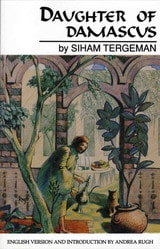
Daughter of Damascus
A MemoirBy Siham Tergeman
University of Texas Press, 1993
Daughter of Damascus presents a personal account of a Syrian woman's youth in the Suq Saruja ("old city") quarter of Damascus in the 1940s. Siham Tergeman wrote this book to preserve the details of a "genuine Arab past" for Syrian young people. In it, she relates the customs pertaining to marriage, birth, circumcision, and death. She writes of Ramadan festivities, family picnics to the orchards of the Ghuta, weekly trips to the public bath, her school experiences, Damascene cooking, peddlers' calls, and proverbs. She includes the well-known dramatic skits, songs, and tales of the Syrian Hakawati storytellers. And, through the words of her father, she describes the difficult period when Syrians were involved in the Balkans War and World War I. All this wealth of ethnographic detail is set in real-life vignettes that make the book lively and entertaining reading.
Little has been published about modern Syrian social life. In this English translation of an Arabic memoir originally published in Syria in 1978, Tergeman appeals to a wide audience. General readers will find a charming story, while scholars can find source material for university courses in anthropology, sociology, family and women's studies, and Middle Eastern area studies. The introduction by anthropologist Andrea Rugh portrays Syrian social life for Western readers and points out some of the nuances that might escape the attention of those unacquainted with Arab culture.

Days of Twilight, Nights of Frenzy
A MemoirWerner Schroeter and Claudia Lenssen
University of Chicago Press, 2017
Written in the last years of his life, Days of Twilight, Nights of Frenzy sees Schroeter looking back at his life with the help of film critic and friend Claudia Lenssen. Born in 1945, Schroeter grew up near Heidelberg and spent just a few weeks in film school before leaving to create his earliest works. Over the years, he would work with acclaimed artists, including Marianne Hopps, Isabelle Huppert, Candy Darling, and Christine Kaufmann. In the 1970s, Schroeter also embarked on prolific parallel careers in theater and opera, where he worked in close collaboration with the legendary diva Maria Callas. His childhood; his travels in Italy, France, and Latin America; his coming out and subsequent life as an gay man in Europe; and his run-ins with Hollywood are but a few of the subjects Schroeter recalls with insights and characteristic understated humor.
A sharp, lively, even funny memoir, Days of Twilight, Nights of Frenzy captures Schroeter’s extravagant life vividly over a vast prolific career, including many stories that might have been lost were it not for this book. It is sure to fascinate cinephiles and anyone interested in the culture around film and the arts.
Dead Weight
A Memoir in EssaysRandall Horton
Northwestern University Press, 2022
The memoir begins with a conversation between Horton and Ralph Ellison’s Invisible Man statue in New York City. Their imagined dialogue examines the psychological impact of racism on Black men and boys, including Horton’s separation from his mother, immediately after his birth, in a segregated Alabama hospital. From his current life as a professor and prison reformer, Horton looks back on his experiences as a drug smuggler and trafficker during the 1980s–1990s as well as the many obstacles he faced after his release. He also examines the lasting impact of his drug activity on those around him, reflecting on the allure of economic freedom and the mental escapism that cocaine provided, an allure so strong that both sellers and users were willing to risk prison. Horton shares historical context and vivid details about people caught in the war on drugs who became unsuspecting protagonists in somebody else’s melodrama.
Lyrical and gripping, Dead Weight reveals the lifelong effects of one man’s incarceration on his psyche, his memories, and his daily experience of American society.
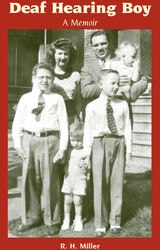
Deaf Hearing Boy
A MemoirR.H. Miller
Gallaudet University Press, 2004
Born in 1938, R. H. Miller was the oldest of four hearing boys with deaf parents in Defiance, Ohio, a small agricultural community. Deaf Hearing Boy is Miller’s compelling account of the complex dynamics at work in his family, including the inter-generational conflicts in which he found himself, the oldest child of deaf adults (CODA), caught in the middle.
In 1942, Miller’s family moved to Toledo so that his father could find work. There, they fared well during World War II because his father worked in manufacturing as a member of Roosevelt’s “civilian army.” Miller’s mother loved urban life, where she and the family could immerse themselves in the Toledo Deaf community, especially at the Toledo Silent Club. The end of the war marked the end of prosperity for the Miller family. Returning soldiers displaced all of the deaf workers, who then had to scrape for a living. The Millers, close to destitution, returned to the family farm in Defiance.
Miller depicts the return to farm life as one of tremendous hardship, both economically and psychologically. They lived off the land from hand to mouth. He also describes his grandparents’ distrust of his parents because they were deaf, and he writes candidly of his role as an unwilling agent in the misunderstandings between them. Miller also portrays the bias he endured in school and town. Parents of girlfriends would force their daughters to stop dating him for fear that his family’s deafness would be passed down.
In the early 1950s, Miller’s grandparents sold the farm and his parents returned to industrial work. Miller excelled at school, and eventually left home for college and life in academia. His later reflections reveal a deep, abiding respect for his parents, despite his early difficulties. Deaf Hearing Boy presents an intimate depiction of a changing time for hearing and deaf Americans alike, when the family farm disappeared and the isolation of Deaf people also began to fade. In witnessing this transformation of society through his family’s life, Miller adds an important chapter to the collective narrative of Deaf people, one made all the more poignant and vivid as told by their Deaf Hearing boy.
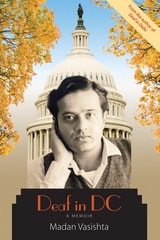
Deaf in DC
A MemoirMadan Vasishta
Gallaudet University Press, 2011
In his first memoir, Madan Vasishta described being a deaf boy in his homeland India, where “deaf” meant someone who is not human. After rising from herding cattle to being a respected photographer in Delhi, his first memoir concluded with his acceptance at Gallaudet College far away in America. Vasishta’s new memoir begins with his arrival in Washington, DC in 1967 with $40.00 in his pocket and very little knowledge of the new worlds he was entering.
Vasishta faced myriad challenges from the outset— he knew no American Sign Language and could not speech read, yet he found himself thrust into classes at Gallaudet two weeks into the semester. Cultural differences mystified him, such as how all American car accidents were someone else’s fault even when one’s car hits a stationary object. He was amazed that his fellow students did not deride him for his mistakes, unlike in India where he would have been scorned for his weakness. After five years, he returned home to India for a visit and was stunned to learn that he no longer fit in, that “even if you do not have an American Dream, the American Dream will have you.”
Deaf in DC follows Vasishta through half a century living in America. He witnessed the transformation from facing bias as a deaf, foreign man of color who could not get a job despite having a Ph.D., to receiving five offers as a school superintendent in the wake of the Civil Rights movement and Deaf President Now. His new memoir reflects a genuine worldview informed by the sage perceptions of a person who has lived widely in many worlds.
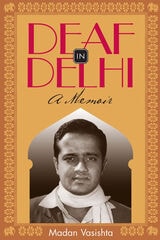
Deaf in Delhi
A MemoirMadan Vasishta
Gallaudet University Press, 2006
Vasishta’s story reflects the India of his youth, an emerging nation where most people struggled with numbing poverty and depended upon close family ties, tradition, and faith to see them through. His family’s search for a cure took him to a host of medical specialists and just as many sadhus and mahatmas, holy men and priests. The school in his small village was ill-prepared to educate deaf students then, so he herded the family cattle, usually the work of hired servants. Vasishta refused to accept this as his final lot in life and fantasized constantly about better jobs. Eventually, he moved to Delhi where his dream of becoming a photographer came true. He also discovered the Delhi Deaf community that, with his family, helped him to achieve an even higher goal, traveling to America to earn a degree at Gallaudet College.
Vasishta, a natural raconteur, imbues Deaf in Delhi with the ever-present ebullience that served him so well in his journey. Readers will savor his good humor and honest observations and look forward to his next book with great relish.
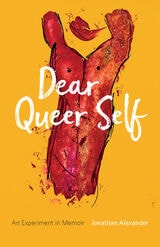
Dear Queer Self
An Experiment in MemoirJonathan Alexander
Acre Books, 2022
In this unconventional memoir, Jonathan Alexander addresses wry and affecting missives to a conflicted younger self. Focusing on three years—1989, 1993, and 1996—Dear Queer Self follows the author through the homophobic heights of the AIDS epidemic, the fall of the Berlin Wall, the election of Bill Clinton, and the steady advancements in gay rights that followed. With humor and wit afforded by hindsight, Alexander relives his closeted college years, his experiments with his sexuality in graduate school, his first marriage to a woman, and his budding career as a college professor.
As he moves from tortured self-denial to hard-won self-acceptance, the author confronts the deeply uncomfortable ways he is implicated in his own story. More than just a coming-out narrative, Dear Queer Self is both an intimate psychological exploration and a cultural examination—a meshing of inner and outer realities and a personal reckoning with how we sometimes torture the truth to make a life. It is also a love letter, an homage to a decade of rapid change, and a playlist of the sounds, sights, and feelings of a difficult, but ultimately transformative, time.
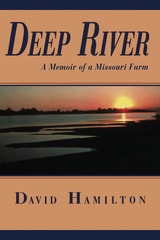
Deep River
A Memoir of a Missouri FarmDavid Hamilton
University of Missouri Press, 2014
Deep River uncovers the layers of history—both personal and regional—that have accumulated on a river-bottom farm in west-central Missouri. This land was part of a late frontier, passed over, then developed through the middle of the last century as the author's father and uncle cleared a portion of it and established their farm.
Hamilton traces the generations of Native Americans, frontiersmen, settlers, and farmers who lived on and alongside the bottomland over the past two centuries. It was a region fought over by Union militia and Confederate bushwhackers, as well as by their respective armies; an area that invited speculation and the establishment of several small towns, both before and after the Civil War; land on which the Missouri Indians made their long last stand, less as a military force than as a settlement and civilization; land that attracted French explorers, the first Europeans to encounter the Missouris and their relatives, the Ioways, Otoes, and Osage, a century before Lewis and Clark. It is land with a long history of occupation and use, extending millennia before the Missouris. Most recently it was briefly and intensively receptive to farming before being restored in large part as state-managed wetlands.
Deep River is composed of four sections, each exploring aspects of the farm and its neighborhood. While the family story remains central to each, slavery and the Civil War in the nineteenth century and Native American history in the centuries before that become major themes as well. The resulting portrait is both personal memoir and informal history, brought up from layers of time, the compound of which forms an emblematic American story.
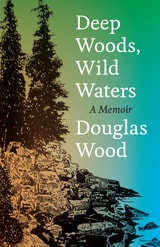
Deep Woods, Wild Waters
A MemoirDouglas Wood
University of Minnesota Press, 2025
A journey through the wilds of nature and the twists and turns of daily life with an icon of the North Woods—now in paperback
Wait, young Douglas’s grandfather says as the bobber twitches on the surface of Little Lake. Be patient. And so begins an encounter with the wonder and promise of nature that will last a lifetime. Deep Woods, Wild Waters traces the winding path that carried Douglas Wood from one marvel to the next, through a landscape of rocks, woods, and waters, with stops along the way for questions and reflections that link human nature to the larger mysteries of the natural world.
Like life itself, the author’s way is not linear. One landmark leads back to a favorite campsite, another prompts him to consider the “gospel of rocks,” another launches him into the wilderness beyond the stars—a contemplation of time and space and humanity’s place in all of it. The creator of thirty-four books, including the classic Old Turtle, and an expert woodsman and wilderness canoe guide, Wood brings all his storytelling and bushwhacking skills to bear as he takes us hurtling down wild rapids, crossing stormy lakes, or simply navigating the treacherous currents and twisty trails of everyday life.
A warm, generous, and knowing guide, Wood maps a journey that, as he says, “anyone can take, through a landscape anyone can know.” Turning the pages, hiking the portages, running the rapids, or scanning the wild country from a high promontory, he invites us to say, in a soul-satisfying moment of recognition, “I know that place.”

Dizzy
A MemoirRachel Weaver
West Virginia University Press, 2026
Gold Medal Winner, Living Now Book Awards, Inspirational Memoir (Female)
“An arresting new memoir….”
– Maureen Corrigan, NPR’s Fresh Air
Beverly Donofrio, author of Riding in Cars with Boys, says “Dizzy is a testament to the power of hope. Weaver’s courage and strength are so inspiring they encourage the same in the reader. If all of that isn’t enough, the beauty and agility of the prose may make you regret reaching the last page.”
In her early thirties, Rachel Weaver woke up dizzy and unable to function. She spent the next ten years seeing more than thirty medical practitioners before receiving a diagnosis, and then another eight years before finding relief from her condition. Dizzy is amedical mystery and a cautionary tale about our broken healthcare system. It is a story about learning to live with life's uncertainty, persevering in the pursuit of answers, and striving to find joy in an imperfect yet beautiful world.

Dubious Mandate
A Memoir of the UN in Bosnia, Summer 1995Phillip Corwin
Duke University Press, 1999
Sympathetic to the UN’s achievements, yet skeptical of its acquiescence to the use of military force, Corwin is critical both of the Bosnian government’s tactics for drawing NATO into the conflict and of NATO’s eagerness to make peace by waging war. He challenges the popular depiction of the Bosnian government as that of noble victim, arguing that the leaders of all three sides in the conflict were “gangsters wearing coats and ties.” Highly caustic about Western reportage, he examines the policies of various Western political and military leaders and gives a detailed account of a pivotal phase of the war in Bosnia, a period that culminated with NATO’s massive bombing of Bosnian Serb targets and ultimately led to the Dayton Peace Agreement. Without a proper understanding of this critical period, he argues, it is difficult to understand the greater scope of the conflict. Corwin also offers insightful portraits of some of the leading players in the Bosnian drama, including Yasushi Akashi, the UN’s top official in the former Yugoslavia in 1994–95; General Rupert Smith, the British commander in Sarajevo in 1995; and Hasan Muratovic, a future Bosnian prime minister.
Capturing the essence of a tense and difficult time, Dubious Mandate will interest diplomats, politicians, military personnel, scholars, and those still trying to fathom the continuing mission of the United Nations and the unfolding of events in the former Yugoslavia during the 1990s.
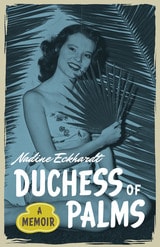
Duchess of Palms
A MemoirBy Nadine Eckhardt
University of Texas Press, 2009
A “fifties girl” tells the fascinating story of her marriages to novelist Billy Lee Brammer and Congressman Bob Eckhardt, and how these relationships propelled her into the multifaceted life she led on her own terms.
Child of the Great Depression, teenage "Duchess of Palms" beauty queen, wife of an acclaimed novelist and later of a brilliant U.S. congressman, and ultimately a successful single working woman and mother, Nadine Eckhardt has lived a fascinating life. In this unique, funny, and honest memoir, she recounts her journey from being a "fifties girl" who lived through the men in her life to becoming a woman in her own right, working toward her own goals.
Eckhardt's first marriage to writer Billy Lee Brammer gave her entrée to liberal political and literary circles in Austin and Washington, where she and Brammer both worked for Senator Lyndon B. Johnson. She describes the heady excitement of LBJ's world—a milieu that Brammer vividly captured in his novel The Gay Place. She next recalls her second marriage to Bob Eckhardt, whom she helped get elected to the U.S. House of Representatives, as well as her growing involvement with the counterculture of social protest, sexual revolution, and drug use. Eckhardt honestly recounts how the changing times changed her perception of herself, recalling that "I didn't know how to achieve for myself, only for others, and I felt ripped off and empty." This painful realization opened the door to a new life for Eckhardt. Her memoir concludes with a joyful description of her multifaceted later life as a restaurateur, assistant to Molly Ivins, writer, and center of a wide circle of friends.