Results by title
85 books match the query 'Men's Studies' and 2 start with d

Dangerous Masculinity
Fatherhood, Race, and Security Inside America's PrisonsAnna Curtis
Rutgers University Press, 2019
For incarcerated fathers, prison rather than work mediates access to their families. Prison rules and staff regulate phone privileges, access to writing materials, and visits. Perhaps even more important are the ways in which the penal system shapes men’s gender performances. Incarcerated men must negotiate how they will enact violence and aggression, both in terms of the expectations placed upon inmates by the prison system and in terms of their own responses to these expectations. Additionally, the relationships between incarcerated men and the mothers of their children change, particularly since women now serve as “gatekeepers” who control when and how they contact their children. This book considers how those within the prison system negotiate their expectations about “real” men and “good” fathers, how prisoners negotiate their relationships with those outside of prison, and in what ways this negotiation reflects their understanding of masculinity.
[more]
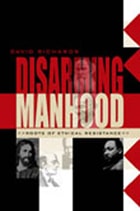
Disarming Manhood
Roots of Ethical ResistanceDavid A.J. Richards
Ohio University Press, 2005
Masculine codes of honor and dominance often are expressed in acts of violence, including war and terrorism. In Disarming Manhood: Roots of Ethical Resistance, David A.J. Richards examines the lives of five famous men—great leaders and crusaders—who actively resisted violence and presented their causes with more humane alternatives.Richards argues that Winston Churchill, William Lloyd Garrison, Mohandas Gandhi, Martin Luther King, and Leo Tolstoy shared a psychology whose nonviolent roots were deeply influenced by a loving, maternalistic ethos deeply influenced by the teachings of Jesus of Nazareth. Drawing upon psychology, history, political theory, and literature, Richards threads a connection between these leaders and the maternal figures who profoundly shaped their responses to conflict. Their lives and work underscore how the outlook of maternal care givers and women enables some men to resist the violent responses characteristic of traditional manhood. The voice of nonviolent masculinity has empowered important democratic movements of ethical transformation, including civil disobedience in South Africa, India, and the United States. Disarming Manhood demonstrates that as Churchill, Garrison, Gandhi, King, and Tolstoy carried out their various missions they were galvanized by teachings whose ethical foundations rejected unjust violence and favored peaceful alternatives. Accessibly written and free of jargon, Disarming Manhood's exploration of human nature and maternal bonds will interest a wide audience as it furthers the understanding of human nature itself and contributes to the fields of developmental psychology and feminist scholarship.
[more]