Results by title
683 books match the query 'Middle East' and 20 start with d

Danger Pay
Memoir of a Photojournalist in the Middle East, 1984-1994By Carol Spencer Mitchell
University of Texas Press, 2008
An engrossing memoir in which a photojournalist records both the precursors to today’s conflicts in the Middle East and her own deeply felt conviction that news coverage of the region actually increases the conflicts there.
"You're going where?" Carol Spencer Mitchell's father demanded as she set off in 1984 to cover the Middle East as a photojournalist for Newsweek and other publications. In this intensely thoughtful memoir, Spencer Mitchell probes the motivations that impelled her—a single Jewish woman—to document the turmoil roiling the Arab world in the 1980s and 1990s, as well as how her experiences as a photojournalist compelled her to set aside her cameras and reexamine the way images are created, scenes are framed, and "real life" is packaged for specific news stories.
In Danger Pay, Spencer Mitchell takes us on a harrowing journey to PLO military training camps for Palestinian children and to refugee camps in the Gaza Strip before, during, and after the first intifada. Through her eyes, we experience the media frenzy surrounding the 1985 hijackings of TWA Flight #847 and the Italian cruise liner Achille Lauro. We meet Middle Eastern leaders, in particular Yasser Arafat and King Hussein of Jordan, with whom Spencer Mitchell developed close working relationships. And we witness Spencer Mitchell's growing conviction that the Western media's portrayal of conflicts in the Middle East actually helps to fuel those conflicts—a conviction that eventually, as she says, "shattered [her] career."
Although the events that Spencer Mitchell records took place decades ago, their repercussions reverberate in the MIddle Eastern conflicts of today. Likewise, her concern about "the triumph of image over reality" takes on greater urgency as our knowledge of the world becomes ever more filtered by virtual media.

Dare the Sea
StoriesAli Hosseini
Northwestern University Press, 2023
The stories in Dare the Sea explore Iran’s landscape, culture, and the undercurrent of change affecting its people—both in Iran and the United States. The stories in the first half of the collection are set in Iran in the time before and just after the Iranian Revolution of 1979. Each tale discloses the obstacles rural Iranians lived with on a daily basis and the exigencies of survival: petty theft, corruption, drug trafficking, religion, and love. Stories in the second half take place in exile, where characters are seemingly dropped into American locales like the Midwest or Hawaii, taking in their situation with only the survival skills they’ve learned in their own land and enduring the hardships of being strangers in a new country.
Loosely interconnected by reappearing characters, the stories in Dare the Sea are strongly linked by the country of Iran, its landscape, its history, and its hold on its people.
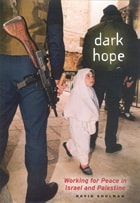
Dark Hope
Working for Peace in Israel and PalestineDavid Shulman
University of Chicago Press, 2007
For decades, we’ve been shocked by images of violent clashes between Israelis and Palestinians in the West Bank and Gaza. But for all their power, those images leave us at a loss: from our vantage at home, it’s hard for us to imagine the struggles of those living in the midst of the fighting. Now, American-born Israeli David Shulman takes us right into the heart of the conflict with Dark Hope, an eye-opening chronicle of his work as a member of the peace group Ta‘ayush, which takes its name from the Arabic for “living together.”
Though Shulman never denies the complexity of the issues fueling the conflict—nor the culpability of people on both sides—he forcefully clarifies the injustices perpetrated by Israel by showing us the human dimension of the occupation. Here we meet Palestinians whose houses have been blown up by the Israeli army, shepherds whose sheep have been poisoned by settlers, farmers stripped of their land by Israel’s dividing wall. We watch as whip-swinging police on horseback attack crowds of nonviolent demonstrators, as Israeli settlers shoot innocent Palestinians harvesting olives, and as families and communities become utterly destroyed by the unrelenting violence of the occupation.
Opposing such injustices, Shulman and his companions—Israeli and Palestinian both—doggedly work through checkpoints to bring aid, rebuild houses, and physically block the progress of the dividing wall. As they face off against police, soldiers, and hostile Israeli settlers, anger mixes with compassion, moments of kinship alternate with confrontation, and, throughout, Shulman wrestles with his duty to fight the cruelty enabled by “that dependable and devastating human failure to feel.”
With Dark Hope, Shulman has written a book of deep moral searching, an attempt to discover how his beloved Israel went wrong—and how, through acts of compassionate disobedience, it might still be brought back.
Decentralization, Local Governance, and Inequality in the Middle East and North Africa
Kristen Kao and Ellen M. Lust, Editors
University of Michigan Press, 2025
A group of international scholars brings together methodologically diverse, original research in Lebanon, Morocco, Syria, and Tunisia to expand the literature on decentralization. Following a preface by Hicham Alaoui, the empirical chapters are arranged into three thematic sections. These focus on subnational variations in the relationships between central and local actors, citizen engagement with state and non-state institutions, and the extent to which representatives reflect their local communities. Together, these chapters provide important insights into governance, participation, and representation in the MENA and open new questions for furthering the study of governance and local development. Only by unpacking perspectives and governance experiences at the micro-level can we understand how decentralization policies affect citizens’ everyday lives.
Decolonizing Independence
Statecraft in Nigeria’s First Republic and Israeli InterventionsLynn Schler
Michigan State University Press, 2022
Decolonizing Israel, Liberating Palestine
Zionism, Settler Colonialism, and the Case for One Democratic StateJeff Halper
Pluto Press, 2021
For decades we have spoken of the 'Israel-Palestine conflict', but what if our understanding of the issue has been wrong all along? This book explores how the concept of settler colonialism provides a clearer understanding of the Zionist movement's project to establish a Jewish state in Palestine, displacing the Palestinian Arab population and marginalizing its cultural presence.
Jeff Halper argues that the only way out of a colonial situation is decolonization: the dismantling of Zionist structures of domination and control and their replacement by a single democratic state, in which Palestinians and Israeli Jews forge a new civil society and a shared political community.
To show how this can be done, Halper uses the 10-point program of the One Democratic State Campaign as a guide for thinking through the process of decolonization to its post-colonial conclusion. Halper's unflinching reframing will empower activists fighting for the rights of the Palestinians and democracy for all.
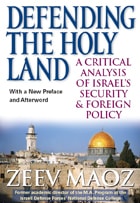
Defending the Holy Land
A Critical Analysis of Israel's Security and Foreign PolicyZeev Maoz
University of Michigan Press, 2008
Most of the wars in which Israel was involved, Maoz shows, were entirely avoidable, the result of deliberate Israeli aggression, flawed decision-making, and misguided conflict management strategies. None, with the possible exception of the 1948 War of Independence, were what Israelis call "wars of necessity." They were all wars of choice-or, worse, folly.
Demonstrating that Israel's national security policy rested on the shaky pairing of a trigger-happy approach to the use of force with a hesitant and reactive peace diplomacy, Defending the Holy Land recounts in minute-by-minute detail how the ascendancy of Israel's security establishment over its foreign policy apparatus led to unnecessary wars and missed opportunites for peace.
A scathing and brilliant revisionist history, Defending the Holy Land calls for sweeping reform of Israel's foreign policy and national security establishments. This book will fundamentally transform the way readers think about Israel's troubled history.
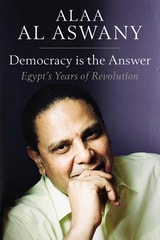
Democracy is the Answer
Egypt's Years of RevolutionAlaa Al Aswany
Gingko, 2014
This book presents, for the first time in English, all of Al-Aswany’s columns from the period, a comprehensive account of the turmoil of the post-revolutionary years, and a portrait of a country and a people in flux. Each column is presented along with a context-setting introduction, as well as notes and a glossary, all designed to give non-Egyptian readers the background they need to understand the events and figures that Al-Aswany chronicles. The result is a definitive portrait of Egypt today—how it got here, and where it might be headed.

Desiring Arabs
Joseph A. Massad
University of Chicago Press, 2007
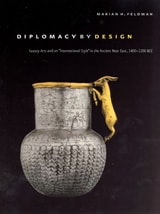
Diplomacy by Design
Luxury Arts and an "International Style" in the Ancient Near East, 1400-1200 BCEMarian H. Feldman
University of Chicago Press, 2006
Marian Feldman's Diplomacy by Design examines the profound connection between art produced during this period and its social context, revealing inanimate objects as catalysts—or even participants—in human dynamics. Feldman's fascinating study shows the ways in which the exchange of these works of art actively mediated and strengthened political relations, intercultural interactions, and economic negotiations. Previous studies of this international style have focused almost exclusively on stylistic attribution at the expense of social contextualization. Written by a specialist in ancient Near Eastern art and archaeology who has excavated and traveled extensively in this area of the world, Diplomacy by Design provides a much broader consideration of the symbolic power of material culture and its centrality in the construction of human relations.
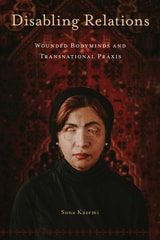
Disabling Relations
Wounded Bodyminds and Transnational PraxisSona Kazemi
Temple University Press, 2026
Kazemi focuses on the disabled dissidents who were incarcerated and tortured by the Islamic regime in the aftermath of the 1979 revolution in Iran, the disabled veterans and civilians wounded during and after the Iran–Iraq War, the disabled survivors of state-sanctioned punitive limb amputation, and the disabled women survivors of acid attacks as a form of gender-based violence. Disabling Relations explains how disabled bodyminds are produced and sustained through the violence of patriarchal, capitalist-imperialist, nationalist, and theocratic social relations. Kazemi uses the theoretical concept of “wounding” as a historical process of becoming and remaining disabled mediated by unequal power relations and “disability consciousness” to show how these survivors come to terms with their disability.
Thinking about critical disability theory in a new way, Kazemi investigates how disability is produced transnationally and the impact that this new theorization can make globally.
In the series Dis/color
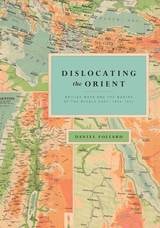
Dislocating the Orient
British Maps and the Making of the Middle East, 1854-1921Daniel Foliard
University of Chicago Press, 2017
Using a wide variety of primary texts and historical maps to show how the idea of the Middle East came into being, Dislocating the Orient will interest historians of the Middle East, the British empire, cultural geography, and cartography.
Dispatches from Pakistan
Madiha R. Tahir
University of Minnesota Press, 2014
Since 9/11, Pakistan has loomed large in the geopolitical imagination of the West. A key ally in the global war on terror, it is also the country in which Osama bin Laden was finally found and killed—and the one that has borne the brunt of much of the ongoing conflict’s collateral damage. Despite its prominence on the front lines and on the front pages, Pakistan has been depicted by Western observers simplistically in terms of its corruption, its fundamentalist Islamic beliefs, and its propensity for violence. Dispatches from Pakistan, in contrast, reveals the complexities, the challenges, and the joys of daily life in the country, from the poetry of Gilgit to the graffiti of Gwadar, from an army barrack in Punjab to the urban politics of Karachi.
This timely book brings together journalists, activists, academics, and artists to provide a rich, in-depth, and intriguing portrait of contemporary Pakistani society. Straddling a variety of boundaries—geographic, linguistic, and narrative—Dispatches from Pakistan is a vital attempt to speak for the multitude of Pakistanis who, in the face of seemingly unimaginable hardships, from drone strikes to crushing poverty, remain defiantly optimistic about their future. While engaging in conversations on issues that make the headlines in the West, the contributors also introduce less familiar dimensions of Pakistani life, highlighting the voices of urban poets, rural laborers, industrial workers, and religious-feminist activists—and recovering Pakistani society’s inquilabi (revolutionary) undercurrents and its hopeful overtones.
Contributors: Mahvish Ahmad; Nosheen Ali, U of California, Berkeley; Shafqat Hussain, Trinity College; Humeira Iqtidar, King’s College London; Amina Jamal, Ryerson U; Hafeez Jamali, U of Texas at Austin; Iqbak Khattak; Zahra Malkani; Raza Mir; Hammad Nasar; Junaid Rana, U of Illinois at Urbana–Champaign; Maliha Safri, Drew U; Aasim Sajjad Akhtar, Lahore U of Management Sciences; Ayesha Siddiqa; Sultan-i-Rome, Government Jahanzeb Postgraduate College, Swat, Pakistan; Saadia Toor, Staten Island College.
Dispatches from the Arab Spring
Understanding the New Middle EastPaul Amar
University of Minnesota Press, 2013
The Arab Spring unleashed forces of liberation and social justice that swept across North Africa and the Middle East with unprecedented speed, ferocity, and excitement. Although the future of the democratic uprisings against oppressive authoritarian regimes remains uncertain in many places, the revolutionary wave that started in Tunisia in December 2010 has transformed how the world sees Arab peoples and politics. Bringing together the knowledge of activists, scholars, journalists, and policy experts uniquely attuned to the pulse of the region, Dispatches from the Arab Spring offers an urgent and engaged analysis of a remarkable ongoing world-historical event that is widely misinterpreted in the West.
Tracing the flows of protest, resistance, and counterrevolution in every one of the countries affected by this epochal change—from Morocco to Iraq and Syria to Sudan—the contributors provide ground-level reports and new ways of teaching about and understanding the Middle East in general, and contextualizing the social upheavals and political transitions that defined the Arab Spring in particular. Rejecting outdated and invalid (yet highly influential) paradigms to analyze the region—from depictions of the “Arab street” as a mindless, reactive mob to the belief that Arab culture was “unfit” for democratic politics—this book offers fresh insights into the region’s dynamics, drawing from social history, political geography, cultural creativity, and global power politics. Dispatches from the Arab Spring is an unparalleled introduction to the changing Middle East and offers the most comprehensive and accurate account to date of the uprisings that profoundly reshaped North Africa and the Middle East.
Contributors: Sheila Carapico, U of Richmond; Nouri Gana, UCLA; Toufic Haddad; Adam Hanieh, SOAS/U of London; Toby C. Jones, Rutgers U; Anjali Kamat; Khalid Medani, McGill U; Merouan Mekouar; Maya Mikdashi, NYU; Paulo Gabriel Hilu Pinto, U Federal Fluminense, Brazil; Jillian Schwedler, Hunter College, CUNY; Ahmad Shokr; Susan Slyomovics, UCLA; Haifa Zangana.
Displaced Allegories
Post-Revolutionary Iranian CinemaNegar Mottahedeh
Duke University Press, 2008
Mottahedeh asserts that, in response to the prohibitions against the desiring look, a new narrative cinema emerged as the displaced allegory of the constraints on the post-Revolutionary Iranian film industry. Allegorical commentary was not developed in the explicit content of cinematic narratives but through formal innovations. Offering close readings of the work of the nationally popular and internationally renowned Iranian auteurs Bahram Bayza’i, Abbas Kiarostami, and Mohsen Makhmalbaf, Mottahedeh illuminates the formal codes and conventions of post-Revolutionary Iranian films. She insists that such analyses of cinema’s visual codes and conventions are crucial to the study of international film. As Mottahedeh points out, the discipline of film studies has traditionally seen film as a medium that communicates globally because of its dependence on a (Hollywood) visual language assumed to be universal and legible across national boundaries. Displaced Allegories demonstrates that visual language is not necessarily universal; it is sometimes deeply informed by national culture and politics.
Displacing Territory
Syrian and Palestinian Refugees in JordanKaren Culcasi
University of Chicago Press, 2023
Based on fieldwork with Palestinian and Syrian refugees in Jordan, Displacing Territory explores how the lived realities of refugees are deeply affected by their imaginings of what constitutes territory and their sense of belonging to different places and territories. Karen Culcasi shows how these individual conceptualizations about territory don’t always fit the Western-centric division of the world into states and territories, thus revealing alternative or subordinated forms and scales of territory. She also argues that disproportionate attention to “refugee crises” in the Global North has diverted focus from other parts of the world that bear the responsibility of protecting the majority of the world’s refugees. By focusing on Jordan, a Global South state that hosts the world’s second-largest number of refugees per capita, this book provides insights to consider alternate ways to handle the situation of refugees elsewhere. In the process, Culcasi brings the reader into refugees’ diverse realities through their own words, inherently arguing against the tendency of many people in the Global North to see refugees as aberrant, burdensome, or threatening.
Dissident Syria
Making Oppositional Arts Officialmiriam cooke
Duke University Press, 2007
A renowned scholar of Arab cultures, cooke spent six months in Syria during the mid-1990s familiarizing herself with the country’s literary scene, particularly its women writers. While she was in Damascus, dissidents told her that to really understand life under Hafiz Asad, she had to speak with playwrights, filmmakers, and, above all, the authors of “prison literature.” She shares what she learned in Dissident Syria. She describes touring a sculptor’s studio, looking at the artist’s subversive work as well as at pieces commissioned by the government. She relates a playwright’s view that theater is unique in its ability to stage protest through innuendo and gesture. Turning to film, she shares filmmakers’ experiences of making movies that are praised abroad but rarely if ever screened at home. Filled with the voices of writers and artists, Dissident Syria reveals a community of conscience within Syria to those beyond its borders.
Divination, Politics, and Ancient Near Eastern Empires
Alan Lenzi
SBL Press, 2014
Advance your understanding of divination’s role in supporting or undermining imperial aspirations in the ancient Near East
This collection examines the ways that divinatory texts in the Hebrew Bible and the ancient Near East undermined and upheld the empires in which the texts were composed, edited, and read. Nine essays and an introduction engage biblical scholarship on the Prophets, Assyriology, the Dead Sea Scrolls, and the critical study of Ancient Empires.
Features:
- Interdisciplinary approaches include propaganda studies
- Essays examine how biblical and other ancient Near Eastern texts were shaped by political and theological empires
- Index of ancient sources
Divine Expectations
An American Woman In Nineteenth-Century PalestineBarbara Kreiger
Ohio University Press, 1999
Barbara Kreiger’s intriguing narrative presents the account of Clorinda Minor, a charismatic American Christian woman whose belief in the Second Coming prompted her to leave a comfortable life in Philadelphia in 1851 and take up agriculture in Palestine.
After her disappointment in a failed prophecy that the End of Days would take place in October 1844, Mrs. Minor determined that the Holy Land was not yet adequately prepared for such an event and decided that it would be her mission to teach the poverty-stricken Jews of Palestine to work the soil. In this very American story, Mrs. Minor, like so many other pioneers of her day, looked to the land as her future.
Even as her mission was distinctly religious, her daily efforts were in the social realm. And although her work brought Jews and Arabs together, and her small farm was a unique settlement where Christians, Muslims, and Jews labored alongside one another, the events detailed in Divine Expectations had dramatic and tragic diplomatic and international repercussions.
With the deft touch of a novelist, Barbara Kreiger weaves the little-known story of Clorinda Minor into the larger context of the region and its history, presenting it in its charming eccentricity and its gripping reality.
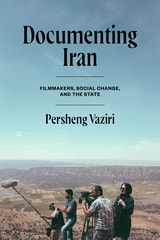
Documenting Iran
Filmmakers and Social ChangePersheng Vaziri
University of Texas Press, 2026
An ethnographic study of how Iranian documentary filmmakers navigate censorship and creativity to shape civic discourse.
Iranian filmmakers have overcome significant obstacles to create a distinctive, globally renowned cinema. Filmmaker and educator Persheng Vaziri explores how documentarians, in particular, have developed a dynamic and creative environment by negotiating limited resources and official constraints. Through their films, they share hard truths—and artful narratives—with fellow Iranians and viewers the world over.
Documenting Iran introduces key historical foundations of documentary filmmaking amid generations of political change—first under the shah and later the Islamic government—with a focus on contemporary filmmakers between 2000 and 2022. Drawing on interviews and ethnographic encounters, Vaziri describes the creative practices and pragmatic choices that provide documentarians relative independence from state censorship and other restrictions on artistic production. Relying on poetic aesthetics, observational filmmaking, international connections, and the accumulated knowledge of a tight-knit local community, filmmakers engage with controversial topics like women’s rights, marriage and divorce laws, environmental degradation, and encounters with Western culture. Documentarians have thus created an activist cinema both subtle and persuasive enough to challenge dogmatic rule and uphold progressive elements of Iranian society.