Results by title
2335 books match the query 'Modern' and 63 start with d
D. H. Lawrence
The Failure and the Triumph of ArtEliseo Vivas
Northwestern University Press, 1960
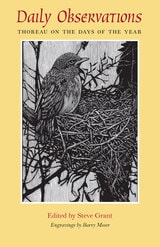
Daily Observations
Thoreau on the Days of the YearSteve Grant
University of Massachusetts Press, 2005
“How many a man has dated a new era in his life from the reading of a book,” wrote Henry David Thoreau in Walden. Today that book continues to provoke, inspire, and change lives all over the world, and each rereading is fresh and challenging. Yet as Thoreau's countless admirers know, there is more to the man than Walden. An engineer, poet, teacher, naturalist, lecturer, and political activist, he truly had multiple lives to lead, and each one speaks forcefully to us today.
Sponsored by the Thoreau Society, the brief, handsomely presented books in this series offer the thoughts of a great writer on a variety of topics, some that we readily associate with him, some that may be surprising. Each volume includes selections from his familiar published works as well as from less well known lectures, letters, and journal entries. The books include original engravings by renowned illustrator and book artist Barry Moser.
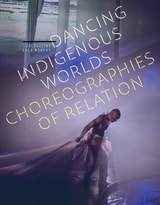
Dancing Indigenous Worlds
Choreographies of RelationJacqueline Shea Murphy
University of Minnesota Press, 2023
The vital role of dance in enacting the embodied experiences of Indigenous peoples
In Dancing Indigenous Worlds, Jacqueline Shea Murphy brings contemporary Indigenous dance makers into the spotlight, putting critical dance studies and Indigenous studies in conversation with one another in fresh and exciting new ways. Exploring Indigenous dance from North America and Aotearoa (New Zealand), she shows how dance artists communicate Indigenous ways of being, as well as generate a political force, engaging Indigenous understandings and histories.
Following specific dance works over time, Shea Murphy interweaves analysis, personal narrative, and written contributions from multiple dance artists, demonstrating dance’s crucial work in asserting and enacting Indigenous worldviews and the embodied experiences of Indigenous peoples. As Shea Murphy asserts, these dance-making practices can not only disrupt the structures that European colonization feeds upon and strives to maintain, but they can also recalibrate contemporary dance.
Based on more than twenty years of relationship building and research, Shea Murphy’s work contributes to growing, and largely underreported, discourses on decolonizing dance studies, and the geopolitical, gendered, racial, and relational meanings that dance theorizes and negotiates. She also includes discussions about the ethics of writing about Indigenous knowledge and peoples as a non-Indigenous scholar, and models approaches for doing so within structures of ongoing reciprocal, respectful, responsible action.

Dancing to Transform
How Concert Dance Becomes Religious in American ChristianityEmily Wright
Intellect Books, 2020
In response to a scarcity of writings on the intersections between dance and Christianity, Dancing to Transform examines the religious lives of American Christians who, despite the historically tenuous place of dance within Christianity, are also professional dancers.
Through a multi-site study of four professional dance companies, Wright conducted participant-observations and ethnographic interviews with artistic directors, choreographers, and company members who self-identify as Christian. She then analyzed choreography from each company to determine how concert dance becomes religious and what effects danced religious practices have for these participants. Her research reveals that the participants turn what they perceive as secular professional dance into different kinds of religious practices in order to actualize individual and communal religious identities—they dance to transform.
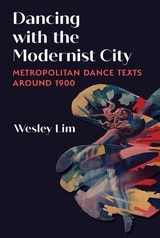
Dancing with the Modernist City
Metropolitan Dance Texts around 1900Wesley Lim
University of Michigan Press, 2024
Drawing on cultural, literary, dance, performance, and queer studies, Dancing with the Modernist City analyzes an array of material from 1896 to 1914—essays, novels, short stories, poetry, newspaper articles, photographs, posters, drawings, and early film. It argues that these writers and artists created a genre called the metropolitan dance text, which depicts dancing figures not on a traditional stage, but with the streets, advertising pillars, theaters, cafes, squares, and even hospitals of an urban setting. Breaking away from the historically male, heteronormative view, this posthumanist mode of writing highlights the visual and episodic unexpectedness of urban encounters. These literary depictions question traditional conceptualizations of space and performance by making the protagonist and the reader feel like they embody the dancer and the movement. In doing so, they upset the conventional depictions of performance and urban spaces in ways paralleling modern dance.
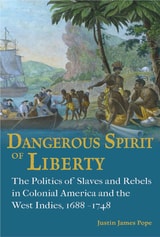
Dangerous Spirit of Liberty
The Politics of Slaves and Rebels in Early America and the West Indies, 1688-1748Justin James Pope
University of Missouri Press, 2024
Dangerous Spirit of Liberty's distinguishing feature is its focus on the role of communication in the development of a rebellious early eighteenth-century Atlantic. Most historians of slavery have presupposed that slave unrest was confined to small locales in the first half of the eighteenth century. In fact, slaves found ways to share news across provinces to great effect. Benefiting from research in the archives of Great Britain, Spain, Barbados, Bermuda, Jamaica, Antigua, the U.S. Virgin Islands, and the mainland United States, the book reveals new evidence of slave communication networks and shows how people of African ancestry shared rumors of emancipation and rebellion in this period. Slaves laboring in colonial commerce and working aboard ships helped foster an increasingly restive Black community. Banished slaves, convicted conspirators accused of plotting insurrection, carried their experiences with them in exile to neighboring colonies. By reconstructing the path of news, the book reveals rumors and reports that particularly resonated among slaves in the early eighteenth century.
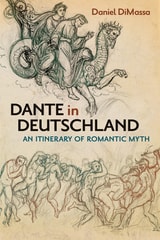
Dante in Deutschland
An Itinerary of Romantic MythDaniel DiMassa
Bucknell University Press, 2022

Dark Mirror
African Americans and the Federal Writers' ProjectJ. J. Butts
The Ohio State University Press, 2021

Darling Queen — Dear old Bones
Queen Whilemina's Correspondence with her English Governess Miss Saxton Winter, 1886–1935Edited by Emerentia van Heuven-van Nes
Amsterdam University Press, 2017

Days on Earth
The Dance of Doris HumphreyMarcia B. Siegel
Duke University Press, 1993
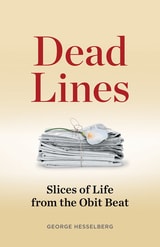
Dead Lines
Slices of Life from the Obit BeatGeorge Hesselberg
Wisconsin Historical Society Press, 2021
In more than forty years at the Wisconsin State Journal, Hesselberg frequently found himself writing about fatal accidents, crime investigations, and the deaths of the wealthy, famous, or notorious. But he was most drawn to the curious, the unknown, and the unsung—the deaths that normally wouldn’t make much of a splash, if any mention at all, in the news columns of a daily paper.
Digging deeper, he uncovered the extraordinary among the ordinary, memorializing the lives of a sword designer, a radio villain, a pioneering female detective, a homeless woman who spoke fluent French, a beloved classroom tarantula, and many more. Their stories are alternately amusing, sad, surprising, and profound. Together they speak to a shared human experience and inspire us to see the people around us with new eyes, valuing the lives while they are still being lived.

Deaf History and Culture in Spain
A Reader of Primary DocumentsBenjamin Fraser
Gallaudet University Press, 2009
In this landmark reader, Benjamin Fraser offers in five parts 44 Spanish documents dating from 1417 to the present, translated for the first time to trace the turbulent history of Deaf culture in Spain. Part I: The Birth of Oralism and Deafness as Metaphor illustrates the predominant impression of deafness as isolation, exemplified by Teresa de Cartagena writings in 1455-60 about deafness as an island. Part II: The Return to Deaf Education highlights writers who wished to restore “the Spanish ‘Art’” of educating deaf students. Lorenzo Hervás y Panduro wrote The Spanish School of Deafmutes, or Method of Teaching Them to Write and Speak the Spanish Language in 1795. Yet, Madrid’s Royal School for Deaf-Mutes, which opened in 1805, taught deaf students using methodical signs adopted from France’s Abbé de l’Epée.
Readings in Part III :The Contemporary Deaf Experience reveal considerations from the 1970s to the ‘90s of Deaf culture and linguistics similar to those in the United States, typified by the works of Inés Polo and Félix-Jesús Pinedo Peydró. The fourth part, The Recognition of Deaf Language and Culture, marks the expansion of academic research in Spain. María Angeles Rodríguez González spearheaded Spanish Sign Language (LSE) linguistics in 1992 with her publication Sign Language. The final part, A Selection of Deaf Poetry, concludes these documents with verse in Spanish spoken dialects rather than LSE, indicating that the evolution of the Deaf experience in Spain continues on its own path today.

Death of Dignity
Angola's Civil WarVictoria Brittain
Pluto Press, 1998
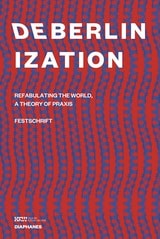
Deberlinization
Refabulating the World, a Theory of PraxisEdited by Bonaventure Soh Bejeng Ndikung, Ibou Coulibaly Diop, and Franck Hermann Ekra
Diaphanes, 2025
In 1884, the Chancellor of the German Empire, Otto von Bismarck, convened a conference in Berlin to organize the division of the African continent among the industrial and military powers of the time. The result was a profound dismemberment of Africa’s original political structures, which, driven by nationalism and a barbaric ethos of rule, had a lasting impact on the continent’s political, socioeconomic, cultural, and spiritual development. One hundred and forty years after the Berlin Conference, it seems more than urgent to disentangle this complex of colonial appropriation, identify its after-effects, and question its epistemological legacy—all the more so as Europe searches for a new positioning in the changing geopolitical balance of power.
This multidisciplinary anthology takes up the idea of a transnational performative utopia to explore the possibilities of refabulating the world order and its future. Between creative action and resistance, memory and foresight, Deberlinization opens up perspectives on trans-African cohesion and outlines a new poetics of sovereignty.
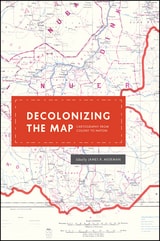
Decolonizing the Map
Cartography from Colony to NationEdited by James R. Akerman
University of Chicago Press, 2017
These essays, originally delivered as the 2010 Kenneth Nebenzahl, Jr., Lectures in the History of Cartography at the Newberry Library, encompass more than two centuries and three continents—Latin America, Africa, and Asia. Ranging from the late eighteenth century through the mid-twentieth, contributors study topics from mapping and national identity in late colonial Mexico to the enduring complications created by the partition of British India and the racialized organization of space in apartheid and post-apartheid South Africa. A vital contribution to studies of both colonization and cartography, Decolonizing the Map is the first book to systematically and comprehensively examine the engagement of mapping in the long—and clearly unfinished—parallel processes of decolonization and nation building in the modern world.
Deconstruction and Philosophy
The Texts of Jacques DerridaEdited by John Sallis
University of Chicago Press, 1989

Dedan Kimathi on Trial
Colonial Justice and Popular Memory in Kenya’s Mau Mau RebellionJulie MacArthur
Ohio University Press, 2017
The transcript from this historic trial, long thought destroyed or hidden, unearths a piece of the British colonial archive at a critical point in the Mau Mau Rebellion. Its discovery and landmark publication unsettles an already contentious Kenyan history and its reverberations in the postcolonial present.
Perhaps no figure embodied the ambiguities, colonial fears, and collective imaginations of Kenya’s decolonization era more than Dedan Kimathi, the self-proclaimed field marshal of the rebel forces that took to the forests to fight colonial rule in the 1950s. Kimathi personified many of the contradictions that the Mau Mau Rebellion represented: rebel statesman, literate peasant, modern traditionalist. His capture and trial in 1956, and subsequent execution, for many marked the end of the rebellion and turned Kimathi into a patriotic martyr.
Here, the entire trial transcript is available for the first time. This critical edition also includes provocative contributions from leading Mau Mau scholars reflecting on the meaning of the rich documents offered here and the figure of Kimathi in a much wider field of historical and contemporary concerns. These include the nature of colonial justice; the moral arguments over rebellion, nationalism, and the end of empire; and the complexities of memory and memorialization in contemporary Kenya.
Contributors: David Anderson, Simon Gikandi, Nicholas Githuku, Lotte Hughes, and John Lonsdale. Introductory note by Willy Mutunga.
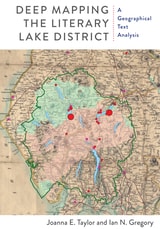
Deep Mapping the Literary Lake District
A Geographical Text AnalysisJoanna E. Taylor
Bucknell University Press, 2022

Deep'n as It Come
The 1927 Mississippi River FloodPete Daniel
University of Arkansas Press, 1998
Daniel weaves his narrative with newspaper and firsthand accounts, interviews and survivors, official reports, and over 140 contemporary photographs. The story of the common refugee who suffered most of the effects of the flood emerges alongside the details of the massive rescue and relief operation—one of the largest ever mounted in the United States. The title, Deep’n as It Come, is a phrase from Cora Lee Campbell’s early description of he approaching water, which, Daniel writes, “moved at a pace of some fourteen miles per day,” and in its movement and sound, “had the eeriness of a full eclipse of t he sun, unsettling, chilling.”
“The contradictions of sorrow and humor. . . death and salvation, despair and hope, calm and panic—all reveal the human dimension” in this compassionate and unforgettable portrait of common people confronting a great natural disaster.

Deleuze
The Clamor of BeingAlain Badiou
University of Minnesota Press, 1999
Deleuzism
A MetacommentaryIan Buchanan
Duke University Press, 2000
To show us how Deleuze’s philosophy works, Buchanan begins with Melville’s notion that “a great book is always the inverse of another book that could only be written in the soul, with silence and blood.” Buchanan demonstrates that the figure of two books—one written in ink and the other written in blood—lies at the center of Deleuze’s hermeneutics and that a special relation must be established in order to read the second book from the first. This relation is Deleuzism. By explicating elemental concepts in Deleuze—desire, flow, the nomad—Buchanan finds that, despite Deleuze’s self-declared moratorium on dialectics, he was in several important respects a dialectician. In essays that address the “prehistory” of Deleuze’s philosophy, his methodology, and the utopic dimensions of his thought, Buchanan extracts an apparatus of social critique that arises from the philosopher’s utopian impulse.
Deleuzism is a work that will engage all those with an interest in the twentieth-century’s most original philosopher.
Democracy Ancient and Modern
Finley, M. I.
Rutgers University Press, 1985
The two new essays, "Athenian Dialogues" and "Censorship in Classical Antiquity" combine with "Leaders and Followers," "Democracy, Consensus, and the National Interest," "Socrates and After" to make this book an unusual inquiry. Few contemporary writers are able to bring to the subject the depth of learning and the persuasive power of language that Sir M. I. Finley brings.
Democracy Ancient and Modern
Finley, M. I.
Rutgers University Press, 2019
This classic study of democratic principles is thus now more relevant than ever. A renowned historian of antiquity and political philosophy, Sir M.I. Finley offers a comparative analysis of Greek and modern conceptions of democracy. As he puts the ancient Greeks in dialogue with their contemporary counterparts, Finley tackles some of the most pressing issues of our day, including public apathy, partisanship, consensus politics, distrust of professional politicians, and the limits of free speech.
Including three lectures that Finley delivered at Rutgers University, plus two additional essays that further illuminate his thinking, Democracy Ancient and Modern explores the dramatic differences between the close-knit civil society of the ancient Greeks and our own atomized mass societies. By mapping out democracy’s past and its present manifestations, this book helps us plot a course for democracy’s future.
Democracy Fatigue
An East European EpidemyCarlos García-Rivero
Central European University Press, 2023
Over the early 21st century, democracy worldwide has deteriorated significantly. At the same time, new populist forces have appeared that challenge democracies through legal reforms. The stark contrast between Eastern and Western Europe in this respect is the focus of this collection of essays.
The authors consider the 2008-2012 economic crisis to be at the root of the success of the populist parties and the rise of cultural backlash against liberal values. In turn, European governments’ responses to the crisis—mainly austerity measures demanded by IMF and the EU— help explain desenchantment with the European Union. These policies made the wider public feel that they were being left out of politics, and populist parties promised to return power to them.
The contributors argue that polarization of the electorate can set in motion a radicalization that strengthens authoritarians at the expense of democrats. They also demonstrate that Eastern and Western Europe differ in their attitudes to the decline in quality of democracy. The studies consider how satisfied people are with the political changes they witness, and argue that seemingly more authoritarian attitudes in the East explain why people feel more satisfied with a defective democracy that empowers the populist-authoritarian political actors that they support.

Democracy on a Tightrope
Politics and Bureaucracy in BrazilPedro Abramovay
Central European University Press, 2026
Demos Rising
Democracy and the Popular Construction of Public Power in France, 1800–1850Stephen W. Sawyer
University of Chicago Press, 2025
In his previous book, Demos Assembled, historian Stephen W. Sawyer offered a transatlantic account of the birth and transformation of the modern democratic state. In Demos Rising, he presents readers of political history with a prequel whose ambitious claim is that a genuine demos became possible in France only with the development of government regulation and administration. Focusing on democracy as a form of administration rather than as a form of sovereignty allows Sawyer to explore urban planning, work and private enterprise, health administration, and much more as cornerstones of a self-governing society of equals.
Examining the period between 1800 and 1850, Sawyer studies a set of thinkers who debated at length over the material problems of everyday life, sparking calls for political action and social reform in the face of conflict wreaked by deforestation, urbanization, health crises, labor relations, industrial capitalism, religious tensions, and imperial expansion. The solutions to these problems, Sawyer argues, were sought—and sometimes found—not through elections, as one might assume, but rather through the “care for all” promised by modern administrative power, regulatory intervention, and social welfare programs. By studying this profound transformation in governance, the book wagers, we can better understand the origin and meaning of democracy—even when events in our own time have thrown the concept into doubt.
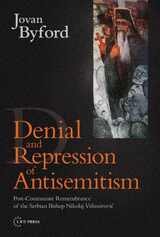
Denial and Repression of Anti-Semitism
Post-Communist Rehabilitation of the Serbian Bishop Nikolaj VelimirovicJovan Byford
Central European University Press, 2008

Descartes and His Contemporaries
Meditations, Objections, and RepliesEdited by Roger Ariew and Marjorie Grene
University of Chicago Press, 1995
Descartes and his Contemporaries recreates the tumultuous intellectual community of seventeenth-century Europe and provides a detailed, modern analysis of the Meditations in its historical context. The book's chapters examine the arguments and positions of each of the objectors—Hobbes, Gassendi, Arnauld, Morin, Caterus, Bourdin, and others whose views were compiled by Mersenne. They illuminate Descartes' relationships to the scholastics and particularly the Jesuits, to Mersenne's circle with its debates about the natural sciences, to the Epicurean movements of his day, and to the Augustinian tradition. Providing a glimpse of the interactions among leading 17th-century intellectuals as they grappled with major philosophical issues, this book sheds light on how Descartes' thought developed and was articulated in opposition to the ideas of his contemporaries.
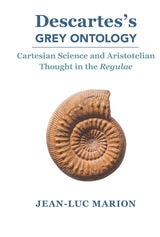
Descartes's Grey Ontology
Cartesian Science and Aristotelian Thought in the RegulaeJean-Luc Marion
St. Augustine's Press, 2022
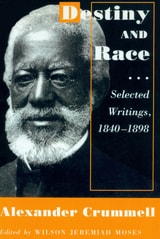
Destiny and Race
Selected Writings, 1840-1898Alexander Crummell
University of Massachusetts Press, 1992
A major reformer and intellectual, Alexander Crummell (1819–1898) was the first black American to graduate from Cambridge University. From 1858 to 1872, he lived in Liberia, where he worked as a farmer, educator, and Episcopal missionary. Returning to America, he established St. Luke’s Episcopal Church in Washington D.C., serving as its pastor until 1894. In 1897 he founded the American Negro Academy, which he intended as a challenge to the accommodationist philosophy of Booker T. Washington.
A prolific writer, Crummell produced pioneering works on black nationalism, black self-determination, and Pan Africanism that influenced W.E.B. Du Bois and other African-American leaders of the time. His surviving papers include over four hundred sermons and political essays and a voluminous correspondence.
Yet despite his importance to American and African-American history, Crummell is little known today, and there have been virtually no modern printings of his writing. This volume is intended to restore Crummell’s voice and to prompt a reevaluation of his work.

Destroyer HMCS Haida
Rindert van Zinderen-Bakker
Amsterdam University Press, 2023
Nowadays she is the only surviving Tribal-class destroyer out of 27 units that were constructed between 1937-1945 for the Royal Navy, Royal Australian Navy, and the Royal Canadian Navy.

Destroyer HNLMS Kortenaer
Rindert van Zinderen-Bakker
Amsterdam University Press, 2023
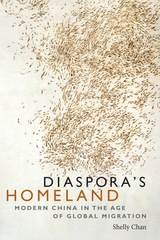
Diaspora's Homeland
Modern China in the Age of Global MigrationShelly Chan
Duke University Press, 2018

Dickens and Massachusetts
The Lasting Legacy of the Commonwealth VisitsDiana C. Archibald
University of Massachusetts Press, 2015
Charles Dickens traveled to North America twice, in 1842 and twenty-five years later in 1867–68, and on both trips Massachusetts was part of his itinerary. Although many aspects of his U.S. travels disappointed him, Massachusetts was the one state that met and even exceeded Dickens's expectations for “the republic of [his] imagination.” From the mills of Lowell to the Perkins School for the Blind, it offered an alternate vision of America that influenced his future writings, while the deep and lasting friendships he formed with Bostonians gave him enduring ties to the commonwealth.
This volume provides insight from leading scholars who have begun to reassess the significance of Massachusetts in the author's life and work. The collection begins with a broad biographical and historical overview taken from the full-length narrative of the award-winning exhibition Dickens and Massachusetts: A Tale of Power and Transformation, which attracted thousands of visitors while on display in Lowell. Abundant images from the exhibition, many of them difficult to find elsewhere, enhance the story of Dickens's relationship with the vibrant cultural and intellectual life of Massachusetts. The second section includes essays that consider the importance of Dickens's many connections to the commonwealth.
In addition to the volume editors, contributors include Chelsea Bray, Iain Crawford, Andre DeCuir, Natalie McKnight, Lillian Nayder, and Kit Polga.

Digital Fiction and the Unnatural
Transmedial Narrative Theory, Method, and AnalysisAstrid Ensslin and Alice Bell
The Ohio State University Press, 2021
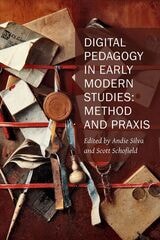
Digital Pedagogy in Early Modern Studies
Method and PraxisEdited by Andie Silva and Scott Schofield
Iter Press, 2023
This collection of essays focuses on teaching at the intersection of early modern literature, book history, and digital media. It considers how teaching different fields and methods of study can be enhanced and facilitated by digital technologies. The volume provides a snapshot of current thinking on digital pedagogy as practiced by leading scholars in the field and offers a series of models that may be adapted, personalized, and repurposed by future teachers seeking to bring digital methodologies to their classrooms. Supplementary materials for this title are available on the Iter Press website (iterpress.org): see under Books/Supplementary Materials.
Dimensions of the Holocaust
Elie Wiesel
Northwestern University Press, 1990

Diplomacy and War at NATO
The Secretary General and Military Action After the Cold WarRyan C. Hendrickson
University of Missouri Press, 2006
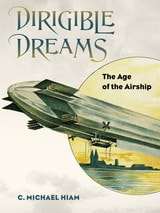
Dirigible Dreams
The Age of the AirshipC. Michael Hiam
University Press of New England, 2014

Disease, War, and the Imperial State
The Welfare of the British Armed Forces during the Seven Years' WarErica Charters
University of Chicago Press, 2014
In Disease, War, and the Imperial State, Erica Charters demonstrates how disease played a vital role in shaping strategy and campaigning, British state policy, and imperial relations during the Seven Years’ War. Military medicine was a crucial component of the British war effort; it was central to both eighteenth-century scientific innovation and the moral authority of the British state. Looking beyond the traditional focus of the British state as a fiscal war-making machine, Charters uncovers an imperial state conspicuously attending to the welfare of its armed forces, investing in medical research, and responding to local public opinion. Charters shows military medicine to be a credible scientific endeavor that was similarly responsive to local conditions and demands.
Disease, War, and the Imperial State is an engaging study of early modern warfare and statecraft, one focused on the endless and laborious task of managing manpower in the face of virulent disease in the field, political opposition at home, and the clamor of public opinion in both Britain and its colonies.
Disney Culture
Wills, John
Rutgers University Press, 2017
Disney Culture proposes that there is still a unifying Disney ethos, one that can be traced back to the corporate philosophy that Walt Disney himself developed back in the 1920s. Yet, as cultural historian John Wills demonstrates, Disney’s values have also adapted to changing social climates. At the same time, the world of Disney has profoundly shaped how Americans view the world.
Wills offers a nuanced take on the corporate ideologies running through animated and live-action Disney movies from Frozen to Fantasia, from Mary Poppins to Star Wars: The Force Awakens. But Disney Culture encompasses much more than just movies as it explores the intersections between Disney’s business practices and its cultural mythmaking. Welcome to “the Disney Way.”
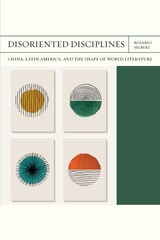
Disoriented Disciplines
China, Latin America, and the Shape of World LiteratureRosario Hubert
Northwestern University Press, 2024
In the absence of specialized programs of study, abstract discussions of China in Latin America took shape in contingent critical infrastructures built at the crossroads of the literary market, cultural diplomacy, and commerce. As Rosario Hubert reveals, modernism flourishes comparatively, in contexts where cultural criticism is a creative and cosmopolitan practice.
Disoriented Disciplines: China, Latin America, and the Shape of World Literature understands translation as a material act of transfer, decentering the authority of the text and connecting seemingly untranslatable cultural traditions. In this book, chinoiserie, “coolie” testimonies, Maoist prints, visual poetry, and Cold War memoirs compose a massive archive of primary sources that cannot be read or deciphered with the conventional tools of literary criticism. As Hubert demonstrates, even canonical Latin American authors, including Jorge Luis Borges, Octavio Paz, and Haroldo de Campos, write about China from the edges of philology, mediating the concrete as well as the sensorial.
Advocating for indiscipline as a core method of comparative literary studies, Disoriented Disciplines challenges us to interrogate the traditional contours of the archives and approaches that define the geopolitics of knowledge.
Dissemination
Jacques Derrida
University of Chicago Press, 1981
Dissemination
Jacques Derrida
University of Chicago Press, 1981
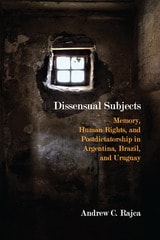
Dissensual Subjects
Memory, Human Rights, and Postdictatorship in Argentina, Brazil, and UruguayAndrew C. Rajca
Northwestern University Press, 2018
Through an engaging exploration of the concept of “never again” (nunca más/nunca mais) and close analysis of photography exhibits, audiovisual installations, and other art forms in spaces of cultural memory, the book explores how aesthetic interventions can suggest alternative ways of framing human rights subjectivity beyond the rhetoric of liberal humanitarianism. The book visits sites of memory, two of which functioned as detention and torture centers during dictatorships, to highlight the tensions between the testimonial tenor of permanent exhibits and the aesthetic interventions of temporary installations there. Rajca thus introduces perspectives that both undo common understandings of authoritarian violence and its effects as well as reconfigure who or what are made visible as subjects of memory and human rights in postdictatorship countries.
Dissensual Subjects offers much to those concerned with numerous interlocking fields: memory, human rights, political subjectivity, aesthetics, cultural studies, visual culture, Southern Cone studies, postdictatorship studies, and sites of memory.
Distorted Mirrors
Americans and Their Relations with Russia and China in the Twentieth CenturyDonald E. Davis & Eugene P. Trani
University of Missouri Press, 2009

Disturbers of the Twentieth Century
Catholic Social Critics in Modern BritainAdam Schwartz
Catholic University of America Press, 2026
Dividing Time
The Invention of Historical Periods in Early Modern EuropeFrederic Clark
University of Chicago Press, 2027
A bold reconstruction of the origins of the “ancient, medieval, modern” trope used to define historical eras and the transitions between them.
We are used to dividing time, indicating the beginning or end of an era based on a year, a month, or even a specific day, after which (supposedly) “nothing was the same.” In this book, historian and classicist Frederic Clark looks at a particularly enduring form of dividing time—the tripartite distinction between antiquity, the Middle Ages, and modernity—in order to analyze the history of this division, how it has been constructed and deployed, and what its past and present implications are.
Clark argues that the study of the past has always depended on subdividing it into multiple parts, which tend to underpin any attempt to articulate a system of culture or value. After all, certain eras, ages, and epochs are celebrated as having ushered in a new, better time, whereas others are depicted as extended periods of decay and darkness. Clark provides an ingenious critique of the foundational assumptions underlying our narratives of periodization and the complex and messy process by which historical schemas develop, from the Renaissance through the early modern period to the Enlightenment and beyond. The result is an engaging and erudite tour through time and its many contested divisions, imagined and reimagined across history.
Dogopolis
How Dogs and Humans Made Modern New York, London, and ParisChris Pearson
University of Chicago Press, 2021
Stroll through any American or European city today and you probably won’t get far before seeing a dog being taken for a walk. It’s expected that these domesticated animals can easily navigate sidewalks, streets, and other foundational elements of our built environment. But what if our cities were actually shaped in response to dogs more than we ever realized?
Chris Pearson’s Dogopolis boldly and convincingly asserts that human-canine relations were a crucial factor in the formation of modern urban living. Focusing on New York, London, and Paris from the early nineteenth century into the 1930s, Pearson shows that human reactions to dogs significantly remolded them and other contemporary western cities. It’s an unalterable fact that dogs—often filthy, bellicose, and sometimes off-putting—run away, spread rabies, defecate, and breed wherever they like, so as dogs became a more and more common in nineteenth-century middle-class life, cities had to respond to people’s fear of them and revulsion at their least desirable traits. The gradual integration of dogs into city life centered on disgust at dirt, fear of crime and vagrancy, and the promotion of humanitarian sentiments. On the other hand, dogs are some people’s most beloved animal companions, and human compassion and affection for pets and strays were equally powerful forces in shaping urban modernity. Dogopolis details the complex interrelations among emotions, sentiment, and the ways we manifest our feelings toward what we love—showing that together they can actually reshape society.
Dogopolis
How Dogs and Humans Made Modern New York, London, and ParisChris Pearson
University of Chicago Press, 2021
Dogopolis presents a surprising source for urban innovation in the history of three major cities: human-canine relationships.
Stroll through any American or European city today and you probably won’t get far before seeing a dog being taken for a walk. It’s expected that these domesticated animals can easily navigate sidewalks, streets, and other foundational elements of our built environment. But what if our cities were actually shaped in response to dogs more than we ever realized?
Chris Pearson’s Dogopolis boldly and convincingly asserts that human-canine relations were a crucial factor in the formation of modern urban living. Focusing on New York, London, and Paris from the early nineteenth century into the 1930s, Pearson shows that human reactions to dogs significantly remolded them and other contemporary western cities. It’s an unalterable fact that dogs—often filthy, bellicose, and sometimes off-putting—run away, spread rabies, defecate, and breed wherever they like, so as dogs became a more and more common in nineteenth-century middle-class life, cities had to respond to people’s fear of them and revulsion at their least desirable traits. The gradual integration of dogs into city life centered on disgust at dirt, fear of crime and vagrancy, and the promotion of humanitarian sentiments. On the other hand, dogs are some people’s most beloved animal companions, and human compassion and affection for pets and strays were equally powerful forces in shaping urban modernity. Dogopolis details the complex interrelations among emotions, sentiment, and the ways we manifest our feelings toward what we love—showing that together they can actually reshape society.