Results by title
491 books match the query 'Moral and ethical aspects' and 25 start with d
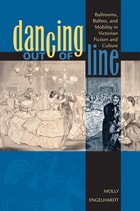
Dancing out of Line
Ballrooms, Ballets, and Mobility in Victorian Fiction and CultureMolly Engelhardt
Ohio University Press, 2009
Dancing out of Line transports readers back to the 1840s, when the craze for social and stage dancing forced Victorians into a complex relationship with the moving body in its most voluble, volatile form.
By partnering cultural discourses with representations of the dance and the dancer in novels such as Jane Eyre, Bleak House, and Daniel Deronda, Molly Engelhardt makes explicit many of the ironies underlying Victorian practices that up to this time have gone unnoticed in critical circles. She analyzes the role of the illustrious dance master, who created and disseminated the manners and moves expected of fashionable society, despite his position as a social outsider of nebulous origins. She describes how the daughters of the social elite were expected to “come out” to society in the ballroom, the most potent space in the cultural imagination for licentious behavior and temptation. These incongruities generated new, progressive ideas about the body, subjectivity, sexuality, and health.
Engelhardt challenges our assumptions about Victorian sensibilities and attitudes toward the sexual/social roles of men and women by bringing together historical voices from various fields to demonstrate the versatility of the dance, not only as a social practice but also as a forum for Victorians to engage in debate about the body and its pleasures and pathologies.

Dark Lens
Imaging Germany, 1945Françoise Meltzer
University of Chicago Press, 2019
The ruins of war have long held the power to stupefy and appall. Can such ruins ever be persuasively depicted and comprehended? Can images of ruins force us to identify with the suffering of the enemy and raise uncomfortable questions about forgiveness and revenge?
Françoise Meltzer explores these questions in Dark Lens, which uses the images of war ruins in Nazi Germany to investigate problems of aestheticization and the representation of catastrophe. Through texts that give accounts of bombed-out towns in Germany in the last years of the war, painters’ attempts to depict the destruction, and her own mother’s photographs taken in 1945, Meltzer asks if any medium offers a direct experience of war ruins for the viewer. Refreshingly accessible and deeply personal, Dark Lens is a compelling look at the role images play in constructing memory.

Darwin's Sacred Cause
Race, Slavery and the Quest for Human OriginsAdrian Desmond and James Moore
University of Chicago Press, 2011
There has always been a mystery surrounding Darwin: How did this quiet, respectable gentleman come to beget one of the most radical ideas in the history of human thought? It is difficult to overstate what Darwin was risking in publishing his theory of evolution. So it must have been something very powerful—a moral fire, as Desmond and Moore put it—that helped propel him. That moral fire, they argue, was a passionate hatred of slavery.
In opposition to the apologists for slavery who argued that blacks and whites had originated as separate species, Darwin believed the races belonged to the same human family. Slavery was a “sin,” and abolishing it became his “sacred cause.” By extending the abolitionists’ idea of human brotherhood to all life, Darwin developed our modern view of evolution.
Drawing on a wealth of fresh manuscripts, family letters, diaries, and even ships’ logs, Desmond and Moore argue that only by acknowledging Darwin’s abolitionist heritage can we fully understand the development of his groundbreaking ideas.
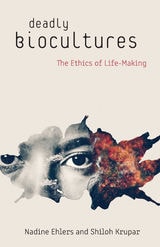
Deadly Biocultures
The Ethics of Life-makingNadine Ehlers
University of Minnesota Press, 2019
A trenchant analysis of the dark side of regulatory life-making today
In their seemingly relentless pursuit of life, do contemporary U.S. “biocultures”—where biomedicine extends beyond the formal institutions of the clinic, hospital, and lab to everyday cultural practices—also engage in a deadly endeavor? Challenging us to question their implications, Deadly Biocultures shows that efforts to “make live” are accompanied by the twin operation of “let die”: they validate and enhance lives seen as economically viable, self-sustaining, productive, and oriented toward the future and optimism while reinforcing inequitable distributions of life based on race, class, gender, and dis/ability. Affirming life can obscure death, create deadly conditions, and even kill.
Deadly Biocultures examines the affirmation to hope, target, thrive, secure, and green in the respective biocultures of cancer, race-based health, fatness, aging, and the afterlife. Its chapters focus on specific practices, technologies, or techniques that ostensibly affirm life and suggest life’s inextricable links to capital but that also engender a politics of death and erasure. The authors ultimately ask: what alternative social forms and individual practices might be mapped onto or intersect with biomedicine for more equitable biofutures?

Decoding Abortion Rhetoric
Communicating Social ChangeCeleste Michelle Condit
University of Illinois Press, 1990

Decolonizing German and European History at the Museum
Katrin Sieg
University of Michigan Press, 2021
Decolonizing German and European History at the Museum examines efforts by European museums to investigate colonialism as part of an unprocessed past, confront its presence, and urge repair. A flurry of exhibitions and the overhaul of numerous large museums in the last decade signal that an emergent colonial memory culture is now reaching broader publics. Exhibitions pose the question of what Europeans owe to those they colonized.
Decolonizing German and European History at the Museum shows how museums can help visitors mourn historic violence and identify the contemporary agents, beneficiaries, victims, survivors, and resisters of colonial presence. At the same time, the book treats the museum as part of the racialized power relations that activists, academics, and artists have long protested against. This book asks whether museums have made the dream of activists, academics, and artists to build equitable futures more acceptable and more durable—or whether in packaging that dream for general audiences they curtail it. Confronting colonial violence, this book argues, pushes Europeans to face the histories of racism and urges them to envision antiracism at the global scale.

Deep Vegetarianism
Michael Fox
Temple University Press, 1999
Demonstrating how a vegetarian diet is related to our awareness of the world and our ethical outlook on life, Fox looks at the different kinds of vegetarian commitments people make and their reasons for making them. In chapters that address such issues as the experiences, emotions, and grounds that are part of choosing vegetarianism, Fox discusses not only good health, animal suffering, and the environmental impacts of meat production, but such issues as the meaning of food, world hunger, religion and spirituality, and, significantly, the links share between vegetarianism and other human rights movements and ideologies, particularly feminism. In an extensive chapter that addresses arguments made by advocates of meat-eating, Fox speaks to claims of humans as natural carnivores, animals as replaceable, and vegetarians as anti-feminist. He also addresses arguments surrounding the eating habits of indigenous peoples, eating free-range animals, and carnivorous behavior among animals. The most complete examination of the vegetarian outlook to date, Deep Vegetarianism reveals the broad range of philosophical views that contribute to such a choice. It recognizes, and calls for, a conscious awareness of -- and an individual responsibility to -- the issues that exist in the moral, political, and social spheres of our existence.
With its lively and controversial discussion, Deep Vegetarianism promises to appeal to anyone looking to explore the relationship between dietary choice, lifestyle, the treatment of animals and the environment, and personal ethical responsibility. It will also be particularly useful for students and teachers of moral philosophy, ethics, religion, comparative cultures, ecology, and feminism.
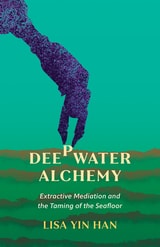
Deepwater Alchemy
Extractive Mediation and the Taming of the SeafloorLisa Yin Han
University of Minnesota Press, 2024
How underwater mediation has transformed deep-sea spaces into resource-rich frontiers
Green energy technologies such as windmills, solar panels, and electric vehicles may soon depend on material found at the seabed. How did a space once imagined to be empty and unfathomable come to be thought of as a treasure trove of resources? Lisa Yin Han traces how contemporary developments in underwater sensing and imaging materially and imaginatively transmogrify the ocean bottom into a resource frontier capable of sustaining a digitally connected global future.
Set against the backdrop of climate change, energy transition, and the expansion of industrial offshore extractions, Deepwater Alchemy looks at oceanic media and its representation of the seabed in terms of valuable resources. From high-tech simulations to laboratories and archives that collect and analyze sediments, Han explores the media technologies that survey, visualize, and condition the possibility for industrial resource extraction, introducing the concept of extractive mediation to describe the conflations between resource prospecting and undersea knowledge production. Moving away from anthropocentric frameworks, she argues that we must equalize access to deep ocean mediation and include the submerged perspectives of multispecies communities.
From the proliferation of petroleum seismology to environmental-impact research on seabed mining to the development of internet-enabled seafloor observatories, Deepwater Alchemy shows us that deepwater mediation is entangled in existential hopes and fears for our planetary future. As the ocean bottom becomes increasingly accessible to people, Han prompts us to ask not whether we can tame the seafloor, but, rather, why and for whom are we taming it?

Defending Animal Rights
Tom Regan
University of Illinois Press, 2006

Deformative Fictions
Cruelty and Narrative Ethics in Twentieth-Century Latin American LiteratureAshley Hope Pérez
The Ohio State University Press, 2024
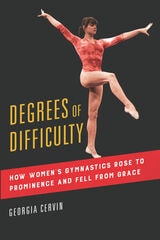
Degrees of Difficulty
How Women's Gymnastics Rose to Prominence and Fell from GraceGeorgia Cervin
University of Illinois Press, 2021
Electrifying athletes like Olga Korbut and Nadia Comăneci helped make women’s artistic gymnastics one of the most popular events in the Olympic Games. But the transition of gymnastics from a women’s sport to a girl’s sport in the 1970s also laid the foundation for a system of emotional, physical, and sexual abuse of gymnasts around the world. Georgia Cervin offers a unique history of women's gymnastics, examining how the high-stakes diplomatic rivalry of the Cold War created a breeding ground for exploitation. Yet, a surprising spirit of international collaboration arose to decide the social values and image of femininity demonstrated by the sport. Cervin also charts the changes in style, equipment, training, and participants that transformed the sport, as explosive athleticism replaced balletic grace and gymnastics dominance shifted from East to West.
Sweeping and revelatory, Degrees of Difficulty tells a story of international friction, unexpected cooperation, and the legacy of abuse and betrayal created by the win-at-all-cost attitudes of the Cold War.
Demands of the Day
On the Logic of Anthropological InquiryPaul Rabinow and Anthony Stavrianakis
University of Chicago Press, 2013

Demands of the Dead
Executions, Storytelling, and Activism in the United StatesKaty Ryan
University of Iowa Press, 2012
The first work to combine literary criticism with other forms of death penalty–abolitionist writing, Demands of the Dead demonstrates the active importance of literature and literary criticism to the struggle for greater justice in the United States. Gathering personal essays, scholarly articles, and creative writings on the death penalty in American culture, this striking collection brings human voices and literary perspectives to a subject that is often overburdened by statistics and angry polemics. Contributors include death-row prisoners, playwrights, poets, activists, and literary scholars.
Highlighting collaborations between writers inside and outside prison, all within the context of the history of state killing laws and foundational concepts that perpetuate a culture of violent death, Demands of the Dead opens with a pamphlet dictated by Willie Francis, a teenager who survived a first execution attempt in Louisiana’s electric chair before he was subsequently killed by the state in 1947.
Writers are a conspicuous part of U.S. death-penalty history, composing a vibrant literary record of resistance to state killing. This multigenre collection both recalls and contributes to this tradition through discussions of such writers as Walt Whitman, Herman Melville, Gertrude Atherton, Ernest Gaines, Sonia Sanchez, Kia Corthron, and Sherman Alexie. A major contribution to literary studies and American prison studies, Demands of the Dead asserts the relevance of storytelling to ethical questions and matters of public policy.

Democracy and Imperialism
Irving Babbitt and Warlike DemocraciesWilliam S. Smith
University of Michigan Press, 2019
Following costly U.S. engagement in two wars in the Middle East, questions about the appropriateness of American military interventions dominate foreign policy debates. Is an interventionist foreign policy compatible with the American constitutional tradition?
This book examines critic Irving Babbitt’s (1865–1933) unique contribution to understanding the quality of foreign policy leadership in a democracy. Babbitt explored how a democratic nation’s foreign policy is a product of the moral and cultural tendencies of the nation’s leaders, arguing that the substitution of expansive, sentimental Romanticism for the religious and ethical traditions of the West would lead to imperialism.
The United States’ move away from the restraint and order of sound constitutionalism to involve itself in the affairs of other nations will inevitably cause a clash with the “civilizational” regions that have emerged in recent decades. Democracy and Imperialism uses the question of soul types to address issues of foreign policy leadership, and discusses the leadership qualities that are necessary for sound foreign policy.
Desierto
Memories of the FutureBy Charles Bowden, foreword by William deBuys
University of Texas Press, 2018
“A dark, troubling vision of life in the desert, defined broadly; of mountain lions and drug kingpins, Mexican hopes and Indian feuds.”
—Los Angeles Times
“In these powerful epic tales of the Sonora Desert, Bowden peoples the harsh land on both sides of the US-Mexican border with saints and sinners, but his enduring hero is the desert itself.”
—Kirkus Reviews

Designing Human Practices
An Experiment with Synthetic BiologyPaul Rabinow and Gaymon Bennett
University of Chicago Press, 2012
In 2006 anthropologists Paul Rabinow and Gaymon Bennett set out to rethink the role that human sciences play in biological research, creating the Human Practices division of the Synthetic Biology Engineering Research Center—a facility established to create design standards for the engineering of new enzymes, genetic circuits, cells, and other biological entities—to formulate a new approach to the ethical, security, and philosophical considerations of controversial biological work. They sought not simply to act as watchdogs but to integrate the biosciences with their own discipline in a more fundamentally interdependent way, inventing a new, dynamic, and experimental anthropology that they could bring to bear on the center’s biological research.
Designing Human Practices is a detailed account of this anthropological experiment and, ultimately, its rejection. It provides new insights into the possibilities and limitations of collaboration, and diagnoses the micro-politics which effectively constrained the potential for mutual scientific flourishing. Synthesizing multiple disciplines, including biology, genetics, anthropology, and philosophy, alongside a thorough examination of funding entities such as the National Science Foundation, Designing Human Practices pushes the social study of science into new and provocative territory, utilizing a real-world experience as a springboard for timely reflections on how the human and life sciences can and should transform each other.

Dethroning historical reputations
universities, museums and the commemoration of benefactorsEdited by Jill Pellew and Lawrence Goldman
University of London Press, 2018
Detours
Travel and the Ethics of Research in the Global SouthEdited by M. Bianet Castellanos
University of Arizona Press, 2019
Influenced by the works of anthropologists Ruth Behar and Renato Rosaldo, the scholars and journalists in this volume consider how first encounters—those initial, awkward attempts to learn about a culture and a people—evolved into enduring and critical engagements. Contemplating the ethics and racial politics of traveling and doing research abroad, they call attention to the power and privilege that permit researchers to enter people’s lives, ask intimate questions, and publish those disclosures. Focusing on Latin America and the Caribbean, they ask, Why this place? What keeps us coming back? And what role do we play in producing narratives of inequality, uneven development, and global spectacle?
The book examines the “politics of return”—the experiences made possible by revisiting a field site over extended periods of time—of scholars and journalists who have spent decades working in and writing about Latin America and the Caribbean. Contributors aren’t telling a story of enlightenment and goodwill; they focus instead on the slippages and conundrums that marked them and raised questions of their own intentions and intellectual commitments.
Speaking from the intersection of race, class, and gender, the contributors explore the hubris and nostalgia that motivate returning again and again to a particular place. Through personal stories, they examine their changing ideas of Latin America and the Caribbean and how those places have shaped the people they’ve become, as writers, as teachers, and as activists.

Dialogic Confession
Bonhoeffer's Rhetoric of ResponsibilityRonald C. Arnett. Foreword by Clifford Christians
Southern Illinois University Press, 2005
In this landmark volume of contemporary communication theory, Ronald C. Arnett applies the metaphor of dialogic confession—which enables historical moments to be addressed from a confessed standpoint and through a communicative lens—to the works of German theologian Dietrich Bonhoeffer, who pointed to an era of postmodern difference with his notion of "a world come of age." Arnett’s interpretations of Bonhoeffer’s life and scholarship in contention with Nazi dominance offer implications for a dialogic confession that engages the complexity of postmodern narrative contention.
Rooted in classical theory, the field of communication ethics is abstract and arguably outmoded. In Dialogic Confession: Bonhoeffer’s Rhetoric of Responsibility, Arnett locates cross-cultural and comparative anchors that not only bring legitimacy and relevance to the field but also develop a conceptual framework that will advance and inspire future scholarship.

Divided Korea
Toward a Culture of ReconciliationRoland Bleiker
University of Minnesota Press, 2005
In 2002, North Korea precipitated a major international crisis when it revealed the existence of a secret nuclear weapons program and announced its withdrawal from the Nuclear Nonproliferation Treaty. Earlier in the year, George W. Bush had declared North Korea part of the “axis of evil,” and soon afterward his administration listed the country as a potential target of a preemptive nuclear strike. Pyongyang’s angry reaction ensured the complete deterioration of relations on the Korean peninsula, where only two years before the leaders of North and South Korea had come together in a historic summit meeting.
Few international conflicts are as volatile, protracted, or seemingly insoluble as the one in Korea, where mutual mistrust, hostile Cold War attitudes, and the possibility of a North Korean economic collapse threaten the security of the entire region. For Roland Bleiker, this persistently recurring pattern suggests profound structural problems within and between the two Koreas that have not been acknowledged until now. Expanding the discussion beyond geopolitics and ideology, Bleiker places peninsular tensions in the context of an ongoing struggle over competing forms of Korean identity. Divided Korea examines both domestic and international attitudes toward Korean identity, the legacy of war, and the possibilities for-and anxieties about-unification.
Divided Korea challenges the prevailing logic of confrontation and deterrence, embarking on a fundamental reassessment of both the roots of the conflict and the means to achieve a more stable political environment and, ultimately, peace. In order to realize a lasting solution, Bleiker concludes, the two Koreas and the international community must first show a willingness to accept difference and contemplate forgiveness as part of a broader reconciliation process.
Roland Bleiker is professor of international relations at the University of Queensland. From 1986 to 1988 he served as chief of office for the Swiss delegation to the Neutral Nations Supervisory Commission in Panmunjom.

Domesticating Organ Transplant
Familial Sacrifice and National Aspiration in MexicoMegan Crowley-Matoka
Duke University Press, 2016

Drone Warfare and Lawfare in a Post-Heroic Age
Marouf Hasian Jr.
University of Alabama Press, 2016
With a growing fleet of more than 7,500 drones, these emblems of what one commentary has dubbed “push-button, bloodless wars” comprise as much as a third of the US aircraft force. Their use is hotly debated, some championing air power that doesn’t risk the lives of pilots, others arguing that drone strikes encourage cycles of violence against the United States, its allies, and interests.
In this landmark study, Hasian illuminates both the discursive and visual argumentative strategies that drone supporters and critics both rely on. He comprehensively reviews how advocates and detractors parse and re-contextualize drone images, casualty figures, governmental “white papers,” NGO reports, documentaries, and blogs to support their points of view. He unpacks the ideological reflexes and assumptions behind these legal, ethical, and military arguments.
Visiting both formal legal language used by legislators, political leaders, and policy makers as well as public, vernacular commentaries about drones, Drone Warfare and Lawfare in a Post-Heroic Age dispassionately illuminates the emotive, cognitive, and behavioral strategies partisans use to influence public and official opinion.

Drones and Support for the Use of Force
James Igoe Walsh and Marcus Schulzke
University of Michigan Press, 2018
Drones and Support for the Use of Force uses experimental research to analyze the effects of combat drones on Americans’ support for the use of force. The authors’ findings—that drones have had important but nuanced effects on support for the use of force—have implications for democratic control of military action and civil-military relations and provide insight into how the proliferation of military technologies influences foreign policy.
Duty to Respond
Mass Crime, Denial, and Collective ResponsibilityNenad Dimitrijevic
Central European University Press, 2011
Dying in Full Detail
Mortality and Digital DocumentaryJennifer Malkowski
Duke University Press, 2017