Results by title
120 books match the query 'Multicultural Education' and 9 start with d

Decolonizing the University
Edited by Gurminder K. Bhambra, Kerem Nisancioglu and Dalia Gebrial
Pluto Press, 2018
In 2015, students at the University of Cape Town demanded the removal of a statue of Cecil Rhodes, the imperialist, racist business magnate, from their campus. Their battle cry, #RhodesMustFall, sparked an international movement calling for the decolonization of universities all over the world.
Today, as the movement develops beyond the picket line, how might it go on to radically transform the terms upon which universities exist? In this book, students, activists, and scholars discuss the possibilities and the pitfalls of doing decolonial work in the heart of the establishment. Subverting curricula, demanding diversity, and destroying old boundaries, this is a radical call for a new era of education. Chapters include:
*Rhodes Must Fall: Oxford and Movements for Change (Dalia Febrial)
*Race and the Neoliberal University ((John Holmwood)
*Black/Academia (Robbie Shilliam)
*The Challenge for Black Studies in the Neoliberal University (Kehinde Andrews)
*Open Initiatives for Decolonising the Curriculum (Pat Lockley)
*Decolonising Education: A Pedagogic Intervention (Carol Azumah Dennis)
*Understanding Eurocentrism as a Structural Problem of Undone Science (William Jamal Richardson)
As the book’s insightful Introduction states, "Taking colonialism as a global project as a starting point, it becomes difficult to turn away from the Western university as a key site through which colonialism—and colonial knowledge in particular—is produced, consecrated, institutionalized and naturalized." Offering resources for students and academics to challenge and resist colonialism inside and outside the classroom, Decolonizing the University provides the tools for radical change in educational disciplines, pedagogies, and institutions.
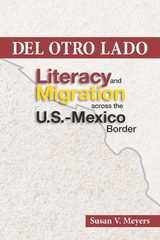
Del Otro Lado
Literacy and Migration across the U.S.-Mexico BorderSusan V. Meyers
Southern Illinois University Press, 2014
In Del OtroLado: Literacy and Migration across the U.S.-Mexico Border, author Susan V. Meyers draws on her year-long ethnographic study in Mexico and the United States to analyze the literacy practices of Mexican-origin students on both sides of the border.
Meyers begins by taking readers through the historical development of the rural Mexican town of Villachuato. Through a series of case studies spanning the decades between the Mexican Revolution and the modern-day village, Meyers explores the ever-widening gulf between the priorities of students and the ideals of the public education system. As more and more of Villachuato’s families migrate in an effort to find work in the wake of shifting transnational economic policies like NAFTA, the town’s public school teachers find themselves frustrated by spiraling drop-out rates. Meyers discovers that students often consider the current curriculum irrelevant and reject the established value systems of Mexico’s public schools. Meyers debunks the longstanding myth that literacy is tied to economic development, arguing that a “literacy contract” model, in which students participate in public education in exchange for access to increased earning potential, better illustrates the situation in rural Mexico.
Meyers next explores literacy on the other side of the border, traveling to Marshalltown, Iowa, where many former citizens of Villachuato have come to reside because of the availability of jobs for unskilled workers at the huge Swift meat-packing plant there. Here she discovers that Mexican-origin families in the United States often consider education a desirable end in itself rather than a means to an end. She argues that migration has a catalyzing effect on literacy, particularly as Mexican migrant families tend to view education as a desirable form of prestige.
Meyers reveals the history and policies that have shaped the literacy practices of Mexican-origin students, and she raises important questions about not only the obligation of the United States to educate migrant students, but also those students’ educational struggles and ways in which these difficulties can be overcome. This transnational study is essential reading for scholars, students, educators and lawmakers interested in shaping the future of educational policy.
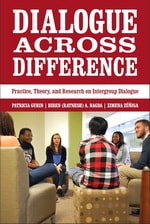
Dialogue Across Difference
Practice, Theory, and Research on Intergroup DialoguePatricia Gurin
Russell Sage Foundation, 2013
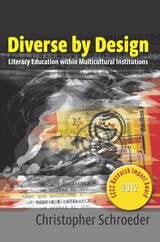
Diverse by Design
Literacy Education within Multicultural InstitutionsChristopher Schroeder
Utah State University Press, 2011
Diversity, despite what we say, disturbs us. In the U.S., we debate linguistic rights, the need for an official language, and educational policies for language minority students. On the one hand, we believe in the rights of individuals, including (at least in the academy) the right to one’s own language. On the other hand, we sponsor a single common language, monolingual and standard, for full participation and communication in both the academy and in U.S. society.
In Diverse by Design, Christopher Schroeder reports on an institutional case study conducted at an officially designated Hispanic-Serving Institution. He gives particular attention to a cohort of Latino students in a special admissions program, to document their experience of a program designed to help students surmount the “obstacle” that ethnolinguistic diversity is perceived to be.
Ultimately, Schroeder argues for reframing multilingualism and multiculturalism, not as obstacles, but as intellectual resources to exploit. While diversity might disturb us, we can overcome its challenges by a more expansive sense of social identity. In an increasingly globalized society, literacy ideologies are ever more critical to educational equity, and to human lives.
Diversifying STEM
Multidisciplinary Perspectives on Race and GenderEbony O. McGee
Rutgers University Press, 2020
Research frequently neglects the important ways that race and gender intersect within the complex structural dynamics of STEM. Diversifying STEM fills this void, bringing together a wide array of perspectives and the voices of a number of multidisciplinary scholars. The essays cover three main areas: the widely-held ideology that science and mathematics are “value-free,” which promotes pedagogies of colorblindness in the classroom as well as an avoidance of discussions around using mathematics and science to promote social justice; how male and female students of color experience the intersection of racist and sexist structures that lead to general underrepresentation and marginalization; and recognizing that although there are no quick fixes, there exists evidence-based research suggesting concrete ways of doing a better job of including individuals of color in STEM. As a whole this volume will allow practitioners, teachers, students, faculty, and professionals to reimagine STEM across a variety of educational paradigms, perspectives, and disciplines, which is critical in finding solutions that broaden the participation of historically underrepresented groups within the STEM disciplines.
Diversity Regimes
Why Talk Is Not Enough to Fix Racial Inequality at UniversitiesJames M. Thomas
Rutgers University Press, 2020
As a major, public flagship university in the American South, so-called “Diversity University” has struggled to define its commitments to diversity and inclusion, and to put those commitments into practice. In Diversity Regimes, sociologist James M. Thomas draws on more than two years of ethnographic fieldwork at DU to illustrate the conflicts and contingencies between a core set of actors at DU over what diversity is and how it should be accomplished. Thomas’s analysis of this dynamic process uncovers what he calls “diversity regimes”: a complex combination of meanings, practices, and actions that work to institutionalize commitments to diversity, but in doing so obscure, entrench, and even magnify existing racial inequalities. Thomas’s concept of diversity regimes, and his focus on how they are organized and unfold in real time, provides new insights into the social organization of multicultural principles and practices.

Diversity in Youth Literature
Opening Doors through ReadingJamie Campbell Naidoo
American Library Association, 2013

Doc
The Story of a Birmingham Jazz ManFrank "Doc" Adams and Burgin Mathews
University of Alabama Press, 2012
Autobiography of jazz elder statesman Frank “Doc” Adams, highlighting his role in Birmingham, Alabama’s, historic jazz scene and tracing his personal adventure that parallels, in many ways, the story and spirit of jazz itself.
Doc tells the story of an accomplished jazz master, from his musical apprenticeship under John T. “Fess” Whatley and his time touring with Sun Ra and Duke Ellington to his own inspiring work as an educator and bandleader.
Central to this narrative is the often-overlooked story of Birmingham’s unique jazz tradition and community. From the very beginnings of jazz, Birmingham was home to an active network of jazz practitioners and a remarkable system of jazz apprenticeship rooted in the city’s segregated schools. Birmingham musicians spread across the country to populate the sidelines of the nation’s bestknown bands. Local musicians, like Erskine Hawkins and members of his celebrated orchestra, returned home heroes. Frank “Doc” Adams explores, through first-hand experience, the history of this community, introducing readers to a large and colorful cast of characters—including “Fess” Whatley, the legendary “maker of musicians” who trained legions of Birmingham players and made a significant mark on the larger history of jazz. Adams’s interactions with the young Sun Ra, meanwhile, reveal life-changing lessons from one of American music’s most innovative personalities.
Along the way, Adams reflects on his notable family, including his father, Oscar, editor of the Birmingham Reporter and an outspoken civic leader in the African American community, and Adams’s brother, Oscar Jr., who would become Alabama’s first black supreme court justice. Adams’s story offers a valuable window into the world of Birmingham’s black middle class in the days before the civil rights movement and integration. Throughout, Adams demonstrates the ways in which jazz professionalism became a source of pride within this community, and he offers his thoughts on the continued relevance of jazz education in the twenty-first century.
Documenting the American Student Abroad
The Media Cultures of International EducationKelly Hankin
Rutgers University Press, 2021
In Documenting the American Student Abroad, Kelly Hankin explores the documentary media cultures that shape these beliefs, drawing our attention to the broad range of stakeholders and documentary modes involved in defining the core values and practices of study abroad. From study abroad video contests and a F.B.I. produced docudrama about student espionage to reality television inspired educational documentaries and docudramas about Amanda Knox, Hankin shows how the institutional values of "global citizenship," "intercultural communication," and "cultural immersion" emerge in contradictory ways through their representation.
By bringing study abroad and media studies into conversation with one another, Documenting the American Student Abroad: The Media Cultures of International Education offers a much needed humanist contribution to the field of international education, as well as a unique approach to the growing scholarship on the intersection of media and institutions. As study abroad practitioners and students increase their engagement with moving images and digital environments, the insights of media scholars are essential for helping the field understand how the mediation of study abroad rhetoric shapes rather than reflects the field's central institutional ideals