Results by title
1947 books match the query 'Music' and 57 start with d

D'Albuquerque's Children
Performing Tradition in Malaysia's Portuguese SettlementMargaret Sarkissian
University of Chicago Press, 2000
Using historical and ethnographic data, Margaret Sarkissian reveals that this music and dance draws on an eclectic array of influences that span the Portuguese diaspora (one song conjures up images of Lucille Ball impersonating Carmen Miranda on "I Love Lucy"). Ironically, she shows, what began as a literate tradition in the 1950s has now become an oral one so deeply rooted in Settlement life that the younger generation, like the tourists, now see it as an unbroken heritage stretching back almost 500 years. A fascinating case of "orientalism in reverse," D'Albuquerque's Children illuminates the creative ways in which one community has adapted to life in a postcolonial world.
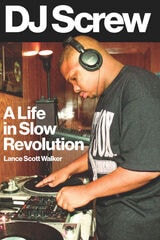
DJ Screw
A Life in Slow RevolutionLance Scott Walker
University of Texas Press, 2022
DJ Screw, a.k.a. Robert Earl Davis Jr., changed rap and hip-hop forever. In the 1990s, in a spare room of his Houston home, he developed a revolutionary mixing technique known as chopped and screwed. Spinning two copies of a record, Screw would “chop” in new rhythms, bring in local rappers to freestyle over the tracks, and slow the recording down on tape. Soon Houstonians were lining up to buy his cassettes—he could sell thousands in a single day. Fans drove around town blasting his music, a sound that came to define the city’s burgeoning and innovative rap culture. June 27 has become an unofficial city holiday, inspired by a legendary mix Screw made on that date.
Lance Scott Walker has interviewed nearly everyone who knew Screw, from childhood friends to collaborators to aficionados who evangelized Screw’s tapes—millions of which made their way around the globe—as well as the New York rap moguls who honored him. Walker brings these voices together with captivating details of Screw’s craft and his world. More than the story of one man, DJ Screw is a history of the Houston scene as it came of age, full of vibrant moments and characters. But none can top Screw himself, a pioneer whose mystique has only grown in the two decades since his death.

DJing in New York
Learning Processes of Underground Club DJsEva J. Egolf
Intellect Books, 2025
DJing in New York offers a rare, behind-the-scenes look at how underground Electronic Dance Music DJs in New York learn their craft, build careers, and navigate the ever-shifting world of nightlife.
Through immersive research, Eva J. Egolf reveals how DJing is more than a technical skill—it’s a deeply social process, rooted in friendships, enculturation, and access to professional networks. From honing beatmatching techniques to navigating the politics of club culture, these DJs rely on community as much as individual talent. Situating DJ learning within broader conversations on race, gender, and LGBTQ+ identities, this book expands our understanding of popular music education and the role of electronic music in shaping urban cultural history. It will be an illuminating resource for music educators, scholars of EDM and club culture, and those fascinated by the intersection of music, identity, and underground nightlife.
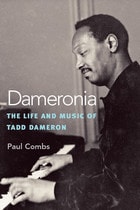
Dameronia
The Life and Music of Tadd DameronPaul Combs
University of Michigan Press, 2013
Dameronia is the first authoritative biography of Tadd Dameron, an important and widely influential figure in jazz history as one of the most significant composers and arrangers of jazz, swing, bebop, and big band. He arranged for names like Count Basie, Artie Shaw, Jimmie Lunceford, and Dizzy Gillespie and played with Bull Moose Jackson and Benny Golson. This book sets out to clarify Dameron's place in the development of jazz in the post–World War II era. It also attempts to shed light on the tragedy of his retreat from the center of jazz activity in the 1950s. By tracing Dameron's career, one finds that until 1958, when he was incarcerated for drug related offenses, he was at the forefront of developments in jazz, sometimes anticipating trends that would not develop fully for several years. Dameron was also an important influence on several high-profile musicians, including Miles Davis, Benny Golson, and Frank Foster. Dameron was a very private man, and while in some aspects of his life he will probably remain an enigma, this book manages to give an intimate portrait of his life at a couple of key stages: the height of his career in 1949 and the brief but productive period between his release from prison and his death.
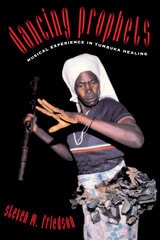
Dancing Prophets
Musical Experience in Tumbuka HealingSteven M. Friedson
University of Chicago Press, 1996
Tumbuka healers diagnose diseases by enacting divination trances in which they "see" the causes of past events and their consequences for patients. Music is the structural nexus where healer, patient, and spirit meet—it is the energizing heat that fuels the trance, transforming both the bodily and social functioning of the individual. Friedson shows how the sound of the ng'oma drum, the clapping of the choir, call-and-response singing, and the jangle of tin belts and iron anklets do not simply accompany other more important ritual activities—they are the very substance of a sacred clinical reality.
This novel look at the relation between music and mental and biological health will interest medical anthropologists, Africanists, and religious scholars as well as ethnomusicologists.
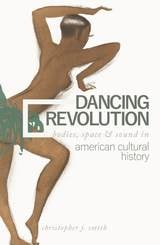
Dancing Revolution
Bodies, Space, and Sound in American Cultural HistoryChristopher J. Smith
University of Illinois Press, 2019
Dancing Revolution presents richly diverse case studies to illuminate these patterns of movement and influence in movement and sound in the history of American public life. Christopher J. Smith spans centuries, geographies, and cultural identities as he delves into a wide range of historical moments. These include the God-intoxicated public demonstrations of Shakers and Ghost Dancers in the First and Second Great Awakenings; creolized antebellum dance in cities from New Orleans to Bristol; the modernism and racial integration that imbued twentieth-century African American popular dance; the revolutionary connotations behind images of dance from Josephine Baker to the Marx Brothers; and public movement's contributions to hip hop, antihegemonic protest, and other contemporary transgressive communities’ physical expressions of dissent and solidarity.
Multidisciplinary and wide-ranging, Dancing Revolution examines how Americans turned the rhythms of history into the movement behind the movements.
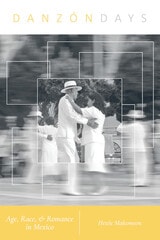
Danzón Days
Age, Race, and Romance in MexicoHettie Malcomson
University of Illinois Press, 2023
Winner of the 2024 BFE Book Prize (British Forum for Ethnomusicology)
Older people negotiating dance routines, intimacy, and racialized differences provide a focal point for an ethnography of danzón in Veracruz, the Mexican city closely associated with the music-dance genre. Hettie Malcomson draws upon on-site research with semi-professional musicians and amateur dancers to reveal how danzón connects, and does not connect, to blackness, joyousness, nostalgia, ageing, and romance. Challenging pervasive utopian views of danzón, Malcomson uses the idea of ambivalence to explore the frictions and opportunities created by seemingly contrary sentiments, ideas, sensations, and impulses. Interspersed with experimental ethnographic vignettes, her account takes readers into black and mestizo elements of local identity in Veracruz, nostalgic and newer styles of music and dance, and the friendships, romances, and rivalries at the heart of regular danzón performance and its complex social world.
Fine-grained and evocative, Danzón Days journeys to one of the genre’s essential cities to provide new perspectives on aging and romance and new explorations of nostalgia and ambivalence.

Dartmouth Song Book
Paul R. Zeller
Dartmouth College Press, 2002

Days of Twilight, Nights of Frenzy
A MemoirWerner Schroeter and Claudia Lenssen
University of Chicago Press, 2017
Written in the last years of his life, Days of Twilight, Nights of Frenzy sees Schroeter looking back at his life with the help of film critic and friend Claudia Lenssen. Born in 1945, Schroeter grew up near Heidelberg and spent just a few weeks in film school before leaving to create his earliest works. Over the years, he would work with acclaimed artists, including Marianne Hopps, Isabelle Huppert, Candy Darling, and Christine Kaufmann. In the 1970s, Schroeter also embarked on prolific parallel careers in theater and opera, where he worked in close collaboration with the legendary diva Maria Callas. His childhood; his travels in Italy, France, and Latin America; his coming out and subsequent life as an gay man in Europe; and his run-ins with Hollywood are but a few of the subjects Schroeter recalls with insights and characteristic understated humor.
A sharp, lively, even funny memoir, Days of Twilight, Nights of Frenzy captures Schroeter’s extravagant life vividly over a vast prolific career, including many stories that might have been lost were it not for this book. It is sure to fascinate cinephiles and anyone interested in the culture around film and the arts.
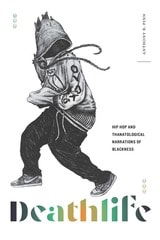
Deathlife
Hip Hop and Thanatological Narrations of BlacknessAnthony B. Pinn
Duke University Press, 2024
Decolonial Metal Music in Latin America
Nelson Varas-Díaz
Intellect Books, 2021
The long-lasting effects of colonialism—racism, political persecution, ethnic extermination, and extreme capitalism—are still felt throughout Latin America. This volume explores how heavy metal music in the region has been used to challenge coloniality and its present-day manifestations. Drawing on extensive ethnographic research in Puerto Rico, Cuba, the Dominican Republic, Mexico, Guatemala, Colombia, Peru, Chile, and Argentina, Nelson Varas-Díaz documents how metal musicians and listeners engage in “extreme decolonial dialogues” as a strategy to challenge past and present forms of oppression.
Most existing work on metal music in Latin America has relied on theoretical frameworks developed in the global North. By contrast, this volume explores the region through its own history and experiences, providing a roadmap for this emerging mode of musical analysis by demonstrating how decolonial metal scholarship can be achieved.

Deconstructive Variations
Music and Reason in Western SocietyRose Rosengard Subotnik
University of Minnesota Press, 1995
Deconstructive Variations was first published in 1995. Minnesota Archive Editions uses digital technology to make long-unavailable books once again accessible, and are published unaltered from the original University of Minnesota Press editions.
Unique in its focus and its interdisciplinary reach, Rose Rosengard Subotnik's work is among the most original and challenging being done in American musicology. Her concerns are both formal and sociological, firmly linking music to social and cultural context and breaking down the barriers between music and life.
Deconstructive Variations is a sequel to Subotnik's previous collection, Developing Variations. It expands and continues her achievement-the promotion of humanistic criticism as a significant activity in music scholarship and the portrayal of Western art music in relation to the social structures and cultural values of the society that created it.
Bringing to her subject a vast range of philosophical, artistic, and historical knowledge, Subotnik applies the insights of Kant, Adorno, Bakhtin, and Derrida to major works of Mozart and Chopin. Each of these essays functions as an argument between two views: for and against the ideal of structural listening; Enlightenment and Romantic readings of The Magic Flute; high-modernist and postmodernist readings of Chopin's A-Major Prelude; and conceptions of reason put forward by Allan Bloom and Spike Lee.
Rose Rosengard Subotnik is professor emerita in the department of music at Brown University, and is the author of Developing Variations: Style and Ideology in Western Music (Minnesota, 1991).
Deep Refrains
Music, Philosophy, and the IneffableMichael Gallope
University of Chicago Press, 2017
In Deep Refrains, Michael Gallope draws together the writings of Arthur Schopenhauer, Friedrich Nietzsche, Ernst Bloch, Theodor Adorno, Vladimir Jankélévitch, Gilles Deleuze, and Félix Guattari in order to revisit the age-old question of music’s ineffability from a modern perspective. For these nineteenth- and twentieth-century European philosophers, music’s ineffability is a complex phenomenon that engenders an intellectually productive sense of perplexity. Through careful examination of their historical contexts and philosophical orientations, close attention to their use of language, and new interpretations of musical compositions that proved influential for their work, Deep Refrains forges the first panoptic view of their writings on music. Gallope concludes that music’s ineffability is neither a conservative phenomenon nor a pious call to silence. Instead, these philosophers ask us to think through the ways in which music’s stunning force might address, in an ethical fashion, intricate philosophical questions specific to the modern world.
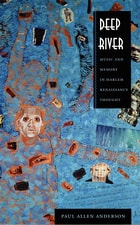
Deep River
Music and Memory in Harlem Renaissance ThoughtPaul Allen Anderson
Duke University Press, 2001
Deep River elucidates how spirituals, African American concert music, the blues, and jazz became symbolic sites of social memory and anticipation during the Harlem Renaissance. Anderson traces the roots of this period’s debates about music to the American and European tours of the Fisk Jubilee Singers in the 1870s and to W. E. B. Du Bois’s influential writings at the turn of the century about folk culture and its bearing on racial progress and national identity. He details how musical idioms spoke to contrasting visions of New Negro art, folk authenticity, and modernist cosmopolitanism in the works of Du Bois, Alain Locke, Zora Neale Hurston, Langston Hughes, Jean Toomer, Sterling Brown, Roland Hayes, Paul Robeson, Carl Van Vechten, and others. In addition to revisiting the place of music in the culture wars of the 1920s, Deep River provides fresh perspectives on the aesthetics of race and the politics of music in Popular Front and Swing Era music criticism, African American critical theory, and contemporary musicology.
Deep River offers a sophisticated historical account of American racial ideologies and their function in music criticism and modernist thought. It will interest general readers as well as students of African American studies, American studies, intellectual history, musicology, and literature.
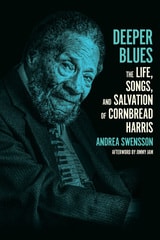
Deeper Blues
The Life, Songs, and Salvation of Cornbread HarrisAndrea Swensson
University of Minnesota Press, 2024
The emotional, epic story of James “Cornbread” Harris—a self-proclaimed “blessed dude” and one of Minneapolis’s most influential musicians
From the heart of the Minnesota blues comes the story of James “Cornbread” Harris Jr., the songwriter, pianist, and consummate bluesman whose seventy years making music helped to shape the Minneapolis Sound. “I am a blessed dude,” Cornbread tells Andrea Swensson, taking us along on his musical journey from a first “gig” entertaining his fellow soldiers during World War II to his subsequent years playing music for audiences across Minnesota. Following Cornbread’s extraordinary life story, Deeper Blues is a unique history of Minnesota music that evolves into a heartfelt tale of reconciliation and forgiveness, all to the tune of the legendary musician’s signature sound.
Cornbread’s career started in the 1950s, when he played with the Augie Garcia Quintet and cowrote their hit “Hi Ho Silver.” A tireless entertainer, he has been performing live ever since, influencing an entire generation of musicians credited with putting Minneapolis on the map in the 1980s—including his long-estranged son, Grammy-winning Rock and Roll Hall of Famer James “Jimmy Jam” Harris III. Going beyond the music, Deeper Blues turns toward family, atonement, and peace when Cornbread reunites with Jimmy Jam after a five-decade separation and they perform together on stage.
Through conversations with Cornbread, Jimmy Jam, and many others, Swensson reveals a story of perseverance and unfailing grace, a firsthand account of making music in the face of racism and segregation, and a hard-won acceptance of the personal sacrifices that are often required when dedicating one’s life to making music. As the man himself says, “All of my hardships ended up to be blessings.”
A rich mix of present-day anecdotes and historical vignettes, animated by voices from Cornbread’s life and the Twin Cities music scene, underscored by the bluesman’s original lyrics of heartache and hope, and featuring never-before-seen photographs of Cornbread and Jimmy Jam, Deeper Blues tells a singular story—one imprinted on the history, heart, and soul of the Minneapolis Sound.
Deleuze and Film Music
Building a Methodological Bridge between Film Theory and MusicGregg Redner
Intellect Books, 2011
The analysis of film music is emerging as one of the fastest-growing areas of interest in film studies. Yet scholarship in this up-and-coming field has been beset by the lack of a common language and methodology between film and music theory. Drawing on the philosophy of Gilles Deleuze, film studies scholar Gregg Redner provides a much-needed analysis of the problem which then forms the basis of his exploration of the function of the film score and its relation to film's other elements. Not just a groundbreaking examination of persistent difficulties in this new area of study, Deleuze and Film Music also offers a solution—a methodological bridge—that will take film music analysis to a new level.
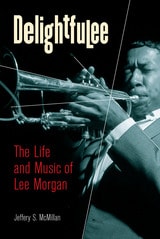
Delightfulee
The Life and Music of Lee MorganJeffery S. McMillan
University of Michigan Press, 2008
One of the most individual stylists of his time, trumpeter Lee Morgan began his professional career in Philadelphia at age fifteen. At eighteen, after a short stint with Art Blakey's Jazz Messengers, Morgan joined Dizzy Gillespie's orchestra, where he stayed until the group disbanded in 1958. A return to Blakey brought Morgan new opportunities, including his first successful attempts at composition. But however much his time with Blakey helped to advance his playing and writing, his boss's and his bandmates' destructive drug habits exerted just as strong an influence. Within three years, Morgan would be back home in Philadelphia, strung out on heroin and penniless.
Morgan's return to music in the early to mid-sixties witnessed a tremendous evolution in his playing. Formerly a virtuoso in the model of his idol, Clifford Brown, Morgan brought to his critically acclaimed Blue Note records of the era an emotionally charged, muscular tone, full of poise and control. But it was with the record Sidewinder, recorded in 1963, that Morgan found his greatest fame and commercial success, due to the infectious groove of the title tune. By the time of his death, at thirty-three---murdered in a New York City club by his girlfriend during a gig---Morgan had begun a new phase of his career, experimenting with freer-forms of musical expression.
Jeff McMillan's Delightfulee is the first biography to seriously examine Morgan's vast contributions to jazz, both as a performer and as a composer. Thanks to exclusive access to Lee Morgan's now-deceased brother, McMillan is also able to provide unparalleled insight into Morgan's personal and family life
Jeff McMillan received his master's degree from the Jazz History and Research program at Rutgers-Newark in 2000 and currently works as an archivist for the Metropolitan Opera in New York City.
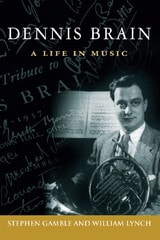
Dennis Brain
A Life in MusicStephen Gamble
University of North Texas Press, 2011
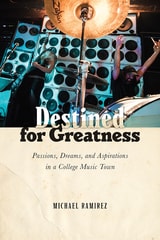
Destined for Greatness
Passions, Dreams, and Aspirations in a College Music TownRamirez, Michael
Rutgers University Press, 2018
In Destined for Greatness, sociologist Michael Ramirez examines the lives of forty-eight independent rock musicians who seek out such non-normative choices in a college town renowned for its music scene. He explores the rich life course trajectories of women and men to explore the extent to which pathways are structured to allow some, but not all, individuals to fashion careers in music worlds. Ramirez suggests a more nuanced understanding of factors that enable the pursuit of musical livelihoods well into adulthood.
Destructive Desires
Rhythm and Blues Culture and the Politics of Racial EqualityRobert J. Patterson
Rutgers University Press, 2019

Detroit Country Music
Mountaineers, Cowboys, and RockabilliesCraig Maki with Keith Cady
University of Michigan Press, 2013
The richness of Detroit’s music history has by now been well established. We know all about Motown, the MC5, and Iggy and the Stooges. We also know about the important part the Motor City has played in the history of jazz. But there are stories about the music of Detroit that remain untold. One of the lesser known but nonetheless fascinating histories is contained within Detroit’s country music roots. At last, Craig Maki and Keith Cady bring to light Detroit’s most important country and western and bluegrass stars, such as Chief Redbird, the York Brothers, and Roy Hall. Beyond the individuals, Maki and Cady also map out the labels, radio programs, and performance venues that sustained Detroit’s vibrant country and bluegrass music scene. In the process, Detroit Country Music examines how and why the city’s growth in the early twentieth century, particularly the southern migration tied to the auto industry, led to this vibrant roots music scene.
This is the first book—the first resource of any kind—to tell the story of Detroit’s contributions to country music. Craig Maki and Keith Cady have spent two decades collecting music and images, and visiting veteran musicians to amass more than seventy interviews about country music in Detroit. Just as astounding as the book’s revelations are the photographs, most of which have never been published before. Detroit Country Musicwill be essential reading for music historians, record collectors, roots music fans, and Detroit music aficionados.
Dewey and Elvis
The Life and Times of a Rock 'n' Roll DeejayLouis Cantor
University of Illinois Press, 2010
Louis Cantor illuminates Phillips's role in turning a huge white audience on to previously forbidden race music. Phillips's zeal for rhythm and blues legitimized the sound and set the stage for both Elvis's subsequent success and the rock 'n' roll revolution of the 1950s. Using personal interviews, documentary sources, and oral history collections, Cantor presents a personal view of the disc jockey while restoring Phillips's place as an essential figure in rock 'n' roll history.
Dhol
Drummers, Identities, and Modern PunjabGibb Schreffler
University of Illinois Press, 2021
Gibb Schreffler draws on two decades of research to investigate dhol's place among the cultural formations within Punjabi communities. Analyzing the identities of musicians, Schreffler illuminates concepts of musical performance, looks at how these concepts help create or articulate Punjabi social structure, and explores identity construction at the intersections of ethnicity, class, and nationality in Punjab and the diaspora. As he shows, understanding the identities of dhol players is an ethical necessity that acknowledges their place in Punjabi cultural history and helps to repair their representation.
An engaging and rich ethnography, Dhol reveals a beloved instrumental form and the musical and social practices of its overlooked performers.
Dictionary of Music
Theodore Karp
Northwestern University Press, 1983
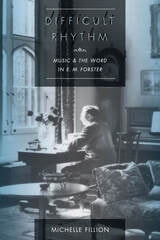
Difficult Rhythm
Music and the Word in E.M. ForsterMichelle Fillion
University of Illinois Press, 2013

Digital Music Videos
Shaviro, Steven
Rutgers University Press, 2017
As these videos have proliferated online, they have become more widely accessible than ever before. In Digital Music Videos, Steven Shaviro examines the ways that music videos interact with and change older media like movies and gallery art; the use of technologies like compositing, motion control, morphing software, and other digital special effects in order to create a new organization of time and space; how artists use music videos to project their personas; and how less well known musicians use music videos to extend their range and attract attention.
Surveying a wide range of music videos, Shaviro highlights some of their most striking innovations while illustrating how these videos are creating a whole new digital world for the music industry.

Digital Sound Studies
Mary Caton Lingold, Darren Mueller, and Whitney Trettien, editors
Duke University Press, 2018
Contributors. Myron M. Beasley, Regina N. Bradley, Steph Ceraso, Tanya Clement, Rebecca Dowd Geoffroy-Schwinden, W. F. Umi Hsu, Michael J. Kramer, Mary Caton Lingold, Darren Mueller, Richard Cullen Rath, Liana M. Silva, Jonathan Sterne, Jennifer Stoever, Jonathan W. Stone, Joanna Swafford, Aaron Trammell, Whitney Trettien
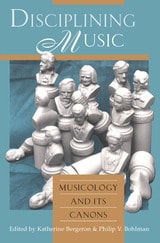
Disciplining Music
Musicology and Its CanonsEdited by Katherine Bergeron and Philip V. Bohlman
University of Chicago Press, 1992
"Fortunately, in a blaze of good-humored . . . scholarship, [this] book helps brains unaccustomed to thinking about the future without jeopardizing the past imagine the wonder classical-music life might become if it embraced all people and all musics."—Laurence Vittes, Los Angeles Reader
"These essays will force us to rethink our position on many issues. . . [and] advance musicology into the twenty-first century."—Giulio Ongaro, American Music Teacher
With essays by Katherine Bergeron, Philip V. Bohlman, Richard Cohn and Douglas Dempster, Philip Gossett, Robert P. Morgan, Bruno Nettl, Don Michael Randel, Ruth A. Solie, and Gary Tomlinson.
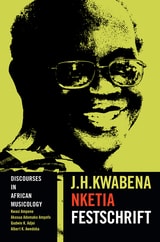
Discourses in African Musicology
J.H. Kwabena Nketia FestschriftKwasi Ampene, Akosua Adomako Ampofo, Godwin K. Adjei, Albert K. Awedoba
Michigan Publishing Services, 2015
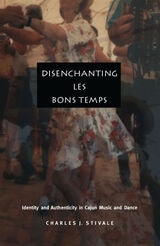
Disenchanting Les Bons Temps
Identity and Authenticity in Cajun Music and DanceCharles J. Stivale
Duke University Press, 2003
Stivale combines his personal knowledge and love of Cajun music and dance with the theoretical insights of Gilles Deleuze and Félix Guattari to consider representations of things Cajun. He examines the themes expressed within the lyrics of the Cajun musical repertoire and reflects on the ways Cajun cultural practices are portrayed in different genres including feature films, documentaries, and instructional dance videos. He analyzes the dynamic exchanges between musicians, dancers, and spectators at such venues as bars and music festivals. He also considers a number of thorny socio-political issues underlying Cajun culture, including racial tensions and linguistic isolation. At the same time, he describes various efforts by contemporary musicians and their fans to transcend the limitations of cultural stereotypes and social exclusion.
Disenchanting Les Bons Temps will appeal to those interested inCajun culture, issues of race and ethnicity, music and dance, and the intersection of French and Francophone studies with Anglo and American cultural studies.

Dissonant Divas in Chicana Music
The Limits of La OndaDeborah R. Vargas
University of Minnesota Press, 2012
Musical sound has been central to heteromasculinist productions of nation and homeland, whether Chicano, Tejano, Texan, Mexican, or American. If this assertion holds true, as Deborah R. Vargas suggests, then what are we to make of those singers and musicians whose representations of gender and sexuality are irreconcilable with canonical Chicano/Tejano music or what Vargas refers to as “la onda”? These are the “dissonant divas” Vargas discusses, performers who stimulate our listening for alternative borderlands imaginaries that are inaudible within the limits of “la onda.”
Dissonant Divas in Chicana Music focuses on the Texan monument of the Alamo and its association with Rosita Fernandez; Tejano corrido folklore and its musical antithesis in Chelo Silva; the female accordion-playing bodies of Ventura Alonza and Eva Ybarra as incompatible with the instrumental labor of conjunto music; geography as national border, explored through the multiple national music scales negotiated by Eva Garza; and racialized gender, viewed through Selena’s integration of black diasporic musical sound. Vargas offers a feminist analysis of these figures’ contributions by advancing a notion of musical dissonance—a dissonance that recognizes the complexity of gender, sexuality, and power within Chicana/o culture.
Incorporating ethnographic fieldwork, oral history, and archival research, Vargas’s study demonstrates how these singers work together to explode the limits of Texan, Chicano, Tejano, Mexican, and American identities.
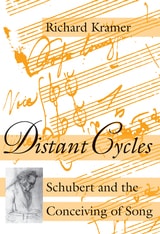
Distant Cycles
Schubert and the Conceiving of SongRichard Kramer
University of Chicago Press, 1994
Returning the songs to their original keys, Kramer reveals linkages among songs which were often obscured as Schubert readied his compositions for publication. His analysis thus conveys even familiar songs in fresh contexts that will affect performance, interpretation, and criticism. After addressing problems of multiple settings and revisions, Kramer presents a series of briefs for the reconfiguring of sets of songs to poems by Goethe, Rellstab, and Heine. He deconstructs Winterreise, using its convoluted origins to illuminate its textual contradictions. Finally, Kramer scrutinizes settings from the Abendrote cycle (on poems by Friedrich Schlegel) for signs of cyclic process. Probing the farthest reaches of Schubert's engagement with the poetics of lieder, Distant Cycles exposes tensions between Schubert the composer and Schubert the merchant-entrepreneur.
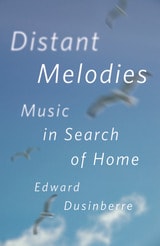
Distant Melodies
Music in Search of HomeEdward Dusinberre
University of Chicago Press, 2022
How does music played and heard over many years inform one’s sense of home? Writing during the COVID-19 pandemic, when travel is forbidden and distance felt anew, Edward Dusinberre, first violinist of the world-renowned Takács Quartet, searches for answers in the music of composers whose relationships to home shaped the pursuit of their craft—Antonín Dvořák, Edward Elgar, Béla Bartók, and Benjamin Britten.
Dusinberre has lived abroad for three decades. At the age of 21, he left his native England to pursue music studies at the Juilliard School in New York. Three years later he moved to Boulder, Colorado. Drawn to the stories of Dvořák’s, Bartók’s, and Britten’s American sojourns as they tried to reconcile their new surroundings with nostalgia for their homelands, Dusinberre reflects on his own evolving relationship to England and the idea of home. As he visits and imagines some of the places crucial to these composers’ creative inspiration, Dusinberre also reflects on Elgar’s unusual Piano Quintet and the landscapes that inspired it.
Combining travel writing with revealing insights into the working lives of string quartet musicians, Distant Melodies is a moving and humorous meditation on the relationship between music and home.
Distillation of Sound
Dub and the Creation of CultureEric Abbey
Intellect Books, 2022
Jamaican music has always been about creating with what is at hand. Taking what is around you and making it into something great is the key to dub and Jamaican culture. Dub music in Jamaica started in the early 1970s and by the end of the decade had influenced an entire population. The music began to use the rhythm track of a song as a song itself and spread quickly throughout the sound systems of the island. This book reflects on the importance of dub music and its influence on the music world with the rise and spread of dub in New York, England, and Japan. Eric Abbey discusses the separation between dub as a product and dub as an act of the engineer. Distillation of Sound focuses on the original music of Jamaica and how dub reggae expanded and shifted Jamaican culture. It will further the discussion on dub music, its importance to Jamaican culture, and its creative influence on the music world.

Divas and Scholars
Performing Italian OperaPhilip Gossett
University of Chicago Press, 2006
Winner of the 2007 Otto Kinkeldey Award from the American Musicological Society and the 2007 Deems Taylor Award from the American Society of Composers, Authors, and Publishers.
Divas and Scholars is a dazzling and beguiling account of how opera comes to the stage, filled with Philip Gossett’s personal experiences of triumphant—and even failed—performances and suffused with his towering and tonic passion for music. Writing as a fan, a musician, and a scholar, Gossett, the world's leading authority on the performance of Italian opera, brings colorfully to life the problems, and occasionally the scandals, that attend the production of some of our most favorite operas.
Gossett begins by tracing the social history of nineteenth-century Italian theaters in order to explain the nature of the musical scores from which performers have long worked. He then illuminates the often hidden but crucial negotiations opera scholars and opera conductors and performers: What does it mean to talk about performing from a critical edition? How does one determine what music to perform when multiple versions of an opera exist? What are the implications of omitting passages from an opera in a performance? In addition to vexing questions such as these, Gossett also tackles issues of ornamentation and transposition in vocal style, the matters of translation and adaptation, and even aspects of stage direction and set design.
Throughout this extensive and passionate work, Gossett enlivens his history with reports from his own experiences with major opera companies at venues ranging from the Metropolitan and Santa Fe operas to the Rossini Opera Festival at Pesaro. The result is a book that will enthrall both aficionados of Italian opera and newcomers seeking a reliable introduction to it—in all its incomparable grandeur and timeless allure.

Divas in the Convent
Nuns, Music, and Defiance in Seventeenth-Century ItalyCraig A. Monson
University of Chicago Press, 2012

Divining the Oracle
Monteverdi's Seconda pratticaMassimo Ossi
University of Chicago Press, 2003
Challenged in print for the unconventional aspects of his music, Monteverdi found himself at the center of a debate between defenders of Renaissance principles and the newest musical currents of the time. The principles of the seconda prattica, Ossi argues in this sophisticated analysis of Monteverdi's writings, music, and approaches to text-setting, were in fact much more significant to the course of Monteverdi's career than previously thought by modern scholars-not only did Monteverdi continue to pursue their aesthetic and theoretical implications for the rest of his life, but they also affected his dramatic compositions as well as his chamber vocal music and sacred works.
Ossi "divines the oracle" of Monteverdi's ambiguous theoretical concepts in a clear way and in terms of pure music; his book will enhance our understanding of Monteverdi as one of the most significant figures in western music history.
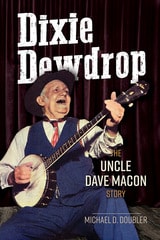
Dixie Dewdrop
The Uncle Dave Macon StoryMichael D. Doubler
University of Illinois Press, 2018
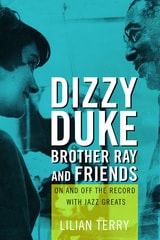
Dizzy, Duke, Brother Ray, and Friends
On and Off the Record with Jazz GreatsLillian Terry
University of Illinois Press, 2017
Drawing on Terry’s long friendships and professional associations, Dizzy, Duke, Brother Ray, and Friends offers readers a rare opportunity to hear intimate conversations with some of the world’s greatest musical figures. Dizzy Gillespie offers his thoughts on playing with “sanctified” rhythm and the all-important personal touch in performance. Duke Ellington discourses on jazz history and concludes an interview to sing a self-written ditty in Italian. Ray Charles gives candid thoughts on race and politics while taking charge of Terry’s tape recorder. Abbey Lincoln, Max Roach, Horace Silver, Bill Evans—all provide Terry and her readers with unforgettable encounters. The result is a collection of profiles, some stretching over a decade or more, that reveal these performers in ways that illuminate their humanity and expand our appreciation of their art.
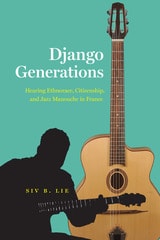
Django Generations
Hearing Ethnorace, Citizenship, and Jazz Manouche in FranceSiv B. Lie
University of Chicago Press, 2021
Jazz manouche—a genre known best for its energetic, guitar-centric swing tunes—is among France’s most celebrated musical practices of the twentieth and twenty-first centuries. It centers on the recorded work of famed guitarist Django Reinhardt and is named for the ethnoracial subgroup of Romanies (also known, often pejoratively, as “Gypsies”) to which Reinhardt belonged. French Manouches are publicly lauded as bearers of this jazz tradition, and many take pleasure and pride in the practice while at the same time facing pervasive discrimination. Jazz manouche uncovers a contradiction at the heart of France’s assimilationist republican ideals: the music is portrayed as quintessentially French even as Manouches themselves endure treatment as racial others.
In this book, Siv B. Lie explores how this music is used to construct divergent ethnoracial and national identities in a context where discussions of race are otherwise censured. Weaving together ethnographic and historical analysis, Lie shows that jazz manouche becomes a source of profound ambivalence as it generates ethnoracial difference and socioeconomic exclusion. As the first full-length ethnographic study of French jazz to be published in English, this book enriches anthropological, ethnomusicological, and historical scholarship on global jazz, race and ethnicity, and citizenship while showing how music can be an important but insufficient tool in struggles for racial and economic justice.

Do My Heart Good
My Odyssey Through Country Music, Medicine, and HistoryCleve Francis
University of Illinois Press, 2026
Francis’s account follows his “multidimensional life” through two milieus that rarely welcome Black men: country music and medicine. Merging rich storytelling with thoughtful insights, Francis shares the obstacles and triumphs he experienced through his lifelong love of performing music and writing songs, his abiding interest in science and medicine, and his determination to overcome racial barriers. He also offers an insider’s view of the 1990s country music world—the discipline of finding songs and recording in Nashville, the fight to get his music on the radio, and a whirlwind of shows and encounters with country music legends.
Engaging and inspiring, Do My Heart Good is the story of how resolve, hard work, and joy composed a uniquely American success story.
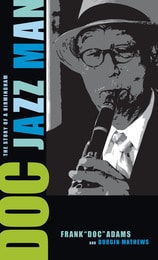
Doc
The Story of a Birmingham Jazz ManFrank "Doc" Adams and Burgin Mathews
University of Alabama Press, 2012
Autobiography of jazz elder statesman Frank “Doc” Adams, highlighting his role in Birmingham, Alabama’s, historic jazz scene and tracing his personal adventure that parallels, in many ways, the story and spirit of jazz itself.
Doc tells the story of an accomplished jazz master, from his musical apprenticeship under John T. “Fess” Whatley and his time touring with Sun Ra and Duke Ellington to his own inspiring work as an educator and bandleader.
Central to this narrative is the often-overlooked story of Birmingham’s unique jazz tradition and community. From the very beginnings of jazz, Birmingham was home to an active network of jazz practitioners and a remarkable system of jazz apprenticeship rooted in the city’s segregated schools. Birmingham musicians spread across the country to populate the sidelines of the nation’s bestknown bands. Local musicians, like Erskine Hawkins and members of his celebrated orchestra, returned home heroes. Frank “Doc” Adams explores, through first-hand experience, the history of this community, introducing readers to a large and colorful cast of characters—including “Fess” Whatley, the legendary “maker of musicians” who trained legions of Birmingham players and made a significant mark on the larger history of jazz. Adams’s interactions with the young Sun Ra, meanwhile, reveal life-changing lessons from one of American music’s most innovative personalities.
Along the way, Adams reflects on his notable family, including his father, Oscar, editor of the Birmingham Reporter and an outspoken civic leader in the African American community, and Adams’s brother, Oscar Jr., who would become Alabama’s first black supreme court justice. Adams’s story offers a valuable window into the world of Birmingham’s black middle class in the days before the civil rights movement and integration. Throughout, Adams demonstrates the ways in which jazz professionalism became a source of pride within this community, and he offers his thoughts on the continued relevance of jazz education in the twenty-first century.
Don't Deny My Name
Words and Music and the Black Intellectual TraditionLorenzo Thomas; Edited and with an Introduction by Aldon Lynn Nielsen
University of Michigan Press, 2008
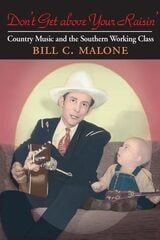
Don't Get above Your Raisin'
Country Music and the Southern Working ClassBill C. Malone
University of Illinois Press, 2002
Widely recognized as country music's ranking senior authority, Bill C. Malone explores how the music's defining themes (home and family, religion, rambling, frolic, humor, and politics) have emerged out of the particularities of working people's day-to-day lives. He traces the many contradictory voices and messages of a music that simultaneously extols the virtues of home and the joys of rambling, the assurances of the Christian life and the ecstasies of hedonism, the strength of working-class life and the material lure of middle-class aspirations. The resulting tensions, Malone argues, are a principal source of the music's enduring appeal.
Country musicians have often been people from undistinguished blue-collar backgrounds who have tried to make their way as entertainers in a society that has little respect for the working class. From this ambivalent position, they have voiced the sometimes contradictory values and longings of their culture while also attempting to fulfill the romantic expectations of outsiders.
"For every Garth Brooks," Malone says, "there are a thousand country musicians who perform in local bars, taverns, and American Legion halls and who have never been able to ‘give up their day jobs.' These are musicians whose middle-class dreams are tempered by working-class realities." A powerful and honest expression of the hopes, longings, frailties, and failings of ordinary people, country music increasingly resonates with listeners beyond its core constituency as they struggle with a complex and uncertain world.

Don't Give Your Heart to a Rambler
My Life with Jimmy Martin, the King of BluegrassBarbara Stephens
University of Illinois Press, 2017
Barbara bore his children and took on a crucial job as his booking agent when the agent he was using failed to obtain show dates for the group. Female booking agents were non-existent at that time but she persevered and went on to become the first female booking agent on Music Row. She also endured years of physical and emotional abuse at Martin's hands. With courage and candor, Barbara tells of the suffering and traces the hard-won personal growth she found inside motherhood and her work. Her vivid account of Martin's explosive personality and torment over his exclusion from the Grand Ole Opry fill in the missing details on a career renowned for being stormy. Barbara also shares her own journey, one of good humor and proud achievements, and filled with fond and funny recollections of the music legends and ordinary people she met, befriended, and represented along the way.
Straightforward and honest, Don't Give your Heart to a Rambler is a woman's story of the world of bluegrass and one of its most colorful, conflicted artists.

Don't Suck, Don't Die
Giving Up Vic ChesnuttBy Kristin Hersh, Foreword by Amanda Petrusich
University of Texas Press, 2015
“Friend, asshole, angel, mutant,” singer-songwriter Vic Chesnutt “came along and made us gross and broken people seem . . . I dunno, cooler, I guess.” A quadriplegic who could play only simple chords on his guitar, Chesnutt recorded seventeen critically acclaimed albums before his death in 2009, including About to Choke, North Star Deserter, and At the Cut. In 2006, NPR placed him in the top five of the ten best living songwriters, along with Bob Dylan, Tom Waits, Paul McCartney, and Bruce Springsteen. Chesnutt’s songs have also been covered by many prominent artists, including Madonna, the Smashing Pumpkins, R.E.M., Sparklehorse, Fugazi, and Neutral Milk Hotel.
Kristin Hersh toured with Chesnutt for nearly a decade and they became close friends, bonding over a love of songwriting and mutual struggles with mental health. In Don’t Suck, Don’t Die, she describes many seemingly small moments they shared, their free-ranging conversations, and his tragic death. More memoir than biography, Hersh’s book plumbs the sources of Chesnutt’s pain and creativity more deeply than any conventional account of his life and recordings ever could. Chesnutt was difficult to understand and frequently difficult to be with, but, as Hersh reveals him, he was also wickedly funny and painfully perceptive. This intimate memoir is essential reading for anyone interested in the music or the artist.

Doowop
The Chicago SceneRobert Pruter
University of Illinois Press, 1996
Robert Pruter's classic look at black doowop in the Windy City moves from street corners to South Side clubs to the studios at Chess Records to recapture the doowop scene of the 1950s. Pruter combines long-lost material from fanzines to the Chicago Defender with in-depth interviews to chronicle legendary African American vocal groups like the Flamingos, the Moonglows, the Spaniels, and the El Dorados. But Pruter also delves into the neighborhood scene that produced the likes of the Quintones and Five Chimes, and returns non-recording acts to their rightful place in Chicago music history.
Rich with detail and including an irreplaceable discography, Doowop offers doowop obsessives and fans of early rock 'n' roll and R&B a must-have look at the genre.

Double Quartet, Volume I
Nathaniel Mackey
Duke University Press, 2027
Double Quartet, Volume II
Nathaniel Mackey
Duke University Press, 2027

Down to the River
Portraits of Iowa MusiciansSandra Louise Dyas
University of Iowa Press, 2007
Dyas’s photographs present both the sweaty intensity of live performances and the more contemplative moments of individual portraits. They are complemented by Chris Offutt’s empathetic essay, which also encapsulates the experience of connecting with a new home through its music. A companion CD with eighteen tracks by Iowa’s finest singer/songwriters, including Dave Moore, Greg Brown, Bo Ramsey, David Zollo, and Pieta Brown, add up to an unmatched perspective on Iowa music and musicians.
CD Tracks
1. Iowa Crawl, Joe Price
2. Poor Back Slider, Greg Brown
3. Parnell, David Zollo
4. #807, Pieta Brown
5. Wheels of Steel, Radoslav Lorkovic
6. Down to the River, Dave Moore
7. Lucy and Andy Drive to Arkansas, Kevin Gordon
8. Chuck Brown, Mike and Amy Finders
9. Nobody But You, Joe Price
10. Earleton, BeJae Fleming
11. Ceremonial Child, High and Lonesome
12. Sidetrack Lounge, Bo Ramsey
13. On the Edge, Pieta Brown
14. One Wrong Turn, Greg Brown
15. Not in Iowa, Kelly Pardekooper
16. Living in a Cornfield, Bo Ramsey
17. ’57 Chevy, Tom Jessen’s Dimestore Outfit
18. Roll on John, the Pines