Results by title
405 books match the query 'Natural history' and 12 start with d
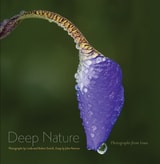
Deep Nature
Photographs from IowaLinda Scarth
University of Iowa Press, 2009
The Scarths’ close-up images of showy orchis and northern monkshood, great spangled fritillary and painted lady, red-breasted nuthatch and eastern wood-pewee, ornate box turtle and gray treefrog, big bluestem and cotton-grass, and many other natural wonders look more like paintings than photographs. Beginning with an iridescent fly hovering over a neon-purple fringed gentian and ending with their iconic image of coneflowers refracted in dewdrops, they have created a sparkling jewelbox of images that will make us look at the small world around us with renewed appreciation.
Attending to the small things in the fabric of nature is the Scarths’ source of artistic inspiration. Taking Walt Whitman’s “every leaf is a miracle” as their beginning, they celebrate not only each leaf but each feather, insect, dewdrop, flower, lichen, and intricate organism in the evolving web of life.
Deep Woods, Wild Waters
A MemoirDouglas Wood
University of Minnesota Press, 2025
A journey through the wilds of nature and the twists and turns of daily life with an icon of the North Woods—now in paperback
Wait, young Douglas’s grandfather says as the bobber twitches on the surface of Little Lake. Be patient. And so begins an encounter with the wonder and promise of nature that will last a lifetime. Deep Woods, Wild Waters traces the winding path that carried Douglas Wood from one marvel to the next, through a landscape of rocks, woods, and waters, with stops along the way for questions and reflections that link human nature to the larger mysteries of the natural world.
Like life itself, the author’s way is not linear. One landmark leads back to a favorite campsite, another prompts him to consider the “gospel of rocks,” another launches him into the wilderness beyond the stars—a contemplation of time and space and humanity’s place in all of it. The creator of thirty-four books, including the classic Old Turtle, and an expert woodsman and wilderness canoe guide, Wood brings all his storytelling and bushwhacking skills to bear as he takes us hurtling down wild rapids, crossing stormy lakes, or simply navigating the treacherous currents and twisty trails of everyday life.
A warm, generous, and knowing guide, Wood maps a journey that, as he says, “anyone can take, through a landscape anyone can know.” Turning the pages, hiking the portages, running the rapids, or scanning the wild country from a high promontory, he invites us to say, in a soul-satisfying moment of recognition, “I know that place.”
Desert Terroir
Exploring the Unique Flavors and Sundry Places of the BorderlandsBy Gary Paul Nabhan
University of Texas Press, 2012
Why does food taste better when you know where it comes from? Because history—ecological, cultural, even personal—flavors every bite we eat. Whether it’s the volatile chemical compounds that a plant absorbs from the soil or the stories and memories of places that are evoked by taste, layers of flavor await those willing to delve into the roots of real food. In this landmark book, Gary Paul Nabhan takes us on a personal trip into the southwestern borderlands to discover the terroir—the “taste of the place”—that makes this desert so delicious.
To savor the terroir of the borderlands, Nabhan presents a cornucopia of local foods—Mexican oregano, mesquite-flour tortillas, grass-fed beef, the popular Mexican dessert capirotada, and corvina (croaker or drum fish) among them—as well as food experiences that range from the foraging of Cabeza de Vaca and his shipwrecked companions to a modern-day camping expedition on the Rio Grande. Nabhan explores everything from the biochemical agents that create taste in these foods to their history and dispersion around the world. Through his field adventures and humorous stories, we learn why Mexican oregano is most potent when gathered at the most arid margins of its range—and why foods found in the remote regions of the borderlands have surprising connections to foods found by his ancestors in the deserts of the Mediterranean and the Middle East. By the end of his movable feast, Nabhan convinces us that the roots of this fascinating terroir must be anchored in our imaginations as well as in our shifting soils.
Desert Time
Diana Kappel-Smith
University of Arizona Press, 1992
"You come to trust her company and to savor her observations: she is the sort of guide who gestures at what you would otherwise step across—or on—without noticing. She calls her collection 'an introduction to particulars.' These she infuses with radiance." —Los Angeles Times Book Review
"With prose that is both lyrical and down-to-earth, Kappel-Smith makes readers aware of the fragility of the desert and the necessity to preserve these wonderful, alien and mysterious places." —San Francisco Chronicle
"We glimpse moments of experience, rendered both in words and in conscientious line drawings. The book has a gentle, meandering tone. It consciously refuses to manufacture dramatic events." —Christian Science Monitor
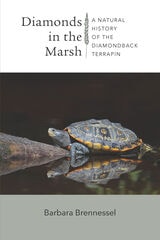
Diamonds in the Marsh
A Natural History of the Diamondback TerrapinBarbara Brennessel
Brandeis University Press, 2021
She’s the mascot for the University of Maryland’s sports teams and her ancestors were nearly driven to extinction by Victorians who indulged in turtle soup. But as she buries herself in the mud every night to sleep, the diamondback terrapin knows none of this. The size of a dinner plate and named for the beautiful concentric rings on her shell, she can live at least forty years and is the only turtle in North America who can live in brackish and salty waters. Several diamondback populations have been the subjects of ecological studies in recent years, but most of that information was buried in scientific literature and various state and federal reports—until this book.
Synthesizing all known research on this remarkable animal, Diamonds in the Marsh is the first full-scale natural history of the diamondback terrapin. Focusing on the northern diamondback, Barbara Brennessel examines its evolution, physiology, adaptations, behavior, growth patterns, life span, genetic diversity, land use, reproduction, and early years. She also discusses its relationship to humans, first as an important food source from colonial times through the nineteenth century, and more recently as a cultural icon, frequently depicted in Native American art and design. She concludes with a look at contemporary hazards to the terrapin and urges continued study of this marvelous creature. Updated with a new introduction by Brennessel, and with a foreword by Bob Prescott, former executive director of Massachusett’s Audubon Wellfleet Bay Sanctuary, Diamonds of the Marsh is perfect for those interested in the conservation of a species.
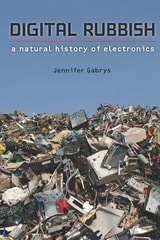
Digital Rubbish
A Natural History of ElectronicsJennifer Gabrys
University of Michigan Press, 2013
This is a study of the material life of information and its devices; of electronic waste in its physical and electronic incarnations; a cultural and material mapping of the spaces where electronics in the form of both hardware and information accumulate, break down, or are stowed away. Electronic waste occurs not just in the form of discarded computers but also as a scatter of information devices, software, and systems that are rendered obsolete and fail. Where other studies have addressed "digital" technology through a focus on its immateriality or virtual qualities, Gabrys traces the material, spatial, cultural, and political infrastructures that enable the emergence and dissolution of these technologies. In the course of her book, she explores five interrelated "spaces" where electronics fall apart: from Silicon Valley to Nasdaq, from containers bound for China to museums and archives that preserve obsolete electronics as cultural artifacts, to the landfill as material repository. All together, these sites stack up into a sedimentary record that forms the "natural history" of this study.
Digital Rubbish: A Natural History of Electronics describes the materiality of electronics from a unique perspective, examining the multiple forms of waste that electronics create as evidence of the resources, labor, and imaginaries that are bundled into these machines. By drawing on the material analysis developed by Walter Benjamin, this natural history method allows for an inquiry into electronics that focuses neither on technological progression nor on great inventors but rather considers the ways in which electronic technologies fail and decay. Ranging across studies of media and technology, as well as environments, geography, and design, Jennifer Gabrys pulls together the far-reaching material and cultural processes that enable the making and breaking of these technologies.
Jennifer Gabrys is Senior Lecturer in Design and Convener of the Masters in Design and Environment in the Department of Design, Goldsmiths, University of London.
Jacket image: Computer dump ©iStockphoto/Lya_Cattel.
digitalculturebooks is an imprint of the University of Michigan Press and the Scholarly Publishing Office of the University of Michigan Library dedicated to publishing innovative and accessible work exploring new media and their impact on society, culture, and scholarly communication. Visit the website at www.digitalculture.org.
Dinner with Darwin
Food, Drink, and EvolutionJonathan Silvertown
University of Chicago Press, 2017
A delectable concoction of coevolution and cookery, gut microbiomes and microherbs, and both the chicken and its egg, Dinner with Darwin reveals that our shopping lists, recipe cards, and restaurant menus don’t just contain the ingredients for culinary delight. They also tell a fascinating story about natural selection and its influence on our plates—and palates. Digging deeper, Silvertown’s repast includes entrées into GMOs and hybrids, and looks at the science of our sensory interactions with foods and cooking—the sights, aromas, and tastes we experience in our kitchens and dining rooms. As is the wont of any true chef, Silvertown packs his menu with eclectic components, dishing on everything from Charles Darwin’s intestinal maladies to taste bud anatomy and turducken.
Our evolutionary relationship with food and drink stretches from the days of cooking cave dwellers to contemporary crêperies and beyond, and Dinner with Darwin serves up scintillating insight into the entire, awesome span. This feast of soup, science, and human society is one to savor. With a wit as dry as a fine pinot noir and a cache of evolutionary knowledge as vast as the most discerning connoisseur’s wine cellar, Silvertown whets our appetites—and leaves us hungry for more.
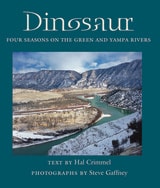
Dinosaur
Four Seasons on the Green and Yampa RiversHal Crimmel
University of Arizona Press, 2007
Gaffney’s reflective photographs emphasize the rough perfection of the landscape; Crimmel’s pensive meditations and his river expertise combine to create a rare point of view, one that ventures into places the guidebooks don’t go. But this narrative is more than tribute—it is a reminder of the fragile nature of desert places. Crimmel lyrically combines his descriptions with an examination of the complex issues relevant to managing public lands—invasive species, tourism, dams, endangered flora and fauna—to address the contradictions inherent in “managed wilderness.” Over four seasons and multiple trips, Crimmel and Gaffney have captured the rivers’ sense of place, creating a portrait of a dazzling high desert landscape that needs to be appreciated and protected.
Distracted by Alabama
Tangled Threads of Natural History, Local History, and FolkloreJames Seay Brown Jr.
University of Alabama Press, 2022
Where rivers, railroads, and redhorse fish tell the story of Alabama’s soul.
A gateway to Alabama for the omnivorous mind, Distracted by Alabama is a collection of twelve captivating essays about Alabama and the South by Samford University writer and scholar Jim Brown, a former president of the Alabama Folklife Association.
During his decades living and teaching in Alabama, Brown followed his curiosity down myriad pathways about Alabama and the region, including the state’s majestic landscape, plants and animals found nowhere else, history, and rich folkways. In the tapestry of Alabama culture, Brown traces the threads of Native American, African slave, and European settler influences, woven over the centuries into novel patterns that surprise and fascinate.
Writing in the voice of a learned companion, Brown reveals insights and stories about unforgettable facets of Alabama culture, such as Sacred Harp singers and African American railroad callers, the use of handmade snares and stationary fishtraps to catch river redhorse and freshwater drum, white oak basketmaking and herbal medicine traditions, the evolution of the single-pen log cabin into the impressive two-story I-house, and a wealth of other engrossing stories.
An instant classic, Distracted by Alabama is a keepsake that readers who love, visit, or are curious about Alabama and Southern culture will return to again and again.
Downcanyon
A Naturalist Explores the Colorado River through the Grand CanyonAnn Haymond Zwinger
University of Arizona Press, 1995
Teamed with scientists and other volunteer naturalists, Zwinger was part of an ongoing study of change along the Colorado. In all seasons and all weathers, in almost every kind of craft that goes down the waves, she returned to the Grand Canyon again and again to explore, look, and listen. From the thrill of running the rapids to the wonder in a grain of sand, her words take the reader down 280 miles of the "ever-flowing, energetic, whooping and hollering, galloping" river.
Zwinger's book begins with a bald eagle count at Nankoweap Creek in January and ends with a subzero, snowy walk out of the canyon at winter solstice. Between are the delights of spring in side canyons, the benediction of rain on a summer beach, and the chill that comes off limestone walls in November.
Her eye for detail catches the enchantment of small things played against the immensity of the river: the gatling-gun love song of tree frogs; the fragile beauty of an evening primrose; ravens "always in close attendance, like lugubrious, sharp-eyed, nineteenth-century undertakers"; and a golden eagle chasing a trout "with wings akimbo like a cleaning lady after a cockroach."
As she travels downstream, Zwinger follows others in history who have risked—and occasionally lost—their lives on the Colorado. Hiking in narrow canyons, she finds cliff dwellings and broken pottery of prehistoric Indians. Rounding a bend or running a rapid, she remembers the triumphs and tragedies of early explorers and pioneers. She describes the changes that have come with putting a big dam on a big river and how the dam has affected the riverine flora and fauna as well as the rapids and their future.
Science in the hands of a poet, this captivating book is for armchair travelers who may never see the grandiose Colorado and for those who have run it wisely and well. Like the author, readers will find themselves bewitched by the color and flow of the river, and enticed by what's around the next bend. With her, they will find its rhythms still in the mind, long after the splash and spray and pound are gone.
Dry River
Stories of Life, Death, and Redemption on the Santa CruzKen Lamberton
University of Arizona Press, 2011
Here, Ken Lamberton finds his way through a lifetime of exploring southern Arizona’s Santa Cruz River. This river—dry, still, and silent one moment, a thundering torrent of mud the next—serves as a reflection of the desert around it: a hint of water on parched sand, a path to redemption across a thirsty landscape.
With his latest book, Lamberton takes us on a trek across the land of three nations—the United States, Mexico, and the Tohono O’odham Nation—as he hikes the river’s path from its source and introduces us to people who draw identity from the river—dedicated professionals, hardworking locals, and the author’s own family. These people each have their own stories of the river and its effect on their lives, and their narratives add immeasurable richness and depth to Lamberton’s own astute observations and picturesque descriptions.
Unlike books that detail only the Santa Cruz’s decline, Dry River offers a more balanced, at times even optimistic, view of the river that ignites hope for reclamation and offers a call to action rather than indulging in despair and resignation. At once a fascinating cultural history lesson and an important reminder that learning from the past can help us fix what we have damaged, Dry River is both a story about the amazing complexity of this troubled desert waterway and a celebration of one man’s lifelong journey with the people and places touched by it.

Dune Country
A Hiker's Guide to the Indiana DunesGlenda L. Daniel
Ohio University Press, 1984