Results by title
479 books match the query 'New York (State)' and 16 start with d
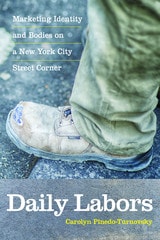
Daily Labors
Marketing Identity and Bodies on a New York City Street CornerCarolyn Pinedo-Turnovsky
Temple University Press, 2019
On street corners throughout the country, men stand or sit together patiently while they wait for someone looking to hire un buen trabajador (a good worker). These day laborers are visible symbols of the changing nature of work—and the demographics of workers—in the United States.
Carolyn Pinedo-Turnovsky spent nearly three years visiting with African American men and Latino immigrant men who looked for work as day laborers at a Brooklyn street intersection. Her fascinating ethnography, Daily Labors, considers these immigrants and citizens as active participants in their social and economic life. They not only work for wages but also labor daily to institute change, create knowledge, and contribute new meanings to shape their social world.
Daily Labors reveals how ideologies about race, gender, nation, and legal status operate on the corner and the vulnerabilities, discrimination, and exploitation workers face in this labor market. Pinedo-Turnovsky shows how workers market themselves to conform to employers’ preconceptions of a “good worker” and how this performance paradoxically leads to a more precarious workplace experience. Ultimately, she sheds light on belonging, community, and what a “good day laborer” for these workers really is.
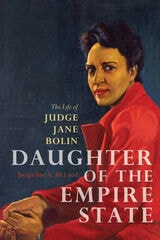
Daughter of the Empire State
The Life of Judge Jane BolinJacqueline A. McLeod
University of Illinois Press, 2016
Bolin was appointed to New York City's domestic relations court in 1939 for the first of four ten-year terms. When she retired in 1978, her career had extended well beyond the courtroom. Drawing on archival materials as well as a meeting with Bolin in 2002, historian Jacqueline A. McLeod reveals how Bolin parlayed her judicial position to impact significant reforms of the legal and social service system in New York.
Beginning with Bolin's childhood and educational experiences at Wellesley and Yale, Daughter of the Empire State chronicles Bolin's relatively quick rise through the ranks of a profession that routinely excluded both women and African Americans. Deftly situating Bolin's experiences within the history of black women lawyers and the historical context of high-achieving black New Englanders, McLeod offers a multi-layered analysis of black women's professionalization in a segregated America.
Linking Bolin's activist leanings and integrationist zeal to her involvement in the NAACP, McLeod analyzes Bolin's involvement at the local level as well as her tenure on the organization's national board of directors. An outspoken critic of the discriminatory practices of New York City's probation department and juvenile placement facilities, Bolin also co-founded, with Eleanor Roosevelt, the Wiltwyck School for boys in upstate New York and campaigned to transform the Domestic Relations Court with her judicial colleagues. McLeod's careful and highly readable account of these accomplishments inscribes Bolin onto the roster of important social reformers and early civil rights trailblazers.
Daughters of Suburbia
Growing Up White, Middle Class, and FemaleEdited by Lorraine Delia Kenny
Rutgers University Press, 2000
In order to move beyond characterizations of "the normal" (a loaded term that can obscure much of what actually defines this culture), Kenny highlights both the experiences of the middle-school students and the stories of three notoriously "bad" white middle-class teenage girls: Amy Fischer, the "Pistol-Packing Long Island Lolita," Cheryl Pierson, who hired a classmate to murder her father, and Emily Heinrichs, a former white supremacist and a teen mom. Arguing that middle-class whiteness thrives on its invisibility--on not being recognized as a cultural phenomenon--Kenny suggests that what the media identify as aberrant, as well as what they choose not to represent, are the keys to identifying the unspoken assumptions that constitute middle-class whiteness as a cultural norm. Daughters of Suburbia makes the familiar strange and gives substance to an otherwise intangible social position. Lorraine Kenny is the Public Education Coordinator for the American Civil Liberties Union's Reproductive Freedom Project. She has taught anthropology at Sarah Lawrence College.
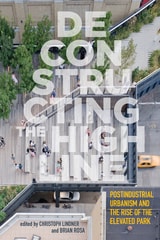
Deconstructing the High Line
Postindustrial Urbanism and the Rise of the Elevated ParkLindner, Christoph
Rutgers University Press, 2017
The High Line, an innovative promenade created on a disused elevated railway in Manhattan, is one of the world’s most iconic new urban landmarks. Since the opening of its first section in 2009, this unique greenway has exceeded all expectations in terms of attracting visitors, investment, and property development to Manhattan’s West Side. Frequently celebrated as a monument to community-led activism, adaptive re-use of urban infrastructure, and innovative ecological design, the High Line is being used as a model for numerous urban redevelopment plans proliferating worldwide.
Deconstructing the High Line is the first book to analyze the High Line from multiple perspectives, critically assessing its aesthetic, economic, ecological, symbolic, and social impacts. Including several essays by planners and architects directly involved in the High Line’s design, this volume also brings together a diverse range of scholars from the fields of urban studies, geography, anthropology, sociology, and cultural studies. Together, they offer insights into the project’s remarkable success, while also giving serious consideration to the critical charge that the High Line is “Disney World on the Hudson,” a project that has merely greened, sanitized, and gentrified an urban neighborhood while displacing longstanding residents and businesses.
Deconstructing the High Line is not just for New Yorkers, but for anyone interested in larger issues of public space, neoliberal redevelopment, creative design practice, and urban renewal.
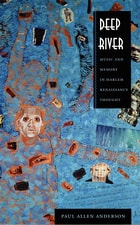
Deep River
Music and Memory in Harlem Renaissance ThoughtPaul Allen Anderson
Duke University Press, 2001
Deep River elucidates how spirituals, African American concert music, the blues, and jazz became symbolic sites of social memory and anticipation during the Harlem Renaissance. Anderson traces the roots of this period’s debates about music to the American and European tours of the Fisk Jubilee Singers in the 1870s and to W. E. B. Du Bois’s influential writings at the turn of the century about folk culture and its bearing on racial progress and national identity. He details how musical idioms spoke to contrasting visions of New Negro art, folk authenticity, and modernist cosmopolitanism in the works of Du Bois, Alain Locke, Zora Neale Hurston, Langston Hughes, Jean Toomer, Sterling Brown, Roland Hayes, Paul Robeson, Carl Van Vechten, and others. In addition to revisiting the place of music in the culture wars of the 1920s, Deep River provides fresh perspectives on the aesthetics of race and the politics of music in Popular Front and Swing Era music criticism, African American critical theory, and contemporary musicology.
Deep River offers a sophisticated historical account of American racial ideologies and their function in music criticism and modernist thought. It will interest general readers as well as students of African American studies, American studies, intellectual history, musicology, and literature.
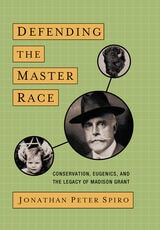
Defending the Master Race
Conservation, Eugenics, and the Legacy of Madison GrantJonathan Spiro
University Press of New England, 2008
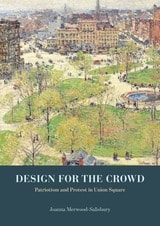
Design for the Crowd
Patriotism and Protest in Union SquareJoanna Merwood-Salisbury
University of Chicago Press, 2019
In this sweeping history of an iconic urban square, Merwood-Salisbury gives us a review of American political activism, philosophies of urban design, and the many ways in which a seemingly stable landmark can change through public engagement and design.
Published with the support of Furthermore: a program of the J. M. Kaplan Fund.
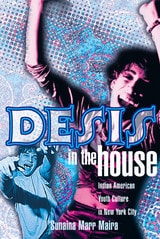
Desis In The House
Indian American Youth Culture In NycSunaina Maira
Temple University Press, 2002
New York City, long the destination for immigrants and migrants, today is home to the largest Indian American population in the United States. Coming of age in a city remarkable for its diversity and cultural innovation, Indian American and other South Asian youth draw on their ethnic traditions and the city's resources to create a vibrant subculture. Some of the city's hottest clubs host regular bhangra parties, weekly events where young South Asians congregate to dance to music that mixes rap beats with Hindi film music, bhangra (North Indian and Pakistani in origin), reggae, techno, and other popular styles. Many of these young people also are active in community and campus organizations that stage performances of "ethnic cultures."
In this book Sunaina Maira explores the world of second-generation Indian American youth to learn how they manage the contradictions of gender roles and sexuality, how they handle their "model minority" status and expectations for class mobility in a society that still racializes everyone in terms of black or white. Maira's deft analysis illuminates the ways in which these young people bridge ethnic authenticity and American "cool."

Dexterity
A NovelDouglas Bauer
University of Iowa Press, 2014
This darkly poetic novel is imbued with the same tough and tender understanding of the emotional lives of real people that distinguishes Bauer’s subsequent novels, The Very Air and The Book of Famous Iowans.
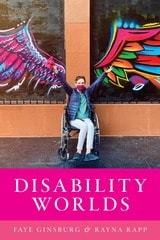
Disability Worlds
Faye Ginsburg and Rayna Rapp
Duke University Press, 2024
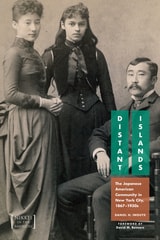
Distant Islands
The Japanese American Community in New York City, 1876-1930sDaniel H. Inouye
University Press of Colorado, 2018
The New York Japanese American community was a composite of several micro communities divided along status, class, geographic, and religious lines. Using a wealth of primary sources—oral histories, memoirs, newspapers, government documents, photographs, and more—Daniel H. Inouye tells the stories of the business and professional elites, mid-sized merchants, small business owners, working-class families, menial laborers, and students that made up these communities. The book presents new knowledge about the history of Japanese immigrants in the United States and makes a novel and persuasive argument about the primacy of class and status stratification and relatively weak ethnic cohesion and solidarity in New York City, compared to the pervading understanding of nikkei on the West Coast. While a few prior studies have identified social stratification in other nikkei communities, this book presents the first full exploration of the subject and additionally draws parallels to divisions in German American communities.
Distant Islands is a unique and nuanced historical account of an American ethnic community that reveals the common humanity of pioneering Japanese New Yorkers despite diverse socioeconomic backgrounds and life stories. It will be of interest to general readers, students, and scholars interested in Asian American studies, immigration and ethnic studies, sociology, and history.
Winner- Honorable Mention, 2018 Immigration and Ethnic History Society First Book Award
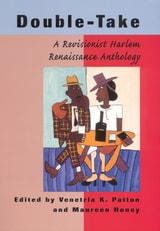
Double-Take
A Revisionist Harlem Renaissance AnthologyPatton, Venetria K
Rutgers University Press, 2001
The editors have included works from a wide variety of genres-poetry, short stories, drama, and essays-allowing readers to understand the true interdisciplinary quality of this cultural movement. Biographical sketches of the authors are provided and most of the pieces are included in their entirety. Double-Take also includes artwork and illustrations, many of which are from original journals and have never before been reprinted. Significantly, Double-Take is the first Harlem Renaissance title to include song lyrics to illustrate the interrelation of various art forms.
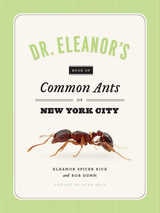
Dr. Eleanor's Book of Common Ants of New York City
Eleanor Spicer Rice, Alex Wild, and Rob Dunn
University of Chicago Press, 2017
No longer! In this witty, accessible, and beautifully illustrated guide, Eleanor Spicer Rice, Alex Wild, and Rob Dunn metamorphose creepy-crawly revulsion into myrmecological wonder. Emerging from Dunn’s ambitious citizen science project Your Wild Life (an initiative based at North Carolina State University), Dr. Eleanor’s Book of Common Ants of New York City provides an eye-opening entomological overview of the natural history of New York’s species most noted by project participants—and even offers insight into the ant denizens of the city’s subways and Central Park. Exploring species from the honeyrump ant to the Japanese crazy ant, and featuring Wild’s stunning photography as well as tips on keeping ant farms in your home, this guide will be a tremendous resource for teachers, students, and scientists alike. But more than this, it will transform the way New Yorkers perceive the environment around them by deepening their understanding of its littlest inhabitants, inspiring everyone to find their inner naturalist, get outside, and crawl across the dirt—magnifying glass in hand.
Dreams Achieved and Denied
Mexican Intergenerational MobilityRobert Courtney Smith
Russell Sage Foundation, 2024
For over twenty years, Smith followed the lives and mobility of nearly one hundred children of Mexican immigrants in New York City. Smith’s longitudinal, ethnographic data enabled him to intimately describe how specific mechanisms blocked or promoted mobility for years as his participants moved from adolescence through early adulthood and into established adulthood. Smith documents how having or gaining legal status made certain New York City or New York State policies and practices more efficacious in supporting individual and family efforts and strategies for mobility. Such immigrant-inclusive and mobility-promoting measures include enabling undocumented people to attend public colleges at in-state tuition rates, and later to get driver’s licenses, offering healthcare to all in New York City, and the City’s subway and school choice systems, which enabled students to attend better schools or take opportunities outside their neighborhoods.
Smith finds that keeping the immigrant bargain – whereby children of immigrants redeem their parents’ sacrifice by doing well in school, helping their parents and siblings, and becoming “good” people (in their parents’ words) – helped them towards better adult outcomes and lives. Having mentors, picking academically stronger schools and friends, and using second chance mechanisms also promoted more adult mobility. However, lacking legal status blocked mobility, by preventing them from benefiting from these same mobility-promoting city and state policies, from mentors, or from working hard and keeping the immigrant bargain.
Dreams Achieved and Denied deeply analyzes the historic upward mobility of U.S.-born Mexicans in New York City. Itcounters the dominant story research and public discourse tell about Mexican mobility in the U.S. and shows how thoughtful public policy can improve the lives of young immigrants and families.
Dreamworlds of Alabama
Allen Shelton
University of Minnesota Press, 2007
“I speak in what others often hear as a strange accent. My past can’t be located. I live in Buffalo, New York, an exile from the South. But these aren’t Yankee dreams, even though my past seems like a fabrication, a dreamworld in which I’m a paper character and not a historical participant, with scars from barbed wire ripping under the pressure and flying through the air like a swarm of bees, or a horse rearing up and banging its head into mine from within, exploding my forehead.” —from the Preface
Wisteria draped on a soldier’s coffin, sent home to Alabama from a Virginia battlefield. The oldest standing house in the county, painted gray and flanked by a pecan orchard. A black steel fence tool, now perched atop a pile of books like a prehistoric bird of prey. In Dreamworlds of Alabama, Allen Shelton explores physical, historical, and social landscapes of northeastern Alabama. His homeplace near the Appalachian foothills provides the setting for a rich examination of cultural practices, a place where the language of place and things resonates with as much vitality and emotional urgency as the language of humans.
Throughout the book, Shelton demonstrates how deeply culture is inscribed in the land and in the most intimate spaces of the person—places of belonging and loss, insight and memory.
Born and raised in Jacksonville, Alabama, Allen Shelton is associate professor of sociology at Buffalo State College.
Drop Dead
Performance in Crisis, 1970s New YorkHillary Miller
Northwestern University Press, 2016
Winner, 2017 American Theater and Drama Society John W. Frick Book Award
Winner, 2017 ASTR Barnard Hewitt Award for Outstanding Research in Theater History
Hillary Miller’s Drop Dead: Performance in Crisis, 1970s New York offers a fascinating and comprehensive exploration of how the city’s financial crisis shaped theater and performance practices in this turbulent decade and beyond.
New York City’s performing arts community suffered greatly from a severe reduction in grants in the mid-1970s. A scholar and playwright, Miller skillfully synthesizes economics, urban planning, tourism, and immigration to create a map of the interconnected urban landscape and to contextualize the struggle for resources. She reviews how numerous theater professionals, including Ellen Stewart of La MaMa E.T.C. and Julie Bovasso, Vinnette Carroll, and Joseph Papp of The Public Theater, developed innovative responses to survive the crisis.
Combining theater history and close readings of productions, each of Miller’s chapters is a case study focusing on a company, a production, or an element of New York’s theater infrastructure. Her expansive survey visits Broadway, Off-, Off-Off-, Coney Island, the Brooklyn Academy of Music, community theater, and other locations to bring into focus the large-scale changes wrought by the financial realignments of the day.
Nuanced, multifaceted, and engaging, Miller’s lively account of the financial crisis and resulting transformation of the performing arts community offers an essential chronicle of the decade and demonstrates its importance in understanding our present moment.