91 books match the query 'Nordic Countries' and 3 start with d
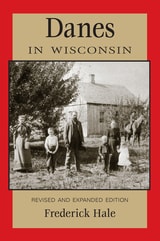
cover of Danes in Wisconsin: Revised and Expanded Edition

Danes in Wisconsin

Revised and Expanded Edition

Frederick Hale

Wisconsin Historical Society Press, 2005

Wisconsin Territory's first Dane arrived in 1829, and by 1860 the state's Danish-born population had reached 1,150. Yet these newcomers remained only a small segment of Wisconsin's increasingly complex cultural mosaic, and the challenges of adapting to life in this new land shaped the Danish experience in the state. In this popular book, now revised and expanded with additional historical photos and documents, Frederick Hale offers a concise introduction to Wisconsin's Danish settlers, exploring their reasons for leaving their homeland, describing their difficult journeys, and examining their adjustments to life on Wisconsin soil.

New to this edition are the selected letters of Danish immigrant Andrew Frederickson. These compelling documents, written over a 40-year span, capture the personal observations of one Dane as he made a new life in Wisconsin.
[more]
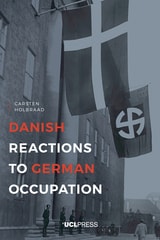
cover of Danish Reactions to German Occupation: History and Historiography

Danish Reactions to German Occupation

History and Historiography

Carsten Holbraad

University College London, 2017

For five years during World War II, Denmark was occupied by Germany. While the Danish reaction to this period of its history has been extensively discussed in Danish-language publications, it has not until now received a thorough treatment in English. Set in the context of modern Danish foreign relations, and tracing the country’s responses to successive crises and wars in the region, Danish Reactions to German Occupation brings a full overview of the occupation to an English-speaking audience. Holbraad carefully dissects the motivations and ideologies driving conduct during the occupation, and his authoritative coverage of the preceding century provides a crucial link to understanding the forces behind Danish foreign policy divisions. Analysing the conduct of a traumatised and strategically exposed small state bordering on an aggressive great power, the book traces a development from reluctant cooperation to active resistance. In doing so, Holbraad surveys and examines the subsequent, and not yet quite finished, debate among Danish historians about this contested period, which takes place between those siding with the resistance and those more inclined to justify limited cooperation with the occupiers – and who sometimes even condone various acts of collaboration.
[more]
cover of Democratization in the Nordic World

Democratization in the Nordic World

David Delfs Erbo Andersen

University of Wisconsin Press, 2024

Denmark, Norway, and Sweden enjoy some of the happiest populations and highest standards of living in the world, thanks in part to stable, democratic systems of government. Here, David Delfs Erbo Andersen presents a syncretic history of political and socioeconomic developments in the three Scandinavian countries since the early modern period, and contrasts their peaceful transitions with the more dramatic histories of otherwise similar European countries, like France and Germany. Unlike these and many other countries—the United States among them—Scandinavia’s transition to democracy from monarchy was not marked by major violent upheavals or extreme political antagonism. 

Rather, Scandinavia’s peaceful process of democratization owed itself to the development of a penetrative bureaucracy in the early modern period and the activism of cooperative associations, first of farmers in the early nineteenth century and then of industrialized workers in the late nineteenth and early twentieth centuries. Thanks to the gradual, relatively consensual adoption of political reforms and social norms, the history of “Nordic democratic exceptionalism” today helps account for the ongoing stability of the Scandinavian countries.
[more]