Results by title
69 books match the query 'Nursing' and 5 start with d
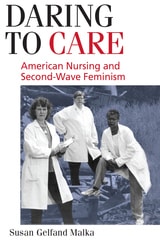
Daring to Care
American Nursing and Second-Wave FeminismSusan Gelfand Malka
University of Illinois Press, 2007
Dementia Caregivers Share Their Stories
A Support Group in a BookLynda A. Markut
Vanderbilt University Press, 2005
Highlighting the ingenuity and resourcefulness of caregivers, the book brims with inspirational stories, practical advice, and creative approaches to problem-solving. Among the issues addressed are:
Becoming a caregiver, whether for a spouse or parent
Dealing with the personality changes caused by dementia, from anxiety and paranoia to hallucinations and impulsive behavior
Keeping dementia sufferers meaningfully involved in life
Handling the emotions and stresses of caregiving
Seeking help through support groups and other sources, including medical professionals, clergy, and other family members The authors, who have both been caregivers themselves, augment their interviewees' stories with connective commentary and their own personal stories. A useful resource section is included to refer readers to associations and help-lines.
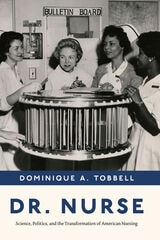
Dr. Nurse
Science, Politics, and the Transformation of American NursingDominique A. Tobbell
University of Chicago Press, 2022
Nurses represent the largest segment of the U.S. health care workforce and spend significantly more time with patients than any other member of the health care team. Dr. Nurse probes their history to examine major changes that have taken place in American health care in the second half of the twentieth century. The book reveals how federal and state health and higher education policies shaped education within health professions after World War II.
Starting in the 1950s, academic nurses sought to construct a science of nursing—distinct from that of the related biomedical or behavioral sciences—that would provide the basis for nursing practice. Their efforts transformed nursing’s labor into a valuable site of knowledge production and proved how the application of their knowledge was integral to improving patient outcomes. Exploring the knowledge claims, strategies, and politics involved as academic nurses negotiated their roles and nursing’s future, Dr. Nurse highlights how state-supported health centers have profoundly shaped nursing education and health care delivery.
Dr. Nurse
Science, Politics, and the Transformation of American NursingDominique A. Tobbell
University of Chicago Press, 2022
An analysis of the efforts of American nurses to establish nursing as an academic discipline and nurses as valued researchers in the decades after World War II.
Nurses represent the largest segment of the U.S. health care workforce and spend significantly more time with patients than any other member of the health care team. Dr. Nurse probes their history to examine major changes that have taken place in American health care in the second half of the twentieth century. The book reveals how federal and state health and higher education policies shaped education within health professions after World War II.
Starting in the 1950s, academic nurses sought to construct a science of nursing—distinct from that of the related biomedical or behavioral sciences—that would provide the basis for nursing practice. Their efforts transformed nursing’s labor into a valuable site of knowledge production and proved how the application of their knowledge was integral to improving patient outcomes. Exploring the knowledge claims, strategies, and politics involved as academic nurses negotiated their roles and nursing’s future, Dr. Nurse highlights how state-supported health centers have profoundly shaped nursing education and health care delivery.
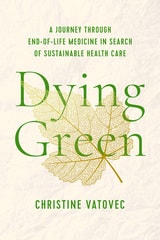
Dying Green
A Journey through End-of-Life Medicine in Search of Sustainable Health CareChristine Vatovec
Rutgers University Press, 2023
In Dying Green, award-winning educator Christine Vatovec offers an engaging study that asks us to consider the broader environmental sustainability of health care. Through a comparative analysis of the care provided to terminally ill patients in a conventional cancer ward, a palliative care unit, and an acute-care hospice facility, she shows how decisions made at a patient’s bedside govern the environmental footprint of the healthcare industry. Likewise, Dying Green offers insights on the many opportunities that exist for reducing the ecological impacts of medical practices in general, while also enhancing care for the dying in particular. By envisioning a more sustainable approach to care, this book offers a way forward that is better for both patients and the planet.