Results by title
137 books match the query 'Patients' and 10 start with d
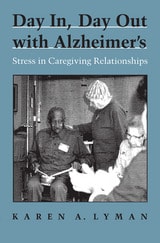
Day In Day Out Alzheimers
Karen Lyman
Temple University Press, 1993
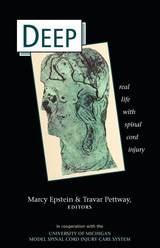
Deep
Real Life with Spinal Cord InjuryMarcy Epstein and Travar Pettway, Editors
University of Michigan Press, 2010
"This project fits into the larger picture of excellence that we wish to accomplish in all dimensions of our health system: groundbreaking and dedicated research, compassionate clinical care, progressive education, and a welcoming environment that includes community with people with disabilities. In Deep, the writers and editors of this book realize this mission with accuracy and clarity."
---Denise G. Tate, Director of Research at the University of Michigan Model Spinal Cord Injury Care System
People with spinal cord injuries experience life beyond their medical and rehabilitative journeys, but these stories are rarely told. Deep: Real Life with Spinal Cord Injury includes the stories of ten men and women whose lives have been transformed by spinal cord injury. Each essay challenges the stereotypes and misconceptions about SCI---with topics ranging from faith to humility to sex and manhood---offering a multitude of voices that weave together to create a better understanding of the diversity of disability and the uniqueness of those individuals whose lives are changed but not defined by their injuries. Life with SCI can be traumatic and ecstatic, uncharted and thrilling, but it always entails a journey beyond previous expectations. This volume captures this sea change, exploring the profound depths of SCI experience.
Dementia Caregivers Share Their Stories
A Support Group in a BookLynda A. Markut
Vanderbilt University Press, 2005
Highlighting the ingenuity and resourcefulness of caregivers, the book brims with inspirational stories, practical advice, and creative approaches to problem-solving. Among the issues addressed are:
Becoming a caregiver, whether for a spouse or parent
Dealing with the personality changes caused by dementia, from anxiety and paranoia to hallucinations and impulsive behavior
Keeping dementia sufferers meaningfully involved in life
Handling the emotions and stresses of caregiving
Seeking help through support groups and other sources, including medical professionals, clergy, and other family members The authors, who have both been caregivers themselves, augment their interviewees' stories with connective commentary and their own personal stories. A useful resource section is included to refer readers to associations and help-lines.
Diary of Our Fatal Illness
Charles Bardes
University of Chicago Press, 2017
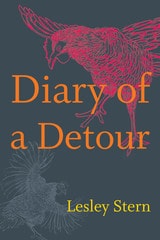
Diary of a Detour
Lesley Stern
Duke University Press, 2020
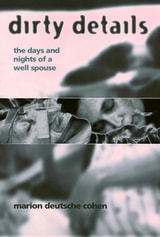
Dirty Details
Marion Deutsche Cohen, foreword by Marty Wyngaarden Krauss
Temple University Press, 1996
In 1977, at the age of 36, Jeffrey Cohen, a physicist at the University of Pennsylvania, was diagnosed with multiple sclerosis. But it wasn't until 10 years later that the "dirty details" began, when the disease had progressed to the point where he could not transfer himself out of his wheelchair. That point is where his wife Marion begins her memoir of caregiving: "If I had to explain it in three words, those words would be 'nights,' 'lifting,' and 'toilet.' And then, if I were permitted to elaborate further, I would continue, 'nights' does not mean lying awake in fear listening for his breathing. 'Lifting' does not mean dragging him by the feet along the floor. And 'toilet' does not mean changing catheters."
But "dirty details," Marion Cohen teaches us, involves more than "nights," "lifting," and "toilet." There is the loss, anger, fear, and desperation that envelops the family. She reveals what it felt like to be consistently in "dire straits" with no real help or understanding, what she characterizes as society's "conspiracy of silence." Chronicling their lives in the context of her husband's progressing disease, she discusses the raging emotions, the celebrations, the day-to-day routine, the arguments, the disappointments, and the moments of closeness. During the 15 years she cared for him at home, both continued to work on various projects, share in the rearing of their four children, and be very much in love. This powerful, honest narrative also delves into the process of making the "nursing-home decision" and those decisions Cohen made to put her and her family's life together again.

Diva
Rafael Campo
Duke University Press, 1999
At once relishing and resisting the poetic traditions of formal English verse, Diva showcases Campo moving deftly between received forms and free verse. In each poem the sound of words is transformed into the highest of arts, the act of performance into the exercise of power, and the most profound abjection into the sweet promise of divinity. Culminating with his new and daring translations of Federico García Lorca's sonetos—the great Spanish poet's most homoerotically explicit and formally accomplished poems—Campo's music instills in the reader an exalted understanding of beauty, suffering, and, ultimately, the human capacity for empathy.
From reviews of Campo's previous poetry:
“Extraordinary meditations on illness and the healing power of words.”—Lambda Literary Foundation
“Read Campo to enter the bloodstream of a man who, with a haunting clarity of vision, shares his memories, his anguish, his healing love.”—Cortney Davis, Literature and Medicine
“Riveting, provocative, and refreshing—[this volume] is a gift to the clinician who is trying to re-invoke in his or her students the humility, compassion, and deep caring that brought us all into medicine in the first place.”—Dr. Sandra L. Bertman, Annals of Internal Medicine
“[Campo] listens to the sounds the body makes, but what he hears is poetry.”—Zoë Ingalls, Chronicle of Higher Education
“Powerful and accessible.”—Jonathan Jackson, Washington Blade
“Bemused, indelible, and heartbreaking.”—Marilyn Hacker, Out
“[Campo’s] private corral of disparate words twist, torque, collide with gorgeous creative imperative.”—Nomi Eve, Independent Weekly
Divided Bodies
Lyme Disease, Contested Illness, and Evidence-Based MedicineAbigail A. Dumes
Duke University Press, 2020
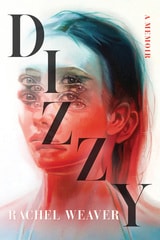
Dizzy
A MemoirRachel Weaver
West Virginia University Press, 2026
Gold Medal Winner, Living Now Book Awards, Inspirational Memoir (Female)
“An arresting new memoir….”
– Maureen Corrigan, NPR’s Fresh Air
Beverly Donofrio, author of Riding in Cars with Boys, says “Dizzy is a testament to the power of hope. Weaver’s courage and strength are so inspiring they encourage the same in the reader. If all of that isn’t enough, the beauty and agility of the prose may make you regret reaching the last page.”
In her early thirties, Rachel Weaver woke up dizzy and unable to function. She spent the next ten years seeing more than thirty medical practitioners before receiving a diagnosis, and then another eight years before finding relief from her condition. Dizzy is amedical mystery and a cautionary tale about our broken healthcare system. It is a story about learning to live with life's uncertainty, persevering in the pursuit of answers, and striving to find joy in an imperfect yet beautiful world.
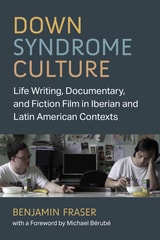
Down Syndrome Culture
Life Writing, Documentary, and Fiction Film in Iberian and Latin American ContextsBenjamin Fraser
University of Michigan Press, 2024
Down Syndrome Culture also pushes the traditionally Anglophone borders of disability studies by examining examples in Spanish, Catalan, and Portuguese-language texts, and incorporating the work of thinkers in Iberian and Latin American studies. Through a close analysis of life writing, documentaries, and fiction films, the book emphasizes the central role of people with Down syndrome in contemporary cultural production. Chapters discuss the autobiography of Andy Trias Trueta, the social actors of the documentary Los niños [The Grown-Ups] (2016), dancers from Danza Mobile, and a variety of fiction films, challenging ableist understandings of disability in nuanced ways. Ultimately, this book reveals the lives, cultural work, and representations of people with trisomy 21 in an international context.