Results by title
126 books match the query 'People with disabilities' and 27 start with d
Deaf People in Hitler's Europe
Donna F. Ryan
Gallaudet University Press, 2002
Inspired by the conference “Deaf People in Hitler’s Europe, 1933–1945,” hosted jointly by Gallaudet University and the United States Holocaust Memorial Museum in 1998, this extraordinary collection, organized into three parts, integrates key presentations and important postconference research.
Henry Friedlander begins “Part I: Racial Hygiene” by analyzing the assault on deaf people and people with disabilities as an integral element in the Nazi attempt to implement their theories of racial hygiene. Robert Proctor documents the role of medical professionals in deciding who should be sterilized or forbidden to marry, and whom the Nazi authorities would murder. In an essay written especially for this volume, Patricia Heberer details how Nazi manipulation of eugenics theory and practice facilitated the justification for the murder of those considered socially undesirable.
“Part II: The German Experience” commences with Jochen Muhs’s interviews of deaf Berliners who lived under Nazi rule, both those who suffered abuse and those who, as members of the Nazi Party, persecuted others, especially deaf Jews. John S. Schuchman describes the remarkable 1932 film Misjudged People, which so successfully portrayed the German deaf community as a vibrant contributor to society that the Nazis banned its showing when they came to power. Horst Biesold’s contribution confirms the complicity of teachers who denounced their own students, labeling them hereditarily deaf and thus exposing them to compulsory sterilization. The section also includes the reprint of a chilling 1934 article entitled “The Place of the School for the Deaf in the New Reich,” in which author Kurt Lietz rued the expense of educating deaf students, who could not become soldiers or bear “healthy children.”
In “Part III: The Jewish Deaf Experience,” John S. Schuchman discusses the plight of deaf Jews in Hungary. His historical analysis is complemented by a chapter containing excerpts from the testimony of six deaf Jewish survivors who describe their personal ordeals. Peter Black’s reflections on the need for more research conclude this vital study of a little-known chapter of the Holocaust.
Deaf People in the Criminal Justice System
Selected Topics on Advocacy, Incarceration, and Social JusticeDebra Guthmann
Gallaudet University Press, 2021
The contributors address issues such as accessibility needs; gaps regarding data collection and the need for more research; additional training for attorneys, court personnel, and prison staff; the need for more qualified sign language interpreters, including Certified Deaf Interpreters who provide services in court, prison, and juvenile facilities; substance use disorders; the school to prison nexus; and the need for advocacy. Students in training programs, researchers, attorneys, mental health professionals, sign language interpreters, family members, and advocates will be empowered by this much-needed resource to improve the experiences and outcomes for deaf people in the criminal justice system.
Deaf and Hard of Hearing Learners with Disabilities
Foundations, Strategies, and ResourcesCaroline Guardino
Gallaudet University Press, 2021
The disabilities covered in this volume include developmental delays, autism spectrum disorder, intellectual and learning disabilities, deafblindness, emotional and behavioral disorders, attention deficit hyperactivity disorder, and a variety of high incidence syndromes. Contributors share best practices using an open-minded, asset-based approach. They examine the literature within each disability category, as well as demographics/characteristics, intervention/identification, placement, communication/language, psychosocial issues, assistive technologies/accommodations, assessments, and transition/post-secondary outcomes. Each chapter begins with learning objectives and concludes with a list of resources and discussion questions. A supplemental instructor’s manual provides valuable material for each chapter, including: (a) sample answers to the discussion questions, (b) investigation activities with grading rubrics, (c) quiz banks, (d) interpreted and captioned summary videos, and (e) PowerPoint slides. Deaf and Hard of Hearing Learners with Disabilities is an essential book for courses at the undergraduate and graduate level, and in workshops and webinars for in-service teachers, professionals, and families.
Decarcerating Disability
Deinstitutionalization and Prison AbolitionLiat Ben-Moshe
University of Minnesota Press, 2020
This vital addition to carceral, prison, and disability studies draws important new links between deinstitutionalization and decarceration
Prison abolition and decarceration are increasingly debated, but it is often without taking into account the largest exodus of people from carceral facilities in the twentieth century: the closure of disability institutions and psychiatric hospitals. Decarcerating Disability provides a much-needed corrective, combining a genealogy of deinstitutionalization with critiques of the current prison system.
Liat Ben-Moshe provides groundbreaking case studies that show how abolition is not an unattainable goal but rather a reality, and how it plays out in different arenas of incarceration—antipsychiatry, the field of intellectual disabilities, and the fight against the prison-industrial complex. Ben-Moshe discusses a range of topics, including why deinstitutionalization is often wrongly blamed for the rise in incarceration; who resists decarceration and deinstitutionalization, and the coalitions opposing such resistance; and how understanding deinstitutionalization as a form of residential integration makes visible intersections with racial desegregation. By connecting deinstitutionalization with prison abolition, Decarcerating Disability also illuminates some of the limitations of disability rights and inclusion discourses, as well as tactics such as litigation, in securing freedom.
Decarcerating Disability’s rich analysis of lived experience, history, and culture helps to chart a way out of a failing system of incarceration.
Decolonizing Media Fandom
Disability, Race, and Marvel Superhero FansDivya Garg
University of Iowa Press, 2025
Decolonizing Media Fandom focuses on the globally diverse fan base of a massively popular Western text: the Marvel superhero universe. Drawing on fanworks from Archive of Our Own, a survey spanning sixteen countries, and one-on-one interviews with Marvel fans who identify as non-white and/or having a disability, Divya Garg examines the strengths and limitations of fandom from the perspective of those who are often relegated to the margins.
Defectives in the Land
Disability and Immigration in the Age of EugenicsDouglas C. Baynton
University of Chicago Press, 2016
In the late nineteenth and early twentieth centuries, Baynton explains, immigration restriction in the United States was primarily intended to keep people with disabilities—known as “defectives”—out of the country. The list of those included is long: the deaf, blind, epileptic, and mobility impaired; people with curved spines, hernias, flat or club feet, missing limbs, and short limbs; those unusually short or tall; people with intellectual or psychiatric disabilities; intersexuals; men of “poor physique” and men diagnosed with “feminism.” Not only were disabled individuals excluded, but particular races and nationalities were also identified as undesirable based on their supposed susceptibility to mental, moral, and physical defects.
In this transformative book, Baynton argues that early immigration laws were a cohesive whole—a decades-long effort to find an effective method of excluding people considered to be defective. This effort was one aspect of a national culture that was increasingly fixated on competition and efficiency, anxious about physical appearance and difference, and haunted by a fear of hereditary defect and the degeneration of the American race.
Despite this Flesh
The Disabled in Stories and PoemsEdited by Vassar Miller
University of Texas Press, 1985
Killed by kindness, stifled by overprotection, choked by subtle if sometimes unconscious snubs, the physically handicapped are one of the world's most invisible minorities. Seeking to draw attention to the various attitudes and perceptions about the handicapped, renowned poet Vassar Miller has assembled this collection of short stories and poems culled from the best of contemporary literature.
The forty-five works focus on characters with motor and/or sensory disabilities. Ranging from optimistic to embittered and from sentimental to realistic, they portray the handicapped and the family; the handicapped and society; the myth of the holy idiot; the handicapped as human being, good, evil, and indifferent; the handicapped as unique. Both instructional and entertaining, this book will be of interest to a wide variety of readers, including the handicapped themselves. It will be especially helpful to professionals in the medical, education, and social service fields. As Vassar Miller says in her introduction, "... the book is meant as a midwife in bringing to birth a renewed understanding of all human beings as so many mirrors of God, however seemingly distorted ..."
Disability Histories
Edited by Susan Burch and Michael Rembis
University of Illinois Press, 2014
Contributors delve into four critical areas of study within disability history: family, community, and daily life; cultural histories; the relationship between disabled people and the medical field; and issues of citizenship, belonging, and normalcy. As the first collection of its kind in over a decade, Disability Histories not only brings readers up to date on scholarship within the field but fosters the process of moving it beyond the U.S. and Western Europe by offering work on Africa, South America, and Asia. The result is a broad range of readings that open new vistas for investigation and study while encouraging scholars at all levels to redraw the boundaries that delineate who and what is considered of historical value.
Informed and accessible, Disability Histories is essential for classrooms engaged in all facets of disability studies within and across disciplines.

Disability Praxis
The Body as a Site of StruggleBob Williams-Findlay
Pluto Press, 2003
‘A masterful intervention that is particularly pertinent for an age of austerity, pandemic, and rising living costs’ Robert Chapman, author of Empire of Normality
‘A brilliant and much-needed contribution to current debates’ Ioana Cerasella Chis, University of Birmingham
‘A comprehensive analysis which also intelligently looks at how disability can fit into the modern world’ Joshua Hepple, activist, writer and disability equality trainer
The rise of the extreme right globally, the crisis of capitalism, and the withdrawal of all but the most punitive arms of the state are disastrously impacting disabled people’s lives.
Bob Williams-Findlay offers an account of the transformative potential of disability praxis and how it relates to disabled politics and activism. He addresses different sites of struggle, showing how disabled people have advanced radical theory into implementing policies.
Examining the growth of the global Disabled People’s Movement during the 1960s, Williams-Findlay shows how a new social discourse shifted away from seeing disability as restrictions on an individual’s body towards understanding the impact of restrictions created by capitalist relations. He shines a light on the contested definitions of disability, asking us to reconsider how different socio-political contexts produce varied understandings of social oppression and how we can play a role in transforming definitions and societies.
Bob Williams-Findlay is the founder of Birmingham Disability Rights Group and the former Chair of the national organization BCODP. He has written in various publications on the topic of disability politics.
Disability Protests
Contentious Politics, 1970 - 1999Sharon N. Barnartt
Gallaudet University Press, 2001
Disability Rights Movement
From Charity to ConfrontationDoris Fleischer
Temple University Press, 2000
Referring to the Americans with Disabilities Act as "every American's insurance policy," the authors recount the genesis of this civil rights approach to disability, from the almost forgotten disability activism of the 1930s to the independent living movement of the 1970s to the call for disability pride of the 1990s. Like other civil rights struggles, the disability rights movement took place in the streets and in the courts as activists fought for change in the schools, the workplace, and in the legal system. They continue to fight for effective access to the necessities of everyday life -- to telephones, buses, planes, public buildings, restaurants, and toilets.
The history of disability rights mirrors the history of the country. Both World Wars sparked changes in disability policy and changes in medical technology as veterans without without limbs and with other disabilities return home. The empowerment of people with disabilities has become another chapter in the struggles over identity politics that began in the 1960s. Today, with the expanding ability of people with disabilities to enter the workforce, and a growing elderly population increasingly significant at a time when HMOs are trying to contain healthcare expenditures.
Disability Rights and Religious Liberty in Education
The Story behind Zobrest v. Catalina Foothills School DistrictBruce J. Dierenfield and David A. Gerber
University of Illinois Press, 2020
Bruce J. Dierenfield and David A. Gerber use the Zobrests' story to examine the complex history and jurisprudence of disability accommodation and educational mainstreaming. They look at the family's effort to acquire educational resources for their son starting in early childhood and the choices the Zobrests made to prepare him for life in the hearing world rather than the deaf community. Dierenfield and Gerber also analyze the thorny church-state issues and legal controversies that informed the case, its journey to the U.S. Supreme Court, and the impact of the high court's ruling on the course of disability accommodation and religious liberty.
Disability Services in Higher Education
An Insider's GuideKirsten T. Behling, Eileen H. Bellemore, Lisa B. Bibeau, Andrew S. Cioffi, and Bridget A. McNamee
Temple University Press, 2023
This volume provides an overview of the responsibilities of a Disabilities Service professional through an examination of relevant literature, laws and regulatory language, case law, and narrative on established practices. It also offers resources that current professionals can modify for use in their day-to-day practice immediately. The authors explore the complexities of accessibility, paying careful attention to the nuances of disability evaluation, accommodation decisions, management of a disability service office, advocating for resources and collaboration within and outside of higher education institutions.
This practitioner-friendly book will help newcomers and seasoned professionals explore and evaluate best practices in the field through questions, examples, and functional job aids available for immediate use.

Disability Theory
Tobin Siebers
University of Michigan Press, 2008
"Disability Theory is just the book we've been waiting for. Clear, cogent, compelling analyses of the tension between the 'social model' of disability and the material details of impairment; of identity politics and unstable identities; of capability rights and human interdependence; of disability and law, disability as masquerade, disability and sexuality, disability and democracy---they're all here, in beautifully crafted and intellectually startling essays. Disability Theory is a field-defining book: and if you're curious about what 'disability' has to do with 'theory,' it's just the book you've been waiting for, too."
---Michael Bérubé, Pennsylvania State University
"Disability Theory is magisterially written, thoroughly researched, and polemically powerful. It will be controversial in a number of areas and will probably ruffle feathers both in disability studies as well as in realms of cultural theory. And that's all to the good."
---Michael Davidson, University of California, San Diego
"Not only is Disability Theory a groundbreaking contribution to disability studies, it is also a bold, ambitious and much needed revision to a number of adjacent and overlapping fields including cultural studies, literary theory, queer theory, and critical race studies. Siebers has written a powerful manifesto that calls theory to account and forces readers to think beyond our comfort zones."
---Helen Deutsch, University of California, Los Angeles
Intelligent, provocative, and challenging, Disability Theory revolutionizes the terrain of theory by providing indisputable evidence of the value and utility that a disability studies perspective can bring to key critical and cultural questions. Tobin Siebers persuasively argues that disability studies transfigures basic assumptions about identity, ideology, language, politics, social oppression, and the body. At the same time, he advances the emerging field of disability studies by putting its core issues into contact with signal thinkers in cultural studies, literary theory, queer theory, gender studies, and critical race theory.
Tobin Siebers is V. L. Parrington Collegiate Professor, Professor of English Language and Literature, and Professor of Art and Design at the University of Michigan.
A volume in the series Corporealities: Discourses of Disability
Illustration: Pattern by Riva Lehrer, acrylic on panel, 18" X 24", 1995
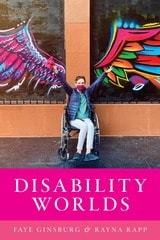
Disability Worlds
Faye Ginsburg and Rayna Rapp
Duke University Press, 2024
Disability and Passing
Blurring the Lines of IdentityJeffrey A Brune
Temple University Press, 2013
Passing—an act usually associated with disguising race—also relates to disability. Whether a person classified as mentally ill struggles to suppress aberrant behavior to appear "normal" or a person falsely claims a disability to gain some advantage, passing is a pervasive and much discussed phenomenon. Nevertheless, Disability and Passing is the first anthology to examine this issue.
The editors and contributors to this volume explore the intersections of disability, race, gender, and sexuality as these various aspects of identity influence each other and make identity fluid. They argue that the line between disability and normality is blurred, discussing disability as an individual identity and as a social category. And they discuss the role of stigma in decisions about whether or not to pass.
Focusing on the United States from the nineteenth century to the present, the essays in Disability and Passing speak to the complexity of individual decisions about passing and open the conversation for broader discussion.
Contributors include: Dea Boster, Allison Carey, Peta Cox, Kristen Harmon, David Linton, Michael Rembis, and the editors.
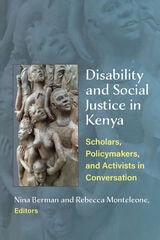
Disability and Social Justice in Kenya
Scholars, Policymakers, and Activists in ConversationNina Berman and Rebecca Monteleone, Editors
University of Michigan Press, 2022
Disability in Africa has received significant attention as a dimension of global development and humanitarian initiatives. Little international attention is given, however, to the ways in which disability is discussed and addressed in specific countries in Africa. Little is known also about the ways in which persons with disabilities have advocated for themselves over the past one hundred years and how their needs were or were not met in locations across the continent. Kenya has been on the forefront of disability activism and disability rights since the middle of the twentieth century. The country was among the first African states to create a legal framework addressing the rights of persons with disabilities, namely the Persons with Disabilities Act of 2003. Kenya, however, has a much longer history of institutions and organizations that are dedicated to addressing the specific needs of persons with disabilities, and substantial developments have occurred since the introduction of the legal framework in 2003.
Disability and Social Justice in Kenya: Scholars, Policymakers, and Activists in Conversation is the first interdisciplinary and multivocal study of its kind to review achievements and challenges related to the situation of persons with disabilities in Kenya today, in light of the country’s longer history of disability and the wide range of local practices and institutions. It brings together scholars, activists, and policymakers who comment on topics including education, the role of activism, the legal framework, culture, the impact of the media, and the importance of families and the community.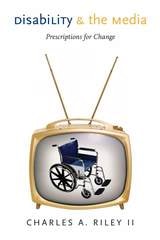
Disability and the Media
Prescriptions for ChangeCharles A. Riley
University Press of New England, 2005
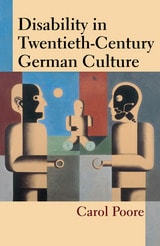
Disability in Twentieth-Century German Culture
Carol Poore
University of Michigan Press, 2010
"Comprehensively researched, abundantly illustrated and written in accessible and engaging prose . . . With great skill, Poore weaves diverse types of evidence, including historical sources, art, literature, journalism, film, philosophy, and personal narratives into a tapestry which illuminates the cultural, political, and economic processes responsible for the marginalization, stigmatization, even elimination, of disabled people---as well as their recent emancipation."
---Disability Studies Quarterly
"A major, long-awaited book. The chapter on Nazi images is brilliant---certainly the best that has been written in this arena by any scholar."
---Sander L. Gilman, Emory University
"An important and pathbreaking book . . . immensely interesting, it will appeal not only to students of twentieth-century Germany but to all those interested in the growing field of disability studies."
---Robert C. Holub, University of Tennessee
Disability in Twentieth-Century German Culture covers the entire scope of Germany's most tragic and tumultuous century---from the Weimar Republic to the current administration---revealing how central the notion of disability is to modern German cultural history. By examining a wide range of literary and visual depictions of disability, Carol Poore explores the contradictions of a nation renowned for its social services programs yet notorious for its history of compulsory sterilization and eugenic dogma. This comprehensive volume focuses particular attention on the horrors of the Nazi era, when those with disabilities were considered "unworthy of life," but also investigates other previously overlooked topics including the exile community's response to disability, socialism and disability in East Germany, current bioethical debates, and the rise and gains of Germany's disability rights movement.
Richly illustrated, wide-ranging, and accessible, Disability in Twentieth-Century German Culture gives all those interested in disability studies, German studies, visual culture, Nazi history, and bioethics the opportunity to explore controversial questions of individuality, normalcy, citizenship, and morality. The book concludes with a memoir of the author's experiences in Germany as a person with a disability.
Carol Poore is Professor of German Studies at Brown University.
Illustration: "Monument to the Unknown Prostheses" by Heinrich Hoerle © 2007 Artists Rights Society (ARS), New York / VG Bild-Kunst, Bonn
A volume in the series Corporealities: Discourses of Disability
"Insightful and meticulously researched . . . Using disability as a concept, symbol, and lived experience, the author offers valuable new insights into Germany's political, economic, social, and cultural character . . . Demonstrating the significant ‘cultural phenomena' of disability prior to and long after Hitler's reign achieves several important theoretical and practical aims . . . Highly recommended."
---Choice
Disability, Civil Rights, and Public Policy
The Politics of ImplementationStephen L. Percy
University of Alabama Press, 1989
Following on the heels of other Civil Rights movements, disability rights laws emerged in the late 1960s and early 1970s. Often these laws were more symbolic than precise in terms of objectives and strategies to guide the implementation of antidiscrimination policies. Policy refinement, the process of translating legislative mandates into strategies and procedures to govern administrative action, is both dynamic and controversial.
The premise of Disability, Civil Rights, and Public Policy is that implementation policies in these areas evolved through protracted political struggles among a variety of persons and groups affected by disability rights laws. Efforts to influence policies extended far beyond the process of legislative enactment and resulted in struggles that were played out in the courts and in the executive branch. Included within this examination of federal disability rights laws are the role of symbolic politics, the strengths and weaknesses of contemporary models used for the study of policy implementation, and the politics of administrative policymaking.
Disability, the Environment, and Colonialism
Edited by Tatiana Konrad
Temple University Press, 2024
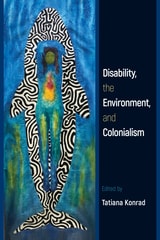
The editor and contributors provide a careful analysis of the intersection of disability, the environment, and colonialism to understand issues such as eco-ableism, environmental degradation, homogenized approaches to environmentalism, and climate change. They also look at the body as a site of colonial oppression and environmental exploitation.
Contributors: Holly Caldwell, Matthew J. C. Cella, John Gulledge, Memona Hossain, Nancy J. Hirschmann, Iain Hutchison, Andrew B. Jenks, Suha Kudsieh, Gordon M. Sayre, Jessica A. Schwartz, Anna Stenning, Aubrey Tang, Alice Wexler, and the editor.
Disabled Futures
A Framework for Radical InclusionMilo W. Obourn
Temple University Press, 2020
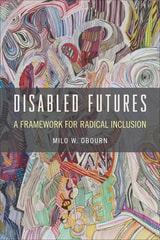
Disabled Futures makes an important intervention in disability studies by taking an intersectional approach to race, gender, and disability. Milo Obourn reads disability studies, gender and sexuality studies, and critical race studies to develop a framework for addressing inequity. They theorize the concept of “racialized disgender”—to describe the ways in which racialization and gendering are social processes with disabling effects—thereby offering a new avenue for understanding race, gender, and disability as mutually constitutive.
Obourn uses readings of literature and popular culture from Lost and Avatar to Octavia Butler’s Xenogenesis trilogy to explore and unpack specific ways that race and gender construct—and are constructed by—historical notions of ability and disability, sickness and health, and successful recovery versus damaged lives. What emerges is not only a more complex and deeper understanding of the intersections between ableism, racism, and (cis)sexism, but also possibilities for imagining alternate and more radically inclusive futures in which all of our identities, experiences, freedoms, and oppressions are understood as interdependent and intertwined.

Disabled State
Deborah Stone
Temple University Press, 1986
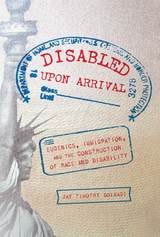
Disabled Upon Arrival
Eugenics, Immigration, and the Construction of Race and DisabilityJay Timothy Dolmage
The Ohio State University Press, 2018
Through careful archival research and consideration of the larger ideologies of racialization and xenophobia, Disabled Upon Arrival links anti-immigration rhetoric to eugenics—the flawed “science” of controlling human population based on racist and ableist ideas about bodily values. Dolmage casts an enlightening perspective on immigration restriction, showing how eugenic ideas about the value of bodies have never really gone away and revealing how such ideas and attitudes continue to cast groups and individuals as disabled upon arrival.
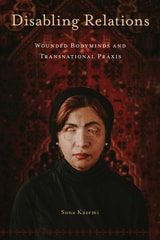
Disabling Relations
Wounded Bodyminds and Transnational PraxisSona Kazemi
Temple University Press, 2026
Kazemi focuses on the disabled dissidents who were incarcerated and tortured by the Islamic regime in the aftermath of the 1979 revolution in Iran, the disabled veterans and civilians wounded during and after the Iran–Iraq War, the disabled survivors of state-sanctioned punitive limb amputation, and the disabled women survivors of acid attacks as a form of gender-based violence. Disabling Relations explains how disabled bodyminds are produced and sustained through the violence of patriarchal, capitalist-imperialist, nationalist, and theocratic social relations. Kazemi uses the theoretical concept of “wounding” as a historical process of becoming and remaining disabled mediated by unequal power relations and “disability consciousness” to show how these survivors come to terms with their disability.
Thinking about critical disability theory in a new way, Kazemi investigates how disability is produced transnationally and the impact that this new theorization can make globally.
In the series Dis/color
Discovering Sign Language
Laura Greene
Gallaudet University Press, 1981

Don't Call Me Inspirational
A Disabled Feminist Talks BackHarilyn Rousso
Temple University Press, 2013
For psychotherapist, painter, feminist, filmmaker, writer, and disability activist Harilyn Rousso, hearing well-intentioned people tell her, "You're so inspirational!" is patronizing, not complimentary.
In her empowering and at times confrontational memoir, Don't Call Me Inspirational, Rousso, who has cerebral palsy, describes overcoming the prejudice against disability--not overcoming disability. She addresses the often absurd and ignorant attitudes of strangers, friends, and family.Rousso also examines her own prejudice toward her disabled body, and portrays the healing effects of intimacy and creativity, as well as her involvement with the disability rights community. She intimately reveals herself with honesty and humor and measures her personal growth as she goes from "passing" to embracing and claiming her disability as a source of pride, positive identity, and rebellion.
A collage of images about her life, rather than a formal portrait, Don't Call Me Inspirational celebrates Rousso's wise, witty, productive, outrageous life, disability and all.