Results by title
125 books match the query 'Perspectives' and 5 start with d
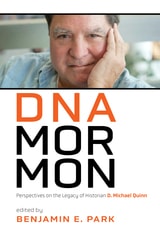
DNA Mormon
Perspectives on the Legacy of Historian D. Michael QuinnBenjamin E. Park
Signature Books, 2022
This compilation is a rigorous and riveting assessment of Quinn’s legacy. In this volume, scholars examine him as a historical figure who helps us better understand modern Mormonism. They also probe his role as a historiographical titan. These essays enable us to analyze his influence on scholarship that both preceded and followed him. More than an investigation into his life and work, DNA Mormon uncovers the world in which he lived.
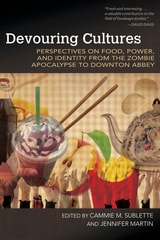
Devouring Cultures
Perspectives on Food, Power, and Identity from the Zombie Apocalypse to Downton AbbeyCammie M. Sublette
University of Arkansas Press, 2016
Devouring Cultures brings together contributors from a wide range of disciplines including media studies, rhetoric, gender studies, philosophy, anthropology, literary criticism, film criticism, race theory, history, and linguistics to examine the ways food signifies both culture and identity.
These scholars look for answers to intriguing questions: What does our choice of dining house say about our social class? Can restaurants teach us about a culture? How does food operate in Downton Abbey? How does food consumption in zombie apocalypse films and apocalyptic literature relate to contemporary food-chain crises and food nostalgia? What aspects of racial conflict, assimilation, and empowerment may be represented in restaurant culture and food choice?
Restaurants, from their historical development to their modern role as surrogate kitchen, are studied as markers of gender, race, and social class, and also as forums for the exhibition of tensions or spaces where culture is learned through the language of food. Food, as it is portrayed in literature, movies, and television, is illuminated as a platform for cultural assimilation, a way for the oppressed to find agency, or even a marker for the end of a civilization.
The essays in Devouring Cultures show how our choices about what we eat, where we eat, and with whom we eat are linked to identity and meaning and how the seemingly simple act of consumption has implications that extend far beyond sustenance.
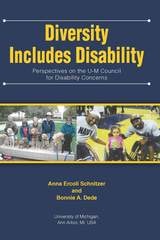
Diversity Includes Disability
Perspectives on the U-M Council for Disability ConcernsAnna Ercoli Schnitzer and Bonnie A. Dede
Michigan Publishing Services, 2018
The Council has changed and enlarged its membership from its origins as a small, low-key group consisting primarily of faculty and staff engaged in the disability arena, to an organization that encompasses a diverse, cross-campus and local community membership, with an extensive mailing list, as well. The achievements of the Council over the years and the goals that it envisions for the future, we hope, will serve as a template for other institutions.
Diversity in Language
Perspectives and ImplicationsEdited by Yoshiko Matsumoto, David Oshima, Orrin Robinson, and Peter Sells
CSLI, 2007
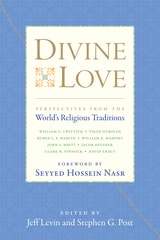
Divine Love
Perspectives from the World's Religious TraditionsJeff Levin
Templeton Press, 2010
The contributors to Divine Love cover a broad spectrum of world religions, comparing and contrasting approaches among Christians of several denominations, Jews, Buddhists, Muslims, Hindus, and adherents of traditional African religions. Each chapter focuses on the definition and conceptual boundaries of divine love; its expression and experience; its instrumentality and salience; how it can become distorted, and how it has been made manifest or restored by great historic exemplars of altruism, compassion, and unlimited love.
The ultimate aim for many of the world’s major faith traditions is to love and be loved by God—to live in connection with the Divine, in union with the Beloved, in reconciliation with the Ultimate. Religious scholars Jeff Levin and Stephen G. Post have termed this connection “divine love.” In their new collection of the same name, they have invited eight of the world’s preeminent religious scholars to share their perspectives on the what, how, and why of divine love.From this diverse gathering of perspectives emerges evidence that to love and to be loved by God, to enter into a mutual and covenantal relationship with the Divine, may well offer solutions to many of the current crises around the world. Only a loving relationship with the Source of being within the context of the great faith and wisdom traditions of the world can fully inform and motivate the acts of love, unity, justice, compassion, kindness, and mercy for all beings that are so desperately required to counter the toxic influences in the world.
Contributors: William C. Chittick, Vigen Guroian, Ruben L. F. Habito, William K. Mahony, John S. Mbiti, Jacob Neusner, Clark H. Pinnock, and David Tracy.