Results by title
117 books match the query 'Philippines' and 5 start with d
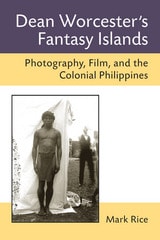
Dean Worcester's Fantasy Islands
Photography, Film, and the Colonial PhilippinesMark Rice
University of Michigan Press, 2014
Dean Worcester’s Fantasy Islands brings to life one of the most significant (but under examined) figures in the history of U.S. colonialism in the Philippines. Upon the outbreak of the Spanish-American War, Worcester, a scientist who had traveled twice to the Philippines on zoological expeditions, established himself as one of America’s leading experts on the Philippines. Over a fourteen-year career as a member of the U.S. colonial regime, Worcester devoted much of his time and energy to traveling among and photographing non-Christian minority groups in the Philippines. He amassed an archive of several thousand photographs taken by him or by government photographers. Worcester deployed those photographs in books, magazine articles, and lectures to promote his belief that the United States should maintain control of the Philippines for decades to come. While many historians have examined American colonial photography in the Philippines, this book is the first lengthy treatment of Worcester’s role in shaping American perceptions of the Philippines in the early twentieth century.
Deeper Ground, Darker Shadows
The Making of a Mindanao RebelEddie L. Quitoriano
University of Wisconsin Press, 2025
Quitoriano finds revolutionary life thrilling but dangerous, with secretly arranged meetings and drops, doctored passports, and hastily planned plastic surgery. He wrestles with the global implications of his work, experiences daily struggles to survive in always-changing political circumstances, and is profoundly human in his love and concern for the family he has left behind in the Philippines. What emerges is a view of international revolutionary movements that only an insider could write. Quitoriano provides an essential and unique missing piece of twentieth-century Philippine and leftist history.

Deforestation in the Postwar Philippines
David M. Kummer
University of Chicago Press, 1992

Discrepant Histories
Vincente Rafael
Temple University Press, 1995

Dream Factories of a Former Colony
American Fantasies, Philippine CinemaJosé B. Capino
University of Minnesota Press, 2010
By tracking American fantasies in Philippine movies from the postindependence period to the present, José B. Capino offers an innovative account of cinema's cultural work in decolonization and globalization. Capino examines how a third world nation's daydreams both articulate empire and mobilize against it, provide imaginary maps and fables of identity for its migrant workers and diasporan subjects, pose challenges to the alibis of patriarchy and nationalism, and open up paths for participating in the cultures of globality.
Through close readings of more than twenty Philippine movies, Capino demonstrates the postcolonial imagination's vital role in generating pragmatic and utopian visions of living with empire. Illuminating an important but understudied cinema, he creates a model for understanding the U.S. image in the third world.