Results by title
413 books match the query 'Pictorial works' and 17 start with d
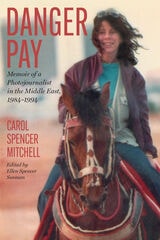
Danger Pay
Memoir of a Photojournalist in the Middle East, 1984-1994By Carol Spencer Mitchell
University of Texas Press, 2008
An engrossing memoir in which a photojournalist records both the precursors to today’s conflicts in the Middle East and her own deeply felt conviction that news coverage of the region actually increases the conflicts there.
"You're going where?" Carol Spencer Mitchell's father demanded as she set off in 1984 to cover the Middle East as a photojournalist for Newsweek and other publications. In this intensely thoughtful memoir, Spencer Mitchell probes the motivations that impelled her—a single Jewish woman—to document the turmoil roiling the Arab world in the 1980s and 1990s, as well as how her experiences as a photojournalist compelled her to set aside her cameras and reexamine the way images are created, scenes are framed, and "real life" is packaged for specific news stories.
In Danger Pay, Spencer Mitchell takes us on a harrowing journey to PLO military training camps for Palestinian children and to refugee camps in the Gaza Strip before, during, and after the first intifada. Through her eyes, we experience the media frenzy surrounding the 1985 hijackings of TWA Flight #847 and the Italian cruise liner Achille Lauro. We meet Middle Eastern leaders, in particular Yasser Arafat and King Hussein of Jordan, with whom Spencer Mitchell developed close working relationships. And we witness Spencer Mitchell's growing conviction that the Western media's portrayal of conflicts in the Middle East actually helps to fuel those conflicts—a conviction that eventually, as she says, "shattered [her] career."
Although the events that Spencer Mitchell records took place decades ago, their repercussions reverberate in the MIddle Eastern conflicts of today. Likewise, her concern about "the triumph of image over reality" takes on greater urgency as our knowledge of the world becomes ever more filtered by virtual media.

Dangerous Knowledge
Art Simon
Temple University Press, 1996
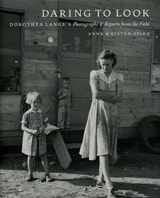
Daring to Look
Dorothea Lange's Photographs and Reports from the FieldAnne Whiston Spirn
University of Chicago Press, 2009
Daring to Look presents never-before-published photos and captions from Dorothea Lange’s fieldwork in California, the Pacific Northwest, and North Carolina during 1939. Lange’s images of squatter camps, benighted farmers, and stark landscapes are stunning, and her captions—which range from simple explanations of settings to historical notes and biographical sketches—add unexpected depth, bringing her subjects and their struggles unforgettably to life, often in their own words.
When Lange was dismissed from the Farm Security Administration at the end of 1939, these photos and field notes were consigned to archives, where they languished, rarely seen. With Daring to Look, Anne Whiston Spirn not only returns them to the public eye, but sets them in the context of Lange’s pioneering life, work, and struggle for critical recognition—firmly placing Lange in her rightful position at the forefront of American photography.
“A thoughtful and meticulously researched account of Lange’s career. . . . Spirn, a photographer herself, traces Lange’s path, visiting her locations and subjects in a fascinating series of ‘then and now’ shots.”—Publishers Weekly
“Dorothea Lange has long been regarded as one of the most brilliant photographic witnesses we have ever had to the peoples and landscapes of America, but until now no one has fully appreciated the richness with which she wove images together with words to convey her insights about this nation. We are lucky indeed that Anne Whiston Spirn, herself a gifted photographer and writer, has now recovered Lange’s field notes and woven them into a rich tapestry of texts and images to help us reflect anew on Lange’s extraordinary body of work.”—William Cronon, author of Nature’s Metropolis
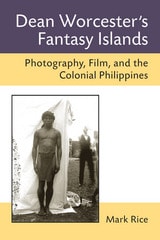
Dean Worcester's Fantasy Islands
Photography, Film, and the Colonial PhilippinesMark Rice
University of Michigan Press, 2014
Dean Worcester’s Fantasy Islands brings to life one of the most significant (but under examined) figures in the history of U.S. colonialism in the Philippines. Upon the outbreak of the Spanish-American War, Worcester, a scientist who had traveled twice to the Philippines on zoological expeditions, established himself as one of America’s leading experts on the Philippines. Over a fourteen-year career as a member of the U.S. colonial regime, Worcester devoted much of his time and energy to traveling among and photographing non-Christian minority groups in the Philippines. He amassed an archive of several thousand photographs taken by him or by government photographers. Worcester deployed those photographs in books, magazine articles, and lectures to promote his belief that the United States should maintain control of the Philippines for decades to come. While many historians have examined American colonial photography in the Philippines, this book is the first lengthy treatment of Worcester’s role in shaping American perceptions of the Philippines in the early twentieth century.
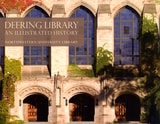
Deering Library
An Illustrated HistoryNina Barrett
Northwestern University Press, 2008
Published to commemorate the Deering Library’s 75th anniversary, this book explores the Deering and McCormick families, who funded the project; the building’s distinctive Collegiate Gothic architecture; its lore as a campus institution; and its role in the evolution of Northwestern University Library into one of the country’s most prominent research libraries. Richly illustrated, it is both an authoritative account of a landmark library and a rich keepsake for Northwestern alumni.
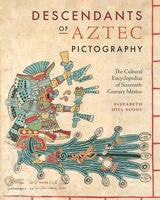
Descendants of Aztec Pictography
The Cultural Encyclopedias of Sixteenth-Century MexicoBy Elizabeth Hill Boone
University of Texas Press, 2021
In the aftermath of the sixteenth-century Spanish conquest of Mexico, Spanish friars and authorities partnered with indigenous rulers and savants to gather detailed information on Aztec history, religious beliefs, and culture. The pictorial books they created served the Spanish as aids to evangelization and governance, but their content came from the native intellectuals, painters, and writers who helped to create them. Examining the nine major surviving texts, preeminent Latin American art historian Elizabeth Hill Boone explores how indigenous artists and writers documented their ancestral culture.
Analyzing the texts as one distinct corpus, Boone shows how they combined European and indigenous traditions of documentation and considers questions of motive, authorship, and audience. For Spanish authorities, she shows, the books revealed Aztec ideology and practice, while for the indigenous community, they preserved venerated ways of pictorial expression as well as rhetorical and linguistic features of ancient discourses. The first comparative analysis of these encyclopedias, Descendants of Aztec Pictography analyzes how the painted compilations embraced artistic traditions from both sides of the Atlantic.

Desert Jewels
Cactus Flowers of the Southwest and MexicoJohn P. Schaefer
University of Arizona Press, 2023
Stunning up-close images by a renowned desert photographer
Cactus flowers are jewels of the desert—they add brilliant pops of color to our arid surroundings. In this book, renowned Tucson photographer John P. Schaefer brings the exquisite and unexpected beauty of the cactus flower to the page. Hundreds of close-up photographs of cactus flowers native to the U.S. Southwest and Mexico offer a visual feast of color and texture, nuance and light.
These stunning photographs allow us to appreciate the spectacular range of color and form cactus flowers have to offer. For the cactus enthusiast, the book offers a comprehensive collection of high-quality flower photographs unlike any other. The photographs cover more than 250 cactus species organized by genus. The book starts with an introduction by the photographer that is both autobiographical and informative. It offers a glimpse into his process for capturing these elusive desert gems, resulting in photographs so beautiful they were featured as a book of stamps issued by the U.S. Postal Service.
This collection of cactus flowers in bloom is a one-of-a-kind work by a master photographer.
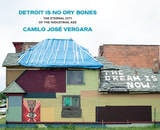
Detroit Is No Dry Bones
The Eternal City of the Industrial AgeCamilo José Vergara
University of Michigan Press, 2016
Detroit Resurgent
Howard Bossen
Michigan State University Press, 2014
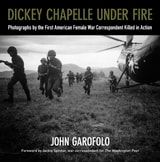
Dickey Chapelle Under Fire
Photographs by the First American Female War Correspondent Killed in ActionJohn Garofolo
Wisconsin Historical Society Press, 2026
Striking photographs and stories from more than two decades on the frontlines by a groundbreaking photojournalist—and the first female American war correspondent to be killed in action.
In 1941, twenty-two-year-old Georgette "Dickey" Chapelle sold her first photo essay to Look magazine. A year later, with World War II underway, she was photographing American soldiers in combat training in Panama. By the end of the war, she had captured the devastation at Iwo Jima and Okinawa, and in the ensuing decades, Dickey and her camera were on the scene at many of the world’s hotspots—from Cuba and the Dominican Republic to Algeria and Lebanon to Vietnam and Laos. Dickey Chapelle Under Fire exposes her remarkable story and shares over 150 stunning images from her extraordinary career as a photojournalist.
In the male-dominated world of war journalism, Chapelle fought to be taken seriously. She eventually earned the respect of many of her male colleagues and broke down barriers for future generations of female journalists. She embedded herself with military units on frontlines around the globe, capturing not only the horrors of war but also the camaraderie and everyday routines of service men and women.
Always one to follow the action, Chapelle traveled with Algerian rebels across the North African desert and with Fidel Castro through the jungles of Cuba. She spent two months in a Hungarian prison after being caught smuggling aid to refugees fleeing a Soviet invasion. Beginning in 1961, Chapelle set her lens and viewfinder on Southeast Asia, capturing the growing conflict there, until she was killed while on patrol with marines in Vietnam in April 1965—making her the first female American war correspondent to be killed in action.
For twenty-five years, Chapelle's photographs graced the pages of National Geographic, the National Observer, Life, and other major publications. Despite her tragic end, Chapelle’s tenacity, courage, and compassion shine throughout her work, highlighting the human impact of war while revealing the larger stories beyond the battlefield. Her legacy lives on through this powerful collection.
Dispatches from Moments of Calm
Alexander Kluge and Gerhard Richter
Seagull Books, 2019
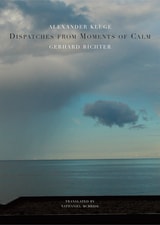
That calm was the work of Gerhard Richter, who had been granted control over Die Welt for that single day, taking over and imprinting all thirty pages of the newspaper with his personal stamp: images from quiet moments amid unquiet times, the demotion of politics from its primary position, the privileging of the private and personal over the public, and, above all, artful, moving contrasts between sharpness and softness. He had created an unprecedented work of mass art.
Among the many people to praise the work was writer Alexander Kluge, who instantly began writing stories to accompany Richter’s images. This book, the second collaboration between Kluge and Richter, brings their stories and images together, along with new words and artworks created specifically for this volume. The result, Dispatches from Moments of Calm, is a beautiful, meditative interval in the otherwise unremitting press of everyday life, a masterpiece by two acclaimed artists working at the height of their powers.
Don’t Make Me Go to Town
Ranchwomen of the Texas Hill CountryBy Rhonda Lashley Lopez
University of Texas Press, 2011
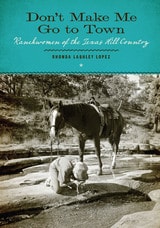
Many people dream of "someday buying a small quaint place in the country, to own two cows and watch the birds," in the words of Texas ranchwoman Amanda Spenrath Geistweidt. But only a few are cut out for the unrelenting work that makes a family ranching operation successful. Don't Make Me Go to Town presents an eloquent photo-documentary of eight women who have chosen to make ranching in the Texas Hill Country their way of life. Ranging from young mothers to elderly grandmothers, these women offer vivid accounts of raising livestock in a rugged land, cut off from amenities and amusements that most people take for granted, and loving the hard lives they've chosen.
Rhonda Lashley Lopez began making photographic portraits of Texas Hill Country ranchwomen in 1993 and has followed their lives through the intervening years. She presents their stories through her images and the women's own words, listening in as the ranchwomen describe the pleasures and difficulties of raising sheep, Angora goats, and cattle on the Edwards Plateau west of Austin and north of San Antonio. Their stories record the struggles that all ranchers face—vagaries of weather and livestock markets, among them—as well as the extra challenges of being women raising families and keeping things going on the home front while also riding the range. Yet, to a woman, they all passionately embrace family ranching as a way of life and describe their efforts to pass it on to future generations.
Dream Shot
The Journey to a Wheelchair Basketball National ChampionshipJosh Birnbaum
University of Illinois Press, 2017
Dream Street
W. Eugene Smith's Pittsburgh ProjectW. Eugene Smith
University of Chicago Press, 2023
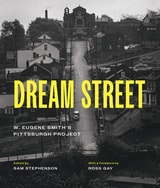
In 1955, having just resigned from his high-profile but stormy career with Life Magazine, W. Eugene Smith was commissioned to spend three weeks in Pittsburgh and produce one hundred photographs for noted journalist and author Stefan Lorant’s book commemorating the city’s bicentennial. Smith ended up staying a year, compiling twenty thousand images for what would be the most ambitious photographic essay of his life. But only a fragment of this work was ever seen, despite Smith's lifelong conviction that it was his greatest collection of photographs.
In 2001, Sam Stephenson published for the first time an assemblage of the core images from this project, selections that Smith asserted were the “synthesis of the whole,” presenting not only a portrayal of Pittsburgh but of postwar America. This new edition, updated with a foreword by the poet Ross Gay, offers a fresh vision of Smith's masterpiece.
Dreaming the Mississippi
Katherine Fischer
University of Missouri Press, 2006
Driftless
Photographs from IowaDanny Wilcox Frazier
Duke University Press, 2007
Robert Frank, Prize Judge
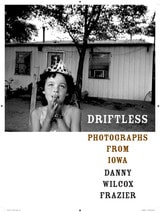
In Driftless, Danny Wilcox Frazier’s dramatic black-and-white photographs portray a changing Midwest of vanishing towns and transformed landscapes. As rural economies fail, people, resources, and services are migrating to the coasts and cities, as though the heart of America were being emptied. Frazier’s arresting photographs take us into Iowa’s abandoned places and illuminate the lives of those people who stay behind and continue to live there: young people at leisure, fishermen on the Mississippi, veterans on Memorial Day, Amish women playing cards, as well as more recent arrivals: Lubavitcher Hasidic Jews at prayer, Latinos at work in the fields. Frazier’s camera finds these newcomers while it also captures activities that seemingly have gone on forever: harvesting and hunting, celebrating and socializing, praying and surviving.
This collection of photographs is a portrait of contemporary rural Iowa, but it is also more that that. It shows what is happening in many rural and out-of-the-way communities all over the United States, where people find ways to get by in the wake of closing factories and the demise of family farms. Taken by a true insider who has lived in Iowa his entire life, Frazier’s photographs are rich in emotion and give expression to the hopes and desires of the people who remain, whose needs and wants are complicated by the economic realities remaking rural America. Poetic and dark but illuminated with flashes of insight, Frazier’s stunning images evoke the brilliance of Robert Frank’s The Americans.
To view an image gallery, click here.
Driving a Table Down
Barry Phipps
University of Iowa Press, 2020
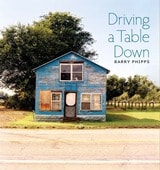
Phipps presents the 104 color photographs in Driving a Table Down—selected from more than 2,000 photographs taken over the twelve-day trip—in sequential order to show, in his words, “what does and does not change as one travels through shifting cultural and geographic regions.” By capturing the present moment while referencing the past with faded signs, almost obliterated murals, closed businesses in quiet towns, forgotten tourist attractions, and many other layers of historical accumulations, the photographs illustrate the stark fact that the present is never entirely present tense. Phipps’s attention to the real-time details of rural regions of the Midwest and the South, juxtaposed with personal photographs of his family, gives us a momentary definition of America in a state of flux, an America that looks to the past in a time of an uncertain future.