Results by title
168 books match the query 'Poland' and 5 start with d
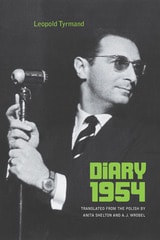
Diary 1954
Leopold Tyrmand
Northwestern University Press, 2014
Leopold Tyrmand, a Polish Jew who survived World War II by working in Germany under a false identity, would go on to live and write under Poland’s Communist regime for twenty years before emigrating to the West, where he continued to express his deeply felt anti-Communist views. Diary 1954—written after the independent weekly paper that employed him was closed for refusing to mourn Stalin’s death—is an account of daily life in Communist Poland. Like Czesław Miłosz, Václav Havel, and other dissidents who described the absurdities of Soviet-backed regimes, Tyrmand exposes the lies—big and small—that the regimes employed to stay in power. Witty and insightful, Tyrmand’s diary is the chronicle of a man who uses seemingly minor modes of resistance—as a provocative journalist, a Warsaw intellectual, the "spiritual father" of Polish hipsters, and a promoter of jazz in Poland—to maintain his freedom of thought.
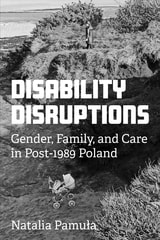
Disability Disruptions
Gender, Family, and Care in Post-1989 PolandNatalia Pamula
University of Illinois Press, 2026
Polish politicians regularly idealize the family. But, as Pamula illustrates such rhetoric coerces people into a state of violent intimacy that forces the burden of care onto family members bound by love, dependence, and responsibility. As the narratives show, disability destabilizes national myths, challenges heteronormative and patriarchal family ideals, and exposes continuities between socialist and capitalist regimes in their treatment of disabled citizens.
A rich blend of activism and analysis, Disability Disruptions ventures outside Anglophone notions of disability to highlight how Poland’s disabled people and caregivers overcome lack of recognition, resist social death, and rewrite public memory.
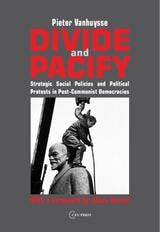
Divide and Pacify
Strategic Social Policies and Political Protests in Post-Communist DemocraciesPieter Vanhuysse
Central European University Press, 2006
Despite dramatic increases in poverty, unemployment, and social inequalities, the Central and Eastern European transitions from communism to market democracy in the 1990s have been remarkably peaceful. This book proposes a new explanation for this unexpected political quiescence. It shows how reforming governments in Poland, Hungary and the Czech Republic have been able to prevent massive waves of strikes and protests by the strategic use of welfare state programs such as pensions and unemployment benefits.
Divide and Pacify explains how social policies were used to prevent massive job losses with softening labor market policies, or to split up highly aggrieved groups of workers in precarious jobs by sending some of them onto unemployment benefits and many others onto early retirement and disability pensions. From a narrow economic viewpoint, these policies often appeared to be immensely costly or irresponsibly populist. Yet a more inclusive social-scientific perspective can shed new light on these seemingly irrational policies by pointing to deeper political motives and wider sociological consequences.

Double Lives, Second Chances
The Cinema of Krzysztof KieslowskiAnnette Insdorf
Northwestern University Press, 2013
Dynamics of Class and Stratification in Poland
1945–2015Irina Tomescu-Dubrow
Central European University Press, 2018