Results by title
87 books match the query 'Political Freedom' and 4 start with d
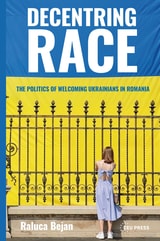
Decentring Race
The Politics of Welcoming Ukrainians in RomaniaRaluca Bejan
Central European University Press, 2026
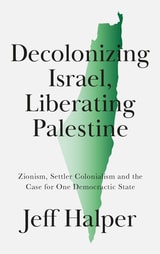
Decolonizing Israel, Liberating Palestine
Zionism, Settler Colonialism, and the Case for One Democratic StateJeff Halper
Pluto Press, 2021
For decades we have spoken of the 'Israel-Palestine conflict', but what if our understanding of the issue has been wrong all along? This book explores how the concept of settler colonialism provides a clearer understanding of the Zionist movement's project to establish a Jewish state in Palestine, displacing the Palestinian Arab population and marginalizing its cultural presence.
Jeff Halper argues that the only way out of a colonial situation is decolonization: the dismantling of Zionist structures of domination and control and their replacement by a single democratic state, in which Palestinians and Israeli Jews forge a new civil society and a shared political community.
To show how this can be done, Halper uses the 10-point program of the One Democratic State Campaign as a guide for thinking through the process of decolonization to its post-colonial conclusion. Halper's unflinching reframing will empower activists fighting for the rights of the Palestinians and democracy for all.

Democracy in the Headwinds
The Rise, Erosion, and Defence of Liberal DemocracyAndreas Busch
Haus Publishing, 2026
In Democracy in the Headwinds, Andreas Busch examines the growing threats to democracy worldwide and outlines the principles needed to safeguard it.
A mob storms the United States Capitol. A Hungarian strongman hollows out courts, media, and civil society for sixteen years, then is voted out in a landslide. Brexit exposes the fragility of a constitution built on unwritten conventions. In Germany, one in five voters chooses a party classified by the state’s own security apparatus as a suspected threat to the democratic order. What is going on—and should it concern us?
Drawing on evidence from the United States, the United Kingdom, Germany, Hungary, Poland, and the wider democratic world, Andreas Busch tells the story of liberal democracy’s rise, its erosion by elected leaders who dismantle institutions from within, and the defenses that hold it together. He traces how economic dislocation, digital disruption, and the polarization of political life have converged to put mature democracies under pressure they were assumed to have outgrown.
At the heart of the book lies a deceptively simple argument: the procedural core of democracy—free and fair elections and the peaceful transfer of power—is the foundation on which everything else rests. Protect the mechanics, and everything else can be rebuilt. Lose them, and nothing can.
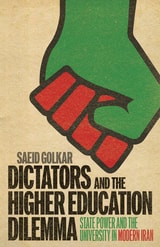
Dictators and the Higher Education Dilemma
State Power and the University in Modern IranSaeid Golkar
Rutgers University Press, 0
Dictators and the Higher Education Dilemma explores a powerful contradiction at the heart of modern authoritarian regimes: While universities are essential for producing skilled labor and projecting national progress, they also cultivate critical thinkers who can challenge state power. Drawing on Iran’s modern history, from the Pahlavi monarchy to the Islamic Republic, Saeid Golkar shows how dictators use universities not only to train technocrats and showcase development but also as tools for shaping ideology, suppressing dissent, and co-opting academics. In authoritarian systems, education becomes a double-edged sword, essential for growth yet dangerous when it empowers independent thought. Golkar reveals how regimes manipulate admissions, censor curricula, and reward loyalty to create compliant intellectuals and loyal elites. Blending personal experience with rich historical and political analysis, this book exposes the tactics used to turn universities into instruments of social control. It speaks to a growing trend worldwide, offering vital insights into the clash between authoritarian power and academic freedom from Iran to China, Russia, and beyond.