Results by title
8812 books match the query 'Political Science' and 352 start with d
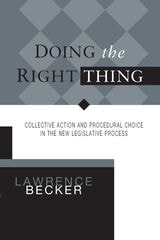
DOING THE RIGHT THING
Collective Action and Procedural Choice in the New Legislative ProcessLawrence Becker
The Ohio State University Press, 2005
Doing the Right Thing examines the use of extraordinary legislative procedures in four cases in the U.S. Congress to accomplish policy objectives that many political scientists would argue are impossible to achieve. It not only shows that Congress is capable of imposing parochial costs in favor of general benefits but it argues that Congress is able to do so in a variety of policy areas through the use of very different kinds of procedural mechanisms that are underappreciated.
The book opens by developing a theory of procedural choice to explain why Congress chooses to delegate in differing degrees in dealing with similar kinds of policy problems. The theory is then applied to four narrative case studies—military base closures, the Yucca Mountain Project, NAFTA, and the Tax Reform Act of 1986—that both show the variety of factors that impact procedural choice and highlight how our national legislature was able to “do the right thing.”
The book concludes by pointing to the variety of ways in which Congress will be confronted with similar policy problems in the coming years and offering some lessons from these cases about what kinds of procedures and policy outcomes we might expect. In short, Congress is remarkably adept at “doing the right thing,” even under difficult circumstances, but only when legislators are willing to manipulate procedures in all the necessary ways.
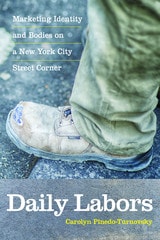
Daily Labors
Marketing Identity and Bodies on a New York City Street CornerCarolyn Pinedo-Turnovsky
Temple University Press, 2019
On street corners throughout the country, men stand or sit together patiently while they wait for someone looking to hire un buen trabajador (a good worker). These day laborers are visible symbols of the changing nature of work—and the demographics of workers—in the United States.
Carolyn Pinedo-Turnovsky spent nearly three years visiting with African American men and Latino immigrant men who looked for work as day laborers at a Brooklyn street intersection. Her fascinating ethnography, Daily Labors, considers these immigrants and citizens as active participants in their social and economic life. They not only work for wages but also labor daily to institute change, create knowledge, and contribute new meanings to shape their social world.
Daily Labors reveals how ideologies about race, gender, nation, and legal status operate on the corner and the vulnerabilities, discrimination, and exploitation workers face in this labor market. Pinedo-Turnovsky shows how workers market themselves to conform to employers’ preconceptions of a “good worker” and how this performance paradoxically leads to a more precarious workplace experience. Ultimately, she sheds light on belonging, community, and what a “good day laborer” for these workers really is.

Damaged Parents
An Anatomy of Child NeglectNorman A. Polansky, Mary Ann Chalmers, Elizabeth Werthan Buttenwieser, and David P. Williams
University of Chicago Press, 1983
"Norman Polansky and his colleagues have produced a truly remarkable book. . . . One of the consequences of [the] relative invisibility of child neglect is that we also know less about it. But this book will help to correct that for it contains reports of findings from two systematic efforts to define, measure, classify, and understand child neglect."—Thomas M. Young, Social Service Review
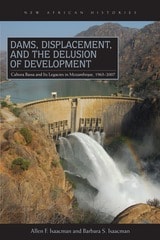
Dams, Displacement, and the Delusion of Development
Cahora Bassa and Its Legacies in Mozambique, 1965–2007Allen F. Isaacman
Ohio University Press, 2013
Cahora Bassa Dam on the Zambezi River, built in the early 1970s during the final years of Portuguese rule, was the last major infrastructure project constructed in Africa during the turbulent era of decolonization. Engineers and hydrologists praised the dam for its technical complexity and the skills required to construct what was then the world’s fifth-largest mega-dam. Portuguese colonial officials cited benefits they expected from the dam—from expansion of irrigated farming and European settlement, to improved transportation throughout the Zambezi River Valley, to reduced flooding in this area of unpredictable rainfall. “The project, however, actually resulted in cascading layers of human displacement, violence, and environmental destruction. Its electricity benefited few Mozambicans, even after the former guerrillas of FRELIMO (Frente de Libertação de Moçambique) came to power; instead, it fed industrialization in apartheid South Africa.” (Richard Roberts)
This in-depth study of the region examines the dominant developmentalist narrative that has surrounded the dam, chronicles the continual violence that has accompanied its existence, and gives voice to previously unheard narratives of forced labor, displacement, and historical and contemporary life in the dam’s shadow.
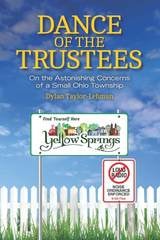
Dance of the Trustees
On the Astonishing Concerns of a Small Ohio TownshipDylan Taylor-Lehman
The Ohio State University Press, 2018
This quaint debate represents just one of many fascinating problems the trustees deal with on a daily basis. While Miami Township is small, the concerns are myriad—from cemeteries filled with unknown remains to a fire department to oversee to legal action required against properties clogged with junk. The responsibilities are doubly impressive considering no trustees have backgrounds in public office.
This book combines entertaining nonfiction vignettes with well-researched township history—including a history of religious cults and the possibility that Lee Harvey Oswald was once in town—and elucidates the processes behind an entire civic division. Dance of the Trustees documents twenty-first-century small-town life with humor, warmth, and erudition.
Dangerous Counsel
Accountability and Advice in Ancient GreeceMatthew Landauer
University of Chicago Press, 2019
With Dangerous Counsel, Matthew Landauer analyzes the sometimes ferocious and unpredictable politics of accountability in ancient Greece and offers novel readings of ancient history, philosophy, rhetoric, and drama. In comparing the demos to a tyrant, thinkers such as Herodotus, Plato, Isocrates, and Aristophanes were attempting to work out a theory of the badness of unaccountable power; to understand the basic logic of accountability and why it is difficult to get right; and to explore the ways in which political discourse is profoundly shaped by institutions and power relationships. In the process they created strikingly portable theories of counsel and accountability that traveled across political regime types and remain relevant to our contemporary political dilemmas.
Dangerous Frames
How Ideas about Race and Gender Shape Public OpinionNicholas J. G. Winter
University of Chicago Press, 2008
Dangerous Friendship
Stanley Levison, Martin Luther King Jr., and the Kennedy BrothersBen Kamin
Michigan State University Press, 2014

Dangerous Migration
Mexican Labor and the Fight for Immigrant RightsEladio B. Bobadilla
University of Illinois Press, 2026
Beginning with Mexican American opposition to the Bracero Program, Eladio Bobadilla traces the movement’s fault lines that formed around the issue of undocumented workers. Bobadilla reveals how internationalist and human rights discourse influenced the rise of the Chicano movement and its defense of Mexican undocumented immigrants. As time passed, anti-Mexican social, political, and legislative forces produced a nativist backlash that put immigration at the center of the United States’ culture wars and created the fantasy of undocumented workers as an existential threat.
Engaging and vivid, Dangerous Migration illuminates the history of debates over Mexican labor, the emergence of the immigrant rights activism, and the nativist movements that united Latinos with right-wing white Americans.
Daniel Shays's Honorable Rebellion
An American StoryDaniel Bullen
Westholme Publishing, 2024
Daniel Shays’s Honorable Rebellion: An American Story by Daniel Bullen tells the history of the crisis from the protesters’ perspective. Through five months of nonviolent protests, the farmers kept courts throughout Massachusetts from hearing foreclosures, facing down threats from the government, which escalated to the point that Governor James Bowdoin ultimately sent an army to arrest them. Even so, the people won reforms in an electoral landslide.
Thomas Jefferson called these protests an honorable rebellion, and hoped that Americans would never let twenty years pass without such a campaign, to rein in powerful interests. This riveting and meticulously researched narrative shows that Shays and his fellow protesters were hardly a dangerous rabble, but rather a proud people who banded together peaceably, risking their lives for justice in a quintessentially American story.

Daniel Webster, “The Completest Man”
Documents from The Papers of Daniel WebsterEdited by Kenneth E. Shewmaker and Daniel Webster
Brandeis University Press, 1993

Darfur Allegory
Rogaia Mustafa Abusharaf
University of Chicago Press, 2021
Elaborated in colonial times and enshrined in policy afterwards, such binary categories have been adopted by the media to explain the civil war in Darfur. The narratives that circulate internationally are thus highly fraught and cover over—to counterproductive effect—forms of Darfurian activism that have emerged in the conflict’s wake. Darfur Allegory marries the analytical precision of a committed anthropologist with an insider’s view of Sudanese politics at home and in the diaspora, laying bare the power of words to heal or perpetuate civil conflict.

Dark Continents
Psychoanalysis and ColonialismRanjana Khanna
Duke University Press, 2003
bringing psychoanalysis, colonialism, and women together can become the starting point of a postcolonial feminist theory. Psychoanalysis brings to light, Khanna argues, how nation-statehood for the former colonies of Europe institutes the violence of European imperialist history. Far from rejecting psychoanalysis, Dark Continents reveals its importance as a reading practice that makes visible the psychical strife of colonial and
postcolonial modernity. Assessing the merits of various models of nationalism, psychoanalysis, and colonialism, it refashions colonial melancholy as a transnational feminist ethics.
Khanna traces the colonial backgrounds of psychoanalysis from its beginnings in the late nineteenth century up to the present. Illuminating Freud’s debt to the languages of archaeology and anthropology throughout his career, Khanna describes how Freud altered his theories of the ego as his own political status shifted from Habsburg loyalist to Nazi victim. Dark Continents explores how psychoanalytic theory was taken up in Europe and its colonies in the period of decolonization following World War II, focusing on its use by a range of writers including Jean-Paul Sartre, Simone de Beauvoir, Octave Mannoni, Aimé and Suzanne Césaire, René Ménil, Frantz Fanon, Albert Memmi, Wulf Sachs, and Ellen Hellman. Given the multiple gendered and colonial contexts of many of these writings, Khanna argues for the necessity of a postcolonial, feminist critique of
decolonization and postcoloniality.

Dark Hope
Working for Peace in Israel and PalestineDavid Shulman
University of Chicago Press, 2007
For decades, we’ve been shocked by images of violent clashes between Israelis and Palestinians in the West Bank and Gaza. But for all their power, those images leave us at a loss: from our vantage at home, it’s hard for us to imagine the struggles of those living in the midst of the fighting. Now, American-born Israeli David Shulman takes us right into the heart of the conflict with Dark Hope, an eye-opening chronicle of his work as a member of the peace group Ta‘ayush, which takes its name from the Arabic for “living together.”
Though Shulman never denies the complexity of the issues fueling the conflict—nor the culpability of people on both sides—he forcefully clarifies the injustices perpetrated by Israel by showing us the human dimension of the occupation. Here we meet Palestinians whose houses have been blown up by the Israeli army, shepherds whose sheep have been poisoned by settlers, farmers stripped of their land by Israel’s dividing wall. We watch as whip-swinging police on horseback attack crowds of nonviolent demonstrators, as Israeli settlers shoot innocent Palestinians harvesting olives, and as families and communities become utterly destroyed by the unrelenting violence of the occupation.
Opposing such injustices, Shulman and his companions—Israeli and Palestinian both—doggedly work through checkpoints to bring aid, rebuild houses, and physically block the progress of the dividing wall. As they face off against police, soldiers, and hostile Israeli settlers, anger mixes with compassion, moments of kinship alternate with confrontation, and, throughout, Shulman wrestles with his duty to fight the cruelty enabled by “that dependable and devastating human failure to feel.”
With Dark Hope, Shulman has written a book of deep moral searching, an attempt to discover how his beloved Israel went wrong—and how, through acts of compassionate disobedience, it might still be brought back.

Dark Matters
On the Surveillance of BlacknessSimone Browne
Duke University Press, 2015
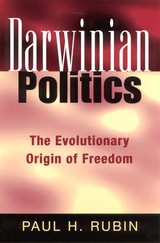
Darwinian Politics
The Evolutionary Origin of FreedomRubin, Paul H.
Rutgers University Press, 2002
Darwinian Politics is the first book to examine political behavior from a modern evolutionary perspective. Here, Paul H. Rubin discusses group or social behavior, including ethnic and racial conflict; altruism and cooperation; envy; political power; and the role of religion in politics ¾ issues that have formed the hallmark of human social behavior.
Adopting a Darwinian perspective, Rubin demonstrates why certain political-moral philosophies succeed or fail in modern Western culture. He begins by showing relationships between biology and natural selection and the history of political philosophy and explains why desirable policies must treat each person as an individual. He considers the notion of group identity and conflict, observing a human propensity to form in-groups, a behavior that does not necessitate but often leads to deviancies such as racism. In discussing altruism, Rubin shows that people are willing to aid the poor if they are convinced that the recipients are not shirkers or free loaders. This explains why recent welfare reforms are widely viewed as successful. Envy, a trait that is often counterproductive in today’s world, is also addressed. In comparing major moral philosophical systems, Rubin contends that utilitarianism is broadly consistent with our evolved preferences. He illustrates evolutionary premises for religious belief and for desires to regulate the behavior of others, and how in today’s world such regulation may not serve any useful purpose.
Ultimately, Rubin argues that humans naturally seek political freedom, and modern Western society provides more freedom than any previous one. In light of his analysis, the author extrapolates that, while there are still areas for improvements, humans have done a remarkably good job of satisfying their evolved political preferences.
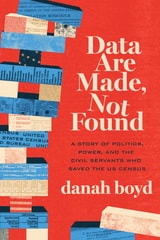
Data Are Made, Not Found
A Story of Politics, Power, and the Civil Servants Who Saved the US Censusdanah boyd
University of Chicago Press, 2026
An eye-opening story of the people who make the census, the United States’ largest and most consequential dataset, and the growing threats to their crucial work.
By many measures, the US census is the government’s largest non-wartime operation, and one of the world’s oldest and biggest data-making endeavors. The 2020 census required more than a decade of planning and technical work—not to mention managing nearly a quarter of a million temporary workers simultaneously—to collect data about the American public. That data was then processed to count each of 331,449,281 residents once—and only once—and in the right place. The operation is also one of the country’s most consequential. Census data determine how political power and federal funding are allocated. Census data make politics, and consequently, politics make census data. In this urgent book, danah boyd explores what it took for the Census Bureau to make the 2020 census, amidst a global pandemic and natural disasters, and while navigating political forces that constrained the budget, micro-managed the schedule, and attacked statisticians’ methods.
With rare insider access to the Census Bureau, boyd observed and interviewed hundreds of government civil servants who made the 2020 census. By documenting the perspectives of government workers, Data Are Made, Not Found provides a rare glimpse into what it takes to make democracy’s data. Each chapter reveals a different challenge—ranging from the last-minute fights about a citizenship question to the not-so-helpful help of well-intended stakeholders to avoid undercounts—and shows how civil servants responded to each problem, controversy, and hurdle. Boyd shows how many of the challenges that the Census Bureau faced in 2020 resulted from decades of political operatives, data users, and various stakeholders playing what boyd calls “Jenga politics,” weakening the administrative state for short-term political gains by removing support and adding more requirements.
Civil servants saved the 2020 census, but future censuses—and other data-making efforts related to elections, health, and the economy—are precarious. Boyd’s message is clear and compelling: protecting democracy means protecting the people and institutions that produce this data.
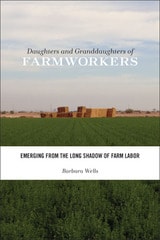
Daughters and Granddaughters of Farmworkers
Emerging from the Long Shadow of Farm LaborWells, Barbara
Rutgers University Press, 0
In Daughters and Granddaughters of Farmworkers, Barbara Wells examines the work and family lives of Mexican American women in a community near the U.S.-Mexican border in California’s Imperial County. Decades earlier, their Mexican parents and grandparents had made the momentous decision to migrate to the United States as farmworkers. This book explores how that decision has worked out for these second- and third-generation Mexican Americans.
Wells provides stories of the struggles, triumphs, and everyday experiences of these women. She analyzes their narratives on a broad canvas that includes the social structures that create the barriers, constraints, and opportunities that have shaped their lives. The women have constructed far more settled lives than the immigrant generation that followed the crops, but many struggle to provide adequately for their families.
These women aspire to achieve the middle-class lives of the American Dream. But upward mobility is an elusive goal. The realities of life in a rural, agricultural border community strictly limit social mobility for these descendants of immigrant farm laborers. Reliance on family networks is a vital strategy for meeting the economic challenges they encounter. Wells illustrates clearly the ways in which the “long shadow” of farm work continues to permeate the lives and prospects of these women and their families.
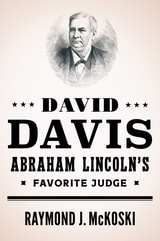
David Davis, Abraham Lincoln's Favorite Judge
Raymond J. McKoski
University of Illinois Press, 2025
One of Abraham Lincoln’s staunchest and most effective allies, Judge David Davis masterminded the floor fight that gave Lincoln the presidential nomination at the 1860 Republican National Convention. This history-changing event emerged from a long friendship between the two men. It also altered the course of Davis’s career, as Lincoln named him to the U.S. Supreme Court in 1862.
Raymond J. McKoski offers a biography of Davis’s public life, his impact on the presidency and judiciary, and his personal, professional, and political relationships with Lincoln. Davis lent his vast network of connections, organizational and leadership abilities, and personal persuasiveness to help Lincoln’s political rise. When Davis became a judge, he honed an ability to hear each case with complete impartiality, a practice that endeared him to Lincoln but one day put him at odds with the president over important Civil War–era rulings. McKoski details these cases while providing an in-depth account of Davis’s role in Lincoln’s two unsuccessful campaigns for U.S. Senate and the fateful run for the presidency.
David Duke and the Politics of Race in the South
John C. Kuzenski
Vanderbilt University Press, 1995

Dawn of Industrial Agriculture in Iowa
Anthropology, Literature, and HistoryE. Paul Durrenberger
University Press of Colorado, 2021
Durrenberger tells the story that Corey aimed to record and preserve of the industrialization of Iowa’s agriculture and the death of its family farms. He analyzes Corey’s regionalist focus on Iowa farming and regionalism’s contemporaneous association in Europe with rising fascism. He explores Corey’s adoption of naturalism, evident in his resistance to heroes and villains, to plot structure and resolution, and to moral judgment, as well as his ethnographic tendency to focus on groups rather than individuals.
An unusual and wide-ranging study, The Dawn of Industrial Agriculture in Iowa offers important insight into the relationships among fiction, individual lives, and anthropological practice, as well as into a pivotal period in American history.

Days of Awe
Reimagining Jewishness in Solidarity with PalestiniansAtalia Omer
University of Chicago Press, 2019
In Days of Awe, Atalia Omer examines this shift through interviews with a new generation of Jewish activists, rigorous data analysis, and fieldwork within a progressive synagogue community. She highlights people politically inspired by social justice campaigns including the Black Lives Matter movement and protests against anti-immigration policies. These activists, she shows, discover that their ethical outrage at US policies extends to Israel’s treatment of Palestinians. For these American Jews, the Jewish history of dispossession and diaspora compels a search for solidarity with liberation movements. This shift produces innovations within Jewish tradition, including multi-racial and intersectional conceptions of Jewishness and movements to reclaim prophetic Judaism. Charting the rise of such religious innovation, Omer points toward the possible futures of post-Zionist Judaism.

De-blading the Knife
Writing Femicide in MudCristina Rivera Garza
Diaphanes, 2026
Dead Ends of Transition
Rentier Economies and ProtectoratesEdited by Michael Dauderstädt and Arne Schildberg
Campus Verlag, 2006
Dead Labor
Toward a Political Economy of Premature DeathJames Tyner
University of Minnesota Press, 2019
A groundbreaking consideration of death from capitalism, from the seventeenth to the twenty-first century
From a 2013 Texas fertilizer plant explosion that killed fifteen people and injured 252 to a 2017 chemical disaster in the wake of Hurricane Harvey, we are confronted all too often with industrial accidents that reflect the underlying attitude of corporations toward the lives of laborers and others who live and work in their companies’ shadows. Dead Labor takes seriously the myriad ways in which bodies are commodified and profits derived from premature death. In doing so it provides a unique perspective on our understanding how life and death drive the twenty-first-century global economy.
James Tyner tracks a history from the 1600s through which premature death and mortality became something calculable, predictable, manageable, and even profitable. Drawing on a range of examples, including the criminalization of migrant labor, medical tourism, life insurance, and health care, he explores how today we can no longer presume that all bodies undergo the same processes of life, death, fertility, and mortality. He goes on to develop the concept of shared mortality among vulnerable populations and examines forms of capital exploitation that have emerged around death and the reproduction of labor.
Positioned at the intersection of two fields—the political economy of labor and the philosophy of mortality—Dead Labor builds on Marx’s notion that death (and truncated life) is a constant factor in the processes of labor. Considering premature death also as a biopolitical and bioeconomic concept, Tyner shows how racialized and gendered bodies are exposed to it in unbalanced ways within capitalism, and how bodies are then commodified, made surplus and redundant, and even disassembled in order to accumulate capital.
Dead in the Water
Global Lessons from the World Bank's Model Hydropower Project in LaosEdited by Bruce Shoemaker and William Robichaud; foreword by Yos Santasombat; afterword by Philip Hirsch
University of Wisconsin Press, 2019
In the 2000s, as the World Bank was reeling from revelations of past hydropower failures, it nonetheless promoted the enormous Nam Theun 2 project. NT2, the Bank believed, offered a new, wiser model of dam development that would alleviate poverty, protect the environment, engage locally affected people in a transparent fashion, and stimulate political transformation. This was a tall order. For the first time, this book shows in detail why, despite assertions of success from the World Bank and other agencies involved in the project, the dam's true story has been one of substantial loss for affected villagers and the regional environment. Nam Theun 2 is an important case study that illustrates much broader problems of global development policy.
Deadline
Populism and the Press in VenezuelaRobert Samet
University of Chicago Press, 2019
In Deadline, anthropologist Robert Samet answers this question by focusing on the relationship between populism, the press, and what he calls “the will to security.” Drawing on nearly a decade of ethnographic research alongside journalists on the Caracas crime beat, he shows how the media shaped the politics of security from the ground up. Paradoxically, Venezuela’s punitive turn was not the product of dictatorship, but rather an outgrowth of practices and institutions normally associated with democracy. Samet reckons with this apparent contradiction by exploring the circulation of extralegal denuncias (accusations) by crime journalists, editors, sources, and audiences. Denuncias are a form of public shaming or exposé that channels popular anger against the powers that be. By showing how denuncias mobilize dissent, Deadline weaves a much larger tale about the relationship between the press, popular outrage, and the politics of security in the twenty-first century.

Deadly Refusals
Kurdish Decolonization in Times of CounterterrorismSerra M. Hakyemez
University of Minnesota Press, 2026
Revolutionary desire and decolonial struggle inside the heart of the carceral state
Deadly Refusals offers an intimate portrait of Kurdish decolonial struggle within the carceral and legal apparatuses of the Turkish state. Set in the counterterrorism courts and maximum-security prisons of Northern Kurdistan, Serra M. Hakyemez’s ethnography examines how prosecuted and imprisoned Kurds from different socioeconomic backgrounds organize in refusal of the criminalization and colonization of their political demands and desires. Through acts of self-criticism, revolutionary education, and comradely care, these prisoners articulate a political subjectivity that challenges the foundations of colonial power.
Based on more than seventeen years of ethnographic research—including interviews with former prisoners, lawyers, judges, and prosecutors; observations of more than one hundred court hearings; and analysis of prison memoirs, poetry, and legal archives—Deadly Refusals uncovers the mechanisms through which counterterrorism law reproduces the colonial state. Yet it is not solely a study of repression. Engaging psychoanalytic concepts of subject, desire, and ethics, Hakyemez illuminates how these carceral spaces also become sites of revolutionary responsibility. Here, refusal is not resignation but a political act in which the colonized self is killed—literally or figuratively—to make way for a larger collective subjectivity.
Using the interplay of comradeship and intimacy, political desire and ordinary pleasure, death and love, Deadly Refusals examines how Kurdish political prisoners forge multilayered relations of decolonization in an ongoing psychopolitical struggle. Hakyemez shows how both small gestures of withdrawal, restraint, and negation as well as radical acts like language protests, hunger strikes, and death protests become part of a shared struggle for alternative futures that state power cannot fully contain or comprehend.
Retail e-book files for this title are screen-reader friendly with images accompanied by short alt text and/or extended descriptions.
Deaf and Disability Studies
Interdisciplinary PerspectivesSusan Burch
Gallaudet University Press, 2010
This collection presents 14 essays by renowned scholars on Deaf people, Deafhood, Deaf histories, and Deaf identity, but from different points of view on the Deaf/Disability compass. Editors Susan Burch and Alison Kafer have divided these works around three themes. The first, Identities and Locations, explores Deaf identity in different contexts. Topics range from a history of activism shaped by the ableism of Deaf elites in the United States from 1880–1920, to a discussion of the roles that economics, location, race, and culture play in the experiences of a Deaf woman from northern Nigeria now living in Washington, D.C.
Alliances and Activism showcases activism organized across differences. Studies include a feminist analysis of how deaf and hearing women working together share responsibility, and an examination of how intra-cultural variations in New York City and Quebec affect deaf-focus HIV/AIDS programs. The third theme, Boundaries and Overlaps, explicitly addresses the relationships between Deaf Studies and Disability Studies. Interviews with scholars from both disciplines help define these relationships. Another contributor calls for hearing/not-deaf people with disabilities to support their Deaf peers in gaining langue access to the United Nations. Deaf and Disability Studies: Interdisciplinary Perspectives reveals that different questions often lead to contrary conclusions among their authors, who still recognize that they all have a stake in this partnership.

Dealing with Risk
Why the Public and the Experts Disagree on Environmental IssuesHoward Margolis
University of Chicago Press, 1997
In Dealing with Risk, Howard Margolis moves beyond the usual "rival rationalities" explanation proffered by risk analysts for the rift between expert and lay opinion. He reveals the conflicts of intuition that undergird those concerns, and proposes a new approach to the psychology of persuasion and belief. Examining the role of intuition, mental habits, and cognitive frameworks in the construction of public opinion, this compelling account bridges the public policy impasse that has plagued controversial environmental issues.
Death Penalty in Decline?
The Fight against Capital Punishment in the Decades since Furman v. GeorgiaAustin Sarat
Temple University Press, 2024
At a time when the United States is undertaking an unprecedented national reconsideration of the death penalty, Death Penalty in Decline? seeks to evaluate how abolitionists might succeed today.
Contributors: John Bessler, Corinna Barrett Lain, James R. Martel, Linda Ross Meyer, Carol S. Steiker, Jordan M. Steiker, and the editor
Death and Dying in the Working Class, 1865-1920
Michael K. Rosenow
University of Illinois Press, 2015
Drawing from an eclectic array of sources ranging from Andrew Carnegie to grave markers in Chicago's potter's field, Rosenow portrays the complex political, social, and cultural relationships that fueled the United States' industrial ascent. The result is an undertaking that adds emotional depth to existing history while challenging our understanding of modes of cultural transmission.

Death of a Nation
American Culture and the End of ExceptionalismDavid W. Noble
University of Minnesota Press, 2002
A trenchant examination of epic shifts in American thought by a major scholar in the field.
In the 1940s, American thought experienced a cataclysmic paradigm shift. Before then, national ideology was shaped by American exceptionalism and bourgeois nationalism: elites saw themselves as the children of a homogeneous nation standing outside the history and culture of the Old World. This view repressed the cultures of those who did not fit the elite vision: people of color, Catholics, Jews, and immigrants. David W. Noble, a preeminent figure in American studies, inherited this ideology. However, like many who entered the field in the 1940s, he rejected the ideals of his intellectual predecessors and sought a new, multicultural, postnational scholarship. Throughout his career, Noble has examined this rupture in American intellectual life. In Death of a Nation, he presents the culmination of decades of thought in a sweeping treatise on the shaping of contemporary American studies and an eloquent summation of his distinguished career.
Exploring the roots of American exceptionalism, Noble demonstrates that it was a doomed ideology. Capitalists who believed in a bounded nationalism also depended on a boundless, international marketplace. This contradiction was inherently unstable, and the belief in a unified national landscape exploded in World War II. The rupture provided an opening for alternative narratives as class, ethnicity, race, and region were reclaimed as part of the nation’s history. Noble traces the effects of this shift among scholars and artists, and shows how even today they struggle to imagine an alternative postnational narrative and seek the meaning of local and national cultures in an increasingly transnational world. While Noble illustrates the challenges that the paradigm shift created, he also suggests solutions that will help scholars avoid romanticized and reductive approaches toward the study of American culture in the future.
Deathwork
Defending The CondemnedMichael Mello
University of Minnesota Press, 2002
A gripping exposé of what lawyers face when they defend prisoners in capital cases.
Legal cases are stories, and some of the most compelling-and the most disturbing-are those that take place on death row: the innocent man executed, juveniles and the mentally ill condemned to die, a smoking electric chair, a napping defense attorney, a senile hit man. These are the stories in which Michael Mello, as a capital public defender, played a crucial role, and they are the cases that make up Deathwork, a moment-by-moment, behind-the-scenes look at the life and work of a death row lawyer and his clients.
Part memoir, part legal casebook, Deathwork offers a gritty, often anguishing picture of what Supreme Court Justice Harry Blackmun called the American legal "machinery of death." The stories Mello tells raise questions about legal issues-from prosecutorial misconduct to the racial inequities of sentencing, from the rules of evidence to the rights of the mentally ill-that here take on a life-and-death urgency. They describe in detail how constitutional issues are raised postconviction, and how those issues are adjudicated by the courts and in accordance with bizarre claims of objectivity. And they show, with a painful immediacy and authenticity, what it is like to live and work under an impending death sentence, the adrenaline rush of the stay or unexpected success, the inconsolable sadness upon the execution of the sick, the afflicted, the innocent.As DNA reversals, last-minute confessions, and revelations of corruption are bringing capital punishment to the forefront of public debate nationwide, this firsthand account of the legalities and realities of the death penalty is as relevant as it is enthralling, as edifying as it is impossible to ignore.
Debating Moderate Islam
The Geopolitics of Islam and the WestM A Muqtedar Khan
University of Utah Press, 2007
After 9/11, many Americans took the view that the attacks on the World Trade Center and the Pentagon were the leading edge of a new war: Islam versus the West. Yet the attacks were also part of the current struggle within Islam between fundamentalist and moderate approaches and were staged for maximum effect in the Muslim world.
This book is based on a special-topic issue of the American Journal of Islamic Social Sciences (Fall 2005), and brings together prominent Muslim voices from the policy and academic communities to debate the nature of moderate Islam and what moderation means in both a theological and a geopolitical sense. Participants reflect on the future of political Islam, its role in Muslim politics, western policies in the Muslim world, and the future of American-Muslim relations. This book and the debate it presents are vital to understanding these complex issues.

Debating the American Dream
How Explanations for Inequality Polarize PoliticsElizabeth Suhay
Russell Sage Foundation, 2025
Drawing on public opinion surveys spanning more than four decades, Suhay finds that Americans’ belief in the American Dream is strongly related to their political party affiliation. Democratic Party leaders have increasingly questioned the fairness of the American economy, and, in effect, have called into question whether the American Dream is “real.” Republican Party leaders, by contrast, have consistently defended the fairness of the economy and the American Dream. While it is true that Americans have become more skeptical of the American Dream overall, Suhay finds this skepticism is concentrated among Democratic members of the public. Despite the increasingly working-class make-up of the Republican coalition, most Republican members of the public continue to believe the American Dream is reality.
Suhay finds that both Democrats and Republicans tend to adhere to their party’s economic narratives when identifying the causes of inequality between rich and poor, White and Black and Latino Americans, and men and women. Democrats and liberals often attribute inequality between these groups to societal causes, such as lack of access to education and jobs or discrimination. Republicans and conservatives, on the other hand, are more likely to blame individuals and lower income groups for their difficulties. However, Americans’ beliefs are less polarized when they consider socioeconomic inequalities rarely debated by politicians. For example, when asking Republicans and Democrats about the roots of rural-urban and White-Asian inequality, there is no clear unequal opportunity-individual responsibility partisan divide. Suhay argues that the availability of partisan “scripts” helps to explain differences in the public’s views on inequality between groups that have been politicized. These beliefs appear to bolster support for the two parties’ policy agendas among party supporters, driving a wedge between Democrats and Republicans in support for redistributive economic policy as well as the political candidates who support or oppose redistribution.
Debating the American Dream provides fascinating insights into politics’ role in Americans’ beliefs and attitudes concerning inequality.
Debating the End of History
The Marketplace, Utopia, and the Fragmentation of Intellectual LifeDavid W. Noble
University of Minnesota Press, 2012
Why do modern people assume that there will be perpetual economic growth? Because, David W. Noble tells us in this provocative study of cultural criticism, such a utopian conviction is the necessary foundation for bourgeois culture. One can imagine the existence of modern middle classes only as long as the capitalist marketplace is expanding. For Noble, the related—and relevant—question is, how can the middle classes believe that a finite earth is an environment in which infinite growth is possible? The answer, which Noble so painstakingly charts, is nothing less than a genealogy of the uses and abuses of knowledge that lie at the heart of so many of our political problems today.
As far back as Plato and as recently as Alan Greenspan, Noble finds proponents of the idea of a world of independent, rational individuals living in timeless simplicity, escaping from an old world of interdependence and generations. Such notions, although in sync with Newtonian science, have come up against the subsequent conclusions of geology, biology, and the physics of Einstein. In a survey of the responses to this quandary of historians, economists, literary critics, and ecologists, Noble reveals how this confrontation, and its implications for a single global marketplace, has forced certain academic disciplines into unnatural—and untenable—positions.
David Noble’s work exposes the cost—not academic at all—of the segregation of the physical sciences from the humanities and social sciences, even as it demonstrates the required movement of the humanities toward the ecological vision of a single, interconnected world.

Debating the Past
Modern Bulgarian Historiography—From Stambolov to ZhivkovRoumen Daskalov
Central European University Press, 2011
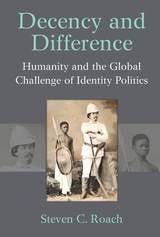
Decency and Difference
Humanity and the Global Challenge of Identity PoliticsSteven C. Roach
University of Michigan Press, 2019
Decency remains one of the most prevalent yet least understood terms in today’s political discourse. In evoking respect, kindness, courage, integrity, reason, and tolerance, it has long expressed an unquestioned duty and belief in promoting and protecting the dignity of all persons. Today this unquestioned belief is in crisis. Tribalism and identity politics have both hindered and threatened its moral stability and efficacy. Still, many continue to undertheorize its political character by isolating it from the effects of identity politics. Decency and Difference argues that decency is a primary source of the political tension that has long shaped the struggles for power, identity, and justice in the global arena. It distinguishes among basic, conservative, and liberal strands of decency to critically examine the many conflicting and competing applications of decency in global politics. Together these different strands reflect a long and uneven evolution from the British and American empires to a global network of justice. This powerful book exposes the gaps of decency and the disparate ways it is practiced, thus addressing the global challenge of configuring a diverse political ethic of decency.

Decent Capitalism
A Blueprint for Reforming our EconomiesSebastian Dullien, Hansjorg Herr, and Christian Kellermann
Pluto Press, 2011
The recent crisis, created by finance capitalism, has brought us to the economic abyss. The excessive freedom of international markets has rapidly transformed into international panic, with states struggling to rescue and bail out a globalised financial sector. Reform is promised by our leaders, but in governments dominated by financial interests there is little hope of meaningful change.
Decent Capitalism argues for a response that addresses capitalism’s systemic tendency towards crisis, a tendency which is completely absent from the mainstream debate. The authors develop a concept of a moderated capitalism that keeps its core strengths intact while reducing its inherent destructive political force in our societies. This book argues that reforming the capitalist system will have to be far more radical than the current political discourse suggests.
Decent Capitalism is a concept and a slogan that will inspire political activists, trade unionists and policy makers to get behind a package of reforms that finally allows the majority to master capitalism.
Decentering the Regime
Ethnicity, Radicalism, and Democracy in Juchitán, MexicoJeffrey W. Rubin
Duke University Press, 1997
Employing an interdisciplinary approach, Rubin shows that the Juchitecos’ ability to organize and sustain a radical political movement grew out of a century-long history of negotiation of political rule. He argues that factors outside the realm of formal politics—such as ethnicity, language, gender, and religion—play an important part in the dynamics of regional political struggles and relationships of power. While offering a detailed view of the Zapotec community and its interactions, Rubin reconceptualizes democracy by considering the question of how meaningful autonomy, self-government, cultural expression, and material well-being can be forged out of violence and repression.
Decentralization and Popular Democracy
Governance from Below in BoliviaJean-Paul Faguet
University of Michigan Press, 2013
Bolivia decentralized in an effort to deepen democracy, improve public services, and make government more accountable. Unlike many countries, Bolivia succeeded. Over the past generation, public investment shifted dramatically toward primary services and resource distribution became far more equitable, partly due to the creation of new local governments. Many municipalities responded to decentralization with transparent, accountable government, yet others suffered ineptitude, corruption, or both. Why? Jean-Paul Faguet combines broad econometric data with deep qualitative evidence to investigate the social underpinnings of governance. He shows how the interaction of civic groups and business interests determines the quality of local decision making.
In order to understand decentralization, Faguet argues, we must understand governance from the ground up. Drawing on his findings, he offers an evaluation of the potential benefits of decentralization and recommendations for structuring successful reform.
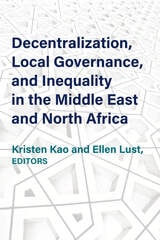
Decentralization, Local Governance, and Inequality in the Middle East and North Africa
Kristen Kao and Ellen M. Lust, Editors
University of Michigan Press, 2025
A group of international scholars brings together methodologically diverse, original research in Lebanon, Morocco, Syria, and Tunisia to expand the literature on decentralization. Following a preface by Hicham Alaoui, the empirical chapters are arranged into three thematic sections. These focus on subnational variations in the relationships between central and local actors, citizen engagement with state and non-state institutions, and the extent to which representatives reflect their local communities. Together, these chapters provide important insights into governance, participation, and representation in the MENA and open new questions for furthering the study of governance and local development. Only by unpacking perspectives and governance experiences at the micro-level can we understand how decentralization policies affect citizens’ everyday lives.
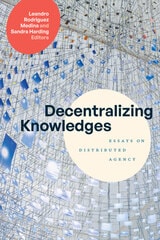
Decentralizing Knowledges
Essays on Distributed AgencyLeandro Rodriguez Medina and Sandra Harding, editor
Duke University Press, 2025
Contributors: Linda Martín Alcoff, Elías Barticevic, Johan Henrik Buljo, Ronald Cancino, Cristina Flores, Kim Fortun, Sandra Harding, Line Aimee Kalak, Duygu Kasdogan, Wiebke Keim, Aalok Khandekar, Daniel Lee Kleinman, Wen-Hua Kuo, John Law, Les Levidow, Leandro Rodriguez Medina, Angela Okune, Liv Østmo, Ari Sitas, Maka Suarez, Sharon Traweek, Hebe Vessuri
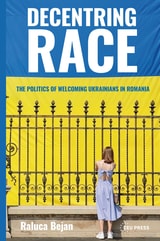
Decentring Race
The Politics of Welcoming Ukrainians in RomaniaRaluca Bejan
Central European University Press, 2026
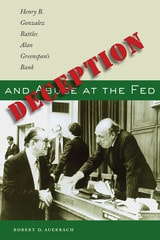
Deception and Abuse at the Fed
Henry B. Gonzalez Battles Alan Greenspan's BankBy Robert D. Auerbach
University of Texas Press, 2008
The Federal Reserve—the central bank of the United States—is the most powerful peacetime bureaucracy in the federal government. Under the chairmanship of Alan Greenspan (1987-2006), the Fed achieved near mythical status for its part in managing the economy, and Greenspan was lauded as a genius. Few seemed to notice or care that Fed officials operated secretly with almost no public accountability. There was a courageous exception to this lack of oversight, however: Henry B. Gonzalez (D-TX)—chairman of the U.S. House of Representatives Financial Services (banking) Committee.
In Deception and Abuse at the Fed, Robert Auerbach, a former banking committee investigator, recounts major instances of Fed mismanagement and abuse of power that were exposed by Rep. Gonzalez, including:
- Blocking Congress and the public from holding powerful Fed officials accountable by falsely declaring—for 17 years—it had no transcripts of its meetings;
- Manipulating the stock and bond markets in 1994 under cover of a preemptive strike against inflation;
- Allowing $5.5 billion to be sent to Saddam Hussein from a small Atlanta branch of a foreign bank—the result of faulty bank examination practices by the Fed;
- Stonewalling Congressional investigations and misleading the Washington Post about the $6,300 found on the Watergate burglars.
Auerbach provides documentation of these and other abuses at the Fed, which confirms Rep. Gonzalez's belief that no government agency should be allowed to operate with the secrecy and independence in which the Federal Reserve has shrouded itself. Auerbach concludes with recommendations for specific, broad-ranging reforms that will make the Fed accountable to the government and the people of the United States.

Deciding to Intervene
The Reagan Doctrine and American Foreign PolicyJames M. Scott
Duke University Press, 1996
Using a comparative case study method, Scott examines the historical, intellectual, and ideological origins of the Reagan Doctrine as it was applied to Afghanistan, Angola, Cambodia, Nicaragua, Mozambique, and Ethiopia. Scott draws on many previously unavailable government documents and a wide range of primary material to show both how this policy in particular, and American foreign policy in general, emerges from the complex, shifting interactions between the White House, Congress, bureaucratic agencies, and groups and individuals from the private sector.
In evaluating the origins and consequences of the Reagan Doctrine, Deciding to Intervene synthesizes the lessons that can be learned from the Reagan administration’s policy and places them within the broad perspective of foreign policy-making today. Scott’s measured treatment of this sensitive and important topic will be welcomed by scholars in policy studies, international affairs, political science, and history, as well as by any reader with an interest in the formation of American foreign policy.
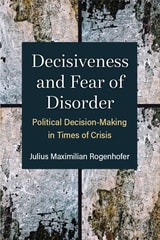
Decisiveness and Fear of Disorder
Political Decision-Making in Times of CrisisJulius Maximilian Rogenhofer
University of Michigan Press, 2024
Rogenhofer shows how his theoretical approach allows us to reinterpret a range of crisis situations beyond the irregular migration context, including democracies’ initial responses to Covid-19, the European Sovereign Debt Crisis, and United States climate politics. These additional case studies help position concerns with decisiveness amid the challenges that populism and technocracy increasingly pose to representative democracies.
Decline Of The Nation-State
Gurutz Jáuregui Bereciartu
University of Nevada Press, 1994
This scholarly work explains the historical and contemporary causes that have given rise to the current explosion of nationalist movements in western Europe. The text also discusses the course these movements may take in the future. The current world political order, maintained by the separation of and frequent antagonism between sovereign nation-states, is increasingly inadequate given the profound social, economic, and technological transformations which have occurred in recent years. The nation-state is no longer the axis of political systems. Existing nation-states are currently undergoing a process similar to the one that caused the disappearance of traditional social forms and territorial entities which were subsumed into broader political structures. The goal of contemporary nationalist movements to create their own nation-states may therefore constitute an anachronistic aspiration and historical error. This crisis of the nation-state, as a form of universal juridico-political organization, and its replacement by supranational structures, is fraught with its own dangers. The latter purports to construct a supranational Europe. However, this new Europe cannot be established in opposition to the nations and regions; rather, it must form a kind of consensual melting pot resulting from the mixture of the complex social and cultural traditions of the different communities constituting European society. Decline of the Nation-State was translated into English by William A. Douglass. It was published originally as Contra el estado-nación: En orno al hecho y la cuestion naciónal in 1986.
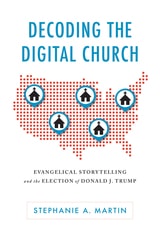
Decoding the Digital Church
Evangelical Storytelling and the Election of Donald J. TrumpStephanie A. Martin
University of Alabama Press, 2021
"This investigation tries to understand why many Evangelical pastors were blamed for endorsing Trump when, in fact, most did not. This book joins other attempts by scholars and journalists to analyze the relationship between Trump and Evangelicals. Recommended.” —CHOICE
Tracing the digital narratives that shaped evangelical identity in a pivotal political moment.
As a political constituency, white conservative evangelicals are generally portrayed as easy to dupe, disposed to vote against their own interests, and prone to intolerance and knee-jerk reactions. In Decoding the Digital Church: Evangelical Storytelling and the Election of Donald J. Trump, Stephanie A. Martin challenges this assumption and moves beyond these overused stereotypes to develop a refined explanation for this constituency’s voting behavior.
This volume offers a fresh perspective on the study of religion and politics and stems from the author’s personal interest in the ways her experiences with believers differ from how scholars often frame this group’s rationale and behaviors. To address this disparity, Martin examines sermons, drawing on her expertise in rhetoric and communication studies with the benefits of ethnographic research in an innovative hybrid approach she terms a “digital rhetorical ethnography.” Martin’s thorough research surveys more than 150 online sermons from America’s largest evangelical megachurches in 37 different states. Through listening closely to the words of the pastors who lead these conservative congregations, Martin describes a gentler discourse less obsessed with issues like abortion or marriage equality than stereotypes of evangelicals might suggest. Instead, the politicaleconomic sermons and stories from pastors encourage true believers
to remember the exceptional nature of the nation’s founding while also deemphasizing how much American citizenship really means.
Martin grapples with and pays serious, scholarly attention to a seeming contradiction: while the large majority of white conservative evangelicals voted in 2016 for Donald J. Trump, Martin shows that many of their pastors were deeply concerned about the candidate, the divisive nature of the campaign, and the potential effect of the race on their congregants’ devotion to democratic process itself. In-depth chapters provide a fuller analysis of our current political climate, recapping previous scholarship on the history of this growing divide and establishing the groundwork to set up the dissonance between the political commitments of evangelicals and their faith that the rhetorical ethnography addresses.