Results by title
233 books match the query 'Political culture' and 13 start with d

Death's Dream Kingdom
The American Psyche Since 9-11Walter A. Davis
Pluto Press, 2006
Why is fear a dominant emotion in contemporary society? Why are politicians using words like 'terror', 'evil' and 'fundamentalism', and what effect is it having on public consciousness?
Answering these questions, Walter A. Davis taps into the cultural psyche to explore the link between ideology and emotional and psychological manipulation. Starting with the three topics that have preoccupied social discourse since 9-11 -- terror, evil and fundamentalism -- he shows that the Bush administration has been hugely successful in controlling and developing a new political climate through the creation of an almost hypnotic mass consciousness.
Davis's findings take us to the heart of the ideological paralysis of the Left, while offering an innovative approach to understanding contemporary history.
Davis fuses a psychoanalytic and philosophical framework to explain the relation between culture and political events, from the sado-masochist hysteria of Mel Gibson's The Passion of the Christ' to the atrocities at Abu Ghraib prison; and from the genocidal use of depleted uranium in Iraq to the apocalyptic language driving the Christian Right's assault on basic human rights.
He exposes the motives and belief-systems of this new American psyche and shows how it sustains the Bush administration's agenda. Illuminating how psychological needs govern political action, Davis reveals why the relationship between politics and public consciousness has massive implications for all of us beyond America's borders.
Walter A. Davis is Professor Emeritus in the Department of English at Ohio State University. He is the author of six previous books, including Inwardness and Existence: Subjectivity in/and Hegel, Heidegger, Marx and Freud (University of Wisconsin Press, 1989) and Deracination: Historicity, Hiroshima, and the Tragic Imperative (SUNY Press, 2001).

Decay
Ghassan Hage, editor
Duke University Press, 2021
Contributors. Cameo Dalley, Peter D. Dwyer, Akhil Gupta, Ghassan Hage, Michael Herzfeld, Elise Klein, Bart Klem, Tamara Kohn, Michael Main, Fabio Mattioli, Debra McDougall, Monica Minnegal, Violeta Schubert
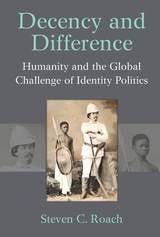
Decency and Difference
Humanity and the Global Challenge of Identity PoliticsSteven C. Roach
University of Michigan Press, 2019
Decency remains one of the most prevalent yet least understood terms in today’s political discourse. In evoking respect, kindness, courage, integrity, reason, and tolerance, it has long expressed an unquestioned duty and belief in promoting and protecting the dignity of all persons. Today this unquestioned belief is in crisis. Tribalism and identity politics have both hindered and threatened its moral stability and efficacy. Still, many continue to undertheorize its political character by isolating it from the effects of identity politics. Decency and Difference argues that decency is a primary source of the political tension that has long shaped the struggles for power, identity, and justice in the global arena. It distinguishes among basic, conservative, and liberal strands of decency to critically examine the many conflicting and competing applications of decency in global politics. Together these different strands reflect a long and uneven evolution from the British and American empires to a global network of justice. This powerful book exposes the gaps of decency and the disparate ways it is practiced, thus addressing the global challenge of configuring a diverse political ethic of decency.
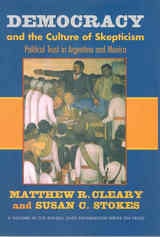
Democracy and the Culture of Skepticism
The Politics of Trust in Argentina and MexicoMatthew R. Cleary
Russell Sage Foundation, 2006

Depositions
Roberto Burle Marx and Public Landscapes under DictatorshipBy Catherine Seavitt Nordenson
University of Texas Press, 2018
Recipient of 2019 John Brinckerhoff Jackson Book Prize, Foundation for Landscape Studies
2021 On the Brinck Book Award Winner
“Burle Marx created a new and modern grammar for international landscape design.”
—Lauro Cavalcanti, quoted in the New York Times
“The real creator of the modern garden.”
—American Institute of Architects
Presenting the first English translation of Burle Marx’s “depositions,” this volume highlights the environmental advocacy of a preeminent Brazilian landscape architect who advised and challenged the country’s military dictatorship.
Roberto Burle Marx (1909–1994) is internationally known as one of the preeminent modernist landscape architects. He designed renowned public landscapes in Brazil, beginning with small plazas in Recife in the 1930s and culminating with large public parks in the early 1960s, most significantly the Parque do Flamengo in Rio de Janeiro. Depositions explores a pivotal moment in Burle Marx’s career—the years in which he served as a member of the Federal Cultural Council created by the military dictatorship in the mid-1960s. Despite the inherent conflict and risk in working with the military regime, Burle Marx boldly used his position to advocate for the protection of the unique Brazilian landscape, becoming a prophetic voice of caution against the regime’s policies of rapid development and resource exploitation.
Depositions presents the first English translation of eighteen environmental position pieces that Burle Marx wrote for the journal Cultura , a publication of the Brazilian Ministry of Education and Culture, from 1967 through 1973. Catherine Seavitt Nordenson introduces and contextualizes the depositions by analyzing their historical and political contexts, as well as by presenting pertinent examples of Burle Marx’s earlier public projects, which enables a comprehensive reading of the texts. Addressing deforestation, the establishment of national parks, the place of commemorative sculpture, and the unique history of the Brazilian cultural landscape, Depositions offers new insight into Burle Marx’s outstanding landscape oeuvre and elucidates his transition from prolific designer to prescient counselor.
Desired States
Sex, Gender, and Political Culture in ChileLessie Jo Frazier
Rutgers University Press, 2020

Detroit's Cold War
The Origins of Postwar ConservatismColleen Doody
University of Illinois Press, 2017

Dinner in Camelot
The Night America's Greatest Scientists, Writers, and Scholars Partied at the Kennedy White HouseJoseph A. Esposito
University Press of New England, 2018
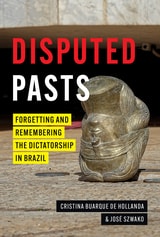
Disputed Pasts
Forgetting and Remembering the Dictatorship in BrazilCristina Buarque de Hollanda and José Szwako
University of Texas Press, 2026
How the memory of military dictatorship shapes Brazil's political divides and the far-right's rise.
Brazil’s military dictatorship ended in 1985, but its history still looms large over the country. Since the restoration of democracy, national politics have been shaped by heated contestation over the dictatorship’s legacy. Cristina Buarque de Hollanda and José Szwako examine how the state, the military, and civil society have variously mourned, celebrated, and suppressed memories of Brazil’s violent past—and to what ends.
As the dictatorship faltered under pressure from the opposition in the streets and in Congress, popular opinion favored democracy, which often meant forgetting. Today, the Brazilian left contends that the past has been silenced, paving the way for Jair Bolsonaro and the far right. Yet the past has been intensely contested: media outlets, social movements, and official commissions have long documented the dictatorship and spurred reparations. Disputed Pasts argues that the conservative ascendency is a reaction to these efforts of remembrance. The right seeks to rehabilitate the violent past by discrediting victims and elevating the dictatorship’s anti-communist ideology. Far from forgetting the past, Bolsonaro and Bolsonarismo actively remember and celebrate it.

Dissent in Dangerous Times
Austin Sarat, Editor
University of Michigan Press, 2004
While dissent has played a central role in our national history and in the American cultural imagination, it is usually dangerous to those who practice it, and always unpalatable to its targets. War does not encourage the tolerance of opposition at home any more than it does on the front: if the War on Terror is to be a permanent war, then the consequences for American political freedoms cannot be overestimated.
"Dissent in Dangerous Times examines the nature of political repression in liberal societies, and the political and legal implications of living in an environment of fear. This profound, incisive, at times even moving volume calls upon readers to think about, and beyond, September 11, reminding us of both the fragility and enduring power of freedom."
--Nadine Strossen, President, American Civil Liberties Union, and Professor of Law, New York Law School.
Contributors to this volume
Lauren Berlant
Wendy Brown
David Cole
Hugh Gusterson
Nancy L. Rosenblum
Austin Sarat

Disunion Among Ourselves
The Perilous Politics of the American RevolutionEli Merritt
University of Missouri Press, 2025
Winner of the 2024 Society of the Cincinnati Prize from the American Revolution Institute
Winner of the 2023 American Revolution Round Table of Philadelphia book award
In this eye-opening account, Eli Merritt reveals the deep political divisions that almost tore the Union apart during the American Revolution. So fractious were the founders’ political fights that they feared the War of Independence might end in disunion and civil war.
Instead of disbanding into separate regional confederacies, the founders managed to unite for the sake of liberty and self-preservation. In so doing, they succeeded in holding the young nation together. To achieve this, they forged grueling compromises, including Declaration of Independence in 1776, the Mississippi-Fisheries Compromise of 1779, and the ratification of the Articles of Confederation in 1781.
In addition to bringing new insights to the history of the American Revolution, Disunion Among Ourselves has inevitable resonances with our present era of political hyperpolarization and serves as a touchstone for contemporary politics, reminding us that the founders overcame far tougher times than our own through commitment to ethical constitutional democracy and compromise.

Dividing Lines
Municipal Politics and the Struggle for Civil Rights in Montgomery, Birmingham, and SelmaJ. Mills Thornton, III
University of Alabama Press, 2006
Presents the story of the civil rights movement from the perspective of community-municipal history at the grassroots level
Thornton demonstrates that the movement had powerful local sources in its three birth cities—Montgomery, Birmingham, and Selma. There, the arcane mechanisms of state and city governance and the missteps of municipal politicians and civic leaders—independent of emerging national trends in racial mores—led to the great swell of energy for change that became the civil rights movement.
Dynamics of an Authoritarian System
Hungary, 2010–2021Mária Csanádi
Central European University Press, 2022
This conceptually synthetic and empirically rich book demonstrates the vulnerability of democratic settings to authoritarianism and populism. Six scholars from various professional fields explore here the metamorphosis of a political party into a centralized authoritarian system. Viktor Orbán and his Fidesz party needed less than ten years to accomplish this transformation in Hungary. In 2010, after winning a majority that could make changes in the constitution – two-thirds of the parliamentary seats, they evolved and stabilized the system, which produced again the two-thirds majority in 2014 and 2018.
The authors reveal how a democratic setting can be used as a device for political capture. They show how a political entity managed to penetrate almost all sub-fields of the economy to arrive at institutionalized corruption, and how the centralized power structure reproduces itself. With the help of a powerful empirical apparatus—among others analyses of more than 220,000 public tenders, redistributions of state subsidies, and the interconnectedness of those privileged with the political elite — the authors detail the functioning of a crony system and the network aspects of political connections in the rapid enrichment of politically-linked businesses. Their studies demonstrate the role of political capture in this redistribution and how this capture leads to a new social stratification.