88 books match the query 'Population' and 4 start with d

cover of Daily Life and Demographics in Ancient Japan

Daily Life and Demographics in Ancient Japan

William Wayne Farris

University of Michigan Press, 2009
For centuries, scholars have wondered what daily life was like for the common people of Japan, especially for long bygone eras such as the ancient age (700–1150). Using the discipline of historical demography, William Wayne Farris shows that for most of this era, Japan’s overall population hardly grew at all, hovering around six million for almost five hundred years.
The reasons for the stable population were complex. Most importantly, Japan was caught up in an East Asian pandemic that killed both aristocrat and commoner in countless numbers every generation. These epidemics of smallpox, measles, mumps, and dysentery decimated the adult population, resulting in wide-ranging social and economic turmoil. Famine recurred about once every three years, leaving large proportions of the populace malnourished or dead. Ecological degradation of central Japan led to an increased incidence of drought and soil erosion. And war led soldiers to murder innocent bystanders in droves.
Under these harsh conditions, agriculture suffered from high rates of field abandonment and poor technological development. Both farming and industry shifted increasingly to labor-saving technologies. With workers at a premium, wages rose. Traders shifted from the use of money to barter. Cities disappeared. The family was an amorphous entity, with women holding high status in a labor-short economy. Broken families and an appallingly high rate of infant mortality were also part of kinship patterns. The average family lived in a cold, drafty dwelling susceptible to fire, wore clothing made of scratchy hemp, consumed meals just barely adequate in the best of times, and suffered from a lack of sanitary conditions that increased the likelihood of disease outbreak. While life was harsh for almost all people from 700 to 1150, these experiences represented investments in human capital that would bear fruit during the medieval epoch (1150–1600).
[more]
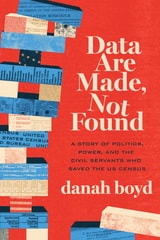
cover of Data Are Made, Not Found: A Story of Politics, Power, and the Civil Servants Who Saved the US Census

Data Are Made, Not Found

A Story of Politics, Power, and the Civil Servants Who Saved the US Census

danah boyd

University of Chicago Press, 2026

An eye-opening story of the people who make the census, the United States’ largest and most consequential dataset, and the growing threats to their crucial work. 

By many measures, the US census is the government’s largest non-wartime operation, and one of the world’s oldest and biggest data-making endeavors. The 2020 census required more than a decade of planning and technical work—not to mention managing nearly a quarter of a million temporary workers simultaneously—to collect data about the American public. That data was then processed to count each of 331,449,281 residents once—and only once—and in the right place. The operation is also one of the country’s most consequential. Census data determine how political power and federal funding are allocated. Census data make politics, and consequently, politics make census data. In this urgent book, danah boyd explores what it took for the Census Bureau to make the 2020 census, amidst a global pandemic and natural disasters, and while navigating political forces that constrained the budget, micro-managed the schedule, and attacked statisticians’ methods. 

With rare insider access to the Census Bureau, boyd observed and interviewed hundreds of government civil servants who made the 2020 census. By documenting the perspectives of government workers, Data Are Made, Not Found provides a rare glimpse into what it takes to make democracy’s data. Each chapter reveals a different challenge—ranging from the last-minute fights about a citizenship question to the not-so-helpful help of well-intended stakeholders to avoid undercounts—and shows how civil servants responded to each problem, controversy, and hurdle. Boyd shows how many of the challenges that the Census Bureau faced in 2020 resulted from decades of political operatives, data users, and various stakeholders playing what boyd calls “Jenga politics,” weakening the administrative state for short-term political gains by removing support and adding more requirements. 

Civil servants saved the 2020 census, but future censuses—and other data-making efforts related to elections, health, and the economy—are precarious. Boyd’s message is clear and compelling: protecting democracy means protecting the people and institutions that produce this data.
[more]
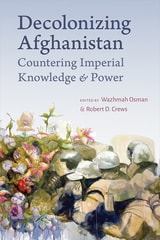
cover of Decolonizing Afghanistan: Countering Imperial Knowledge and Power

Decolonizing Afghanistan

Countering Imperial Knowledge and Power

Wazhmah Osman and Robert D. Crews, editors

Duke University Press, 2025

As the first comprehensive volume to explore the impact of empire on Afghanistan’s past and present, Decolonizing Afghanistan marks a decolonial turn in Afghanistan and American studies. Featuring new and often sidelined ground-up perspectives, this collection examines how Afghan communities have subverted, resisted, and participated in colonial projects from the early twentieth century to the present, with a particular focus on the US intervention that began in 2001. Contributors interrogate the relationship between knowledge and power to analyze how narratives about Afghanistan have framed and legitimated imperial governance. Topics span the contradictions and consequences of the US “Forever” War, the rise of private security contracting, the deployment of biometric and surveillance technologies, the politics of US and Taliban countermedia operations, the evolution of gender discourses, and the mobilization of Afghan Americans and “Afghan culture,” among others. Throughout, contributors draw important connections and insights to ongoing global anticolonial struggles and offer paths to decolonial futures.

Contributors. Matthieu Aikins, Dawood Azami, Purnima Bose, Paula Chakravartty, Robert D. Crews, Marya Hannun, Ali Karimi, Nivi Manchanda, Sabauon Nasseri, Tausif Noor, Wazhmah Osman, Hosai Qasmi, Zohra Saed, Gazelle Samizay, Morwari Zafar, Helena Zeweri
[more]
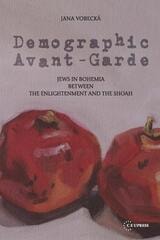
cover of Demographic Avant-Garde: Jews in Bohemia between the Enlightenment and the Shoah

Demographic Avant-Garde

Jews in Bohemia between the Enlightenment and the Shoah

Jana Vobecká

Central European University Press, 2013

This book studies the unique demographic behavior of Jews in Bohemia (the historic part of the Czech Republic), starting from a moment in history when industrialization in Central Europe was still far away in the future, and when Jews were still living legally restricted lives in ghettos. Very early on, however, from the 18th century onwards, Jews developed patterns of decreasing mortality and fertility that was not observed among the gentile majority in Bohemia; patterns which established them as a demographic avant-garde population in all of Europe.
[more]