292 books match the query 'Power resources' and 14 start with d
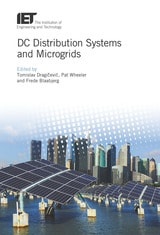
cover of DC Distribution Systems and Microgrids

DC Distribution Systems and Microgrids

Tomislav Dragičević

The Institution of Engineering and Technology, 2018

DC electric power distribution systems have higher efficiency, better current carrying capacity and faster response when compared to conventional AC systems. They also provide a more natural interface with many types of renewable energy sources. Furthermore, there are fewer issues with reactive power flow, power quality and frequency regulation, resulting in a notably less complex control system. All these facts lead to increased applications of DC systems in modern power systems. Still, design and operation of these systems imposes a number of specific challenges, mostly related to lack of mature protection technology and operational experience, as well as very early development stage of standards regarding DC based power infrastructure.
[more]
cover of Design of High-Efficiency Integrated AC-DC Convertors

Design of High-Efficiency Integrated AC-DC Convertors

Ke-Horng Chen

The Institution of Engineering and Technology, 2018
Increased efficiency in power electronic converters of all types and ratings is of considerable interest, not only from the viewpoint of improved converter thermal management but also from an environmental perspective. This important book describes the advantages and challenges, underlying the theory, and applications of high-efficiency AC-DC converters that are built into circuits, an increasingly popular design approach in power electronics.
[more]
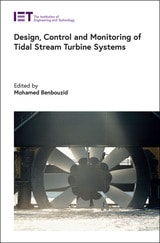
cover of Design, Control and Monitoring of Tidal Stream Turbine Systems

Design, Control and Monitoring of Tidal Stream Turbine Systems

Mohamed Benbouzid

The Institution of Engineering and Technology, 2023

The worldwide potential of electric power from tidal currents is potentially between 100 and 120 GW. The technology uses the ebb and flow currents off coasts to drive submerged turbines. The high load factor and the predictable resource characteristics make tidal energy an attractive, reliable power source. The technology is advancing rapidly towards maturity; several projects have now reached a relatively mature stage and are close to completion, but challenges remain. Topics for ongoing research include hydrodynamics and turbine design, as well as the power conversion interface (including the electric generator), control, and monitoring and maintenance challenges.
[more]
cover of Designer's Guide to Energy Efficient Electrical Installations

Designer's Guide to Energy Efficient Electrical Installations

The Institution of Engineering and Technology

The Institution of Engineering and Technology, 2016
BS 7671 has always been about capacity, safety and control of electrical installations. Could energy efficiency negate that?
[more]
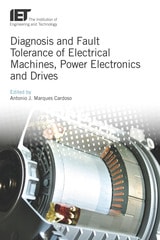
cover of Diagnosis and Fault Tolerance of Electrical Machines, Power Electronics and Drives

Diagnosis and Fault Tolerance of Electrical Machines, Power Electronics and Drives

Antonio J. Marques Cardoso

The Institution of Engineering and Technology, 2019

Electrical machines and drives, and their associated power electronics, are a key part of an industrialized society. Reliability is a major challenge in systems design, operation, and maintenance of these technologies. Unreliable systems drive up costs, so diagnostics and fault tolerance become important to help maintain the system and estimate its operational lifetime.
[more]
cover of Digital Protection for Power Systems

Digital Protection for Power Systems

A.T. Johns

The Institution of Engineering and Technology, 1995
Digital protection is based on the use of computers in power line relaying. Since the late 1960s, digital devices and techniques have been applied to almost all new protection schemes. Today the technology is moving towards standardised hardware platforms; at the software level, however, there remains a huge variety in approaches and protection algorithms.
[more]
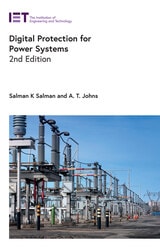
cover of Digital Protection for Power Systems

Digital Protection for Power Systems

Salman K. Salman

The Institution of Engineering and Technology, 2022
Electric power systems have become much more complex in the past years, due to the integration of distributed generation including renewable energy sources and the challenges caused by intermittency of renewables. This complexity makes power systems potentially more vulnerable. However, use of computer-based protection methods (i.e., digital protection relays) supported by communication technology have helped in protecting electrical networks from faults to which they are subjected to.
[more]
cover of Digital Technologies for Solar Photovoltaic Systems: From general to rural and remote installations

Digital Technologies for Solar Photovoltaic Systems

From general to rural and remote installations

Saad Motahhir

The Institution of Engineering and Technology, 2022
The rising share of photovoltaic (PV) energy requires sophisticated digital techniques for control, monitoring and integration with the grid. In remote areas, where no trained personnel might be nearby to intervene, such technologies are vital to ensure reliability and power quality, and to harness the solar potential of these locations. Moreover, tracking is necessary for moveable systems. Digital technologies can be used to enable and augment the use of PV energy in the grid, as well as for desalination, water pumping and hydrolysis.
[more]
cover of Distributed Energy Storage in Urban Smart Grids

Distributed Energy Storage in Urban Smart Grids

Paulo F. Ribeiro

The Institution of Engineering and Technology, 2023
Renewable energy is key to stopping climate change, however, the intermittent nature of most forms of renewable energy generation poses a challenge. Energy storage is therefore a focus of research and development, particularly for urban areas with their limited space and high population density, which results in massive demand for both small distributed and utility-scale generation. Such locations require thorough integration of storage, with the urban energy system treated as a whole, and sufficient planning, sizing and siting, and upgrades to the existing power grid hardware.
[more]
cover of Distributed Generation

Distributed Generation

Nick Jenkins

The Institution of Engineering and Technology, 2010
Throughout the world there is concern over the impact of energy use on the environment (particularly CO2 emissions) and also over the security of fossil fuel supplies. Consequently, governments and energy planners are actively encouraging alternative and cleaner forms of energy production such as renewables (e.g. wind, solar, biomass) and combined heat and power (CHP).
[more]
cover of Distributed Small Wind Turbines

Distributed Small Wind Turbines

Mark Runacres

The Institution of Engineering and Technology, 2025
Small wind turbines can contribute substantially to both a low-carbon energy system, as well as to the autarky and resilience of rural or remote communities and facilities. They can be deployed on building roofs as well as on the ground, and are a useful complement to photovoltaic systems, because they can generate power overnight or in cloudy weather. A range of technologies and designs are available, and suitability depends on the situation, so systematic modelling combined with collection of experience are necessary in making successful, efficient and cost-effective selection decisions.
[more]
cover of Distribution Switchgear

Distribution Switchgear

Stan Stewart

The Institution of Engineering and Technology, 2004
Switchgear plays a fundamental role within the power supply industry. It is required to isolate faulty equipment, divide large networks into sections for repair purposes and reconfigure networks in order to restore power supplies and control other equipment.
[more]
cover of Distribution System Analysis and Automation

Distribution System Analysis and Automation

Juan M. Gers

The Institution of Engineering and Technology, 2013
Distribution systems analysis employs a set of techniques that allow engineers to simulate, analyse, and optimise power distribution systems. Combined with automation, these techniques underpin the emerging concept of the 'smart grid', a digitally-enabled electrical supply grid that can monitor and respond to the behaviour of all its components in real time.
[more]
cover of Distribution Systems Analysis and Automation

Distribution Systems Analysis and Automation

Juan Manuel Gers

The Institution of Engineering and Technology, 2020

Distribution systems analysis employs a set of techniques to simulate, analyse, and optimise power distribution systems. Combined with automation, these techniques underpin the concept of the smart grid. In recent years, distribution systems have been facing growing challenges, due to increasing demand as well as the rising shares of distributed and volatile renewable energy sources.
[more]