194 books match the query 'Practice' and 12 start with d

cover of Databrarianship: The Academic Data Librarian in Theory and Practice

Databrarianship

The Academic Data Librarian in Theory and Practice

Lynda Kellam

Assoc of College & Research Libraries, 2016

[more]
cover of Death, War, and Sacrifice: Studies in Ideology & Practice

Death, War, and Sacrifice

Studies in Ideology & Practice

Bruce Lincoln

University of Chicago Press, 1991

One of the world's leading specialists in Indo-European
religion and society, Bruce Lincoln expresses in these essays
his severe doubts about the existence of a much-hypothesized
prototypical Indo-European religion.

Written over fifteen years, the essays—six of them
previously unpublished—fall into three parts. Part I deals
with matters "Indo-European" in a relatively unproblematized
way, exploring a set of haunting images that recur in
descriptions of the Otherworld from many cultures. While
Lincoln later rejects this methodology, these chapters remain
the best available source of data for the topics they
address.

In Part II, Lincoln takes the data for each essay from a
single culture area and shifts from the topic of dying to
that of killing. Of particular interest are the chapters
connecting sacrifice to physiology, a master discourse of
antiquity that brought the cosmos, the human body, and human
society into an ideologically charged correlation.

Part III presents Lincoln's most controversial case
against a hypothetical Indo-European protoculture.
Reconsidering the work of the prominent Indo-Europeanist
Georges Dumézil, Lincoln argues that Dumézil's writings
were informed and inflected by covert political concerns
characteristic of French fascism. This collection is an
invaluable resource for students of myth, ritual, ancient
societies, anthropology, and the history of religions.

Bruce Lincoln is professor of humanities and religious
studies at the University of Minnesota.
[more]
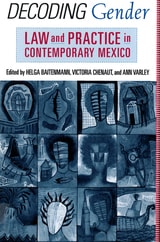
cover of Decoding Gender: Law and Practice in Contemporary Mexico

Decoding Gender

Law and Practice in Contemporary Mexico

Baitenmann, Helga

Rutgers University Press, 2007

Gender discrimination pervades nearly all legal institutions and practices in Latin America. The deeper question is how this shapes broader relations of power. By examining the relationship between law and gender as it manifests itself in the Mexican legal system, the thirteen essays in this volume show how law is produced by, but also perpetuates, unequal power relations. At the same time, however, authors show how law is often malleable and can provide spaces for negotiation and redress. The contributors (including political scientists, sociologists, geographers, anthropologists, and economists) explore these issues-not only in courts, police stations, and prisons, but also in rural organizations, indigenous communities, and families.

By bringing new interdisciplinary perspectives to issues such as the quality of citizenship and the rule of law in present-day Mexico, this book raises important issues for research on the relationship between law and gender more widely.
[more]
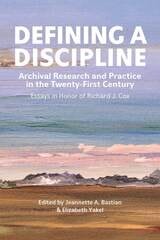
cover of Defining a Discipline: Archival Research and Practice in the 21st Century: Essays in Honor of Richard J. Cox

Defining a Discipline

Archival Research and Practice in the 21st Century: Essays in Honor of Richard J. Cox

Jeannette A. Bastian

Society of American Archivists, 2020
Fourteen archivists present a mosaic of the research that represents the current state of archival science and introduces themes that will carry the profession into the future as a complex academic discipline. As the archival profession in the United States continues to evolve, the book honors one of its most prolific and influential thinkers and writers, Richard J. Cox, who retired from the profession in 2017 after a 45-year career. The book addresses the archival themes of accountability and evidence, ethics and education, archival history, and memory. Defining a Discipline demonstrates the importance of the role of archivists, archives, and archival institutions in communities, organizations, and the digital environment. It looks forward—a direction that the pioneering Cox promoted throughout his career.
[more]
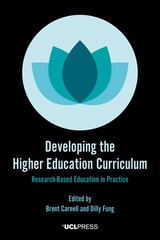
cover of Developing the Higher Education Curriculum: Research-Based Education in Practice

Developing the Higher Education Curriculum

Research-Based Education in Practice

Edited by Brent Carnell and Dilly Fung

University College London, 2017
Developing the Higher Education Curriculum showcases methods for engaging students with research across disciplines. It begins with UCL’s own ap­proach to research-based education, then demonstrates how the framework can apply to various institutions. The fifteen chapters, by a diverse group of scholars, sometimes take a specific subject focus, while others examine tactics from international perspectives, but ultimately draw the conclusion that such curricula not only prepare students for advanced learning, but also for professional roles in complex environments.
[more]
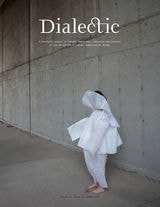
cover of Dialectic: A Scholarly Journal of Thought Leadership, Education and Practice in the Discipline of Visual Communication Design - Volume II, Issue II - Summer 2019

Dialectic

A Scholarly Journal of Thought Leadership, Education and Practice in the Discipline of Visual Communication Design - Volume II, Issue II - Summer 2019

Michael R. Gibson

Michigan Publishing Services, 2019

Dialectic seeks to publish scholarship, analytical study and criticism that will enlighten and inform a diverse audience of design educators engaged not only in classroom teaching experiences but also in differing forms of research and professional practice. The journal's advisory and editorial boards recognize that design education, along with design research and professional practice, exist in relationships that are now broadly informed by theoretical frameworks and applications of knowledge derived from the social and applied sciences, the humanities, and other professions such as business, education, information technology and media studies. The outcomes of these synergies often result in the invention, discovery, understanding, and dissemination of new knowledge, innovation, and best practices.
[more]
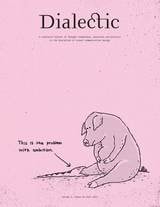
cover of Dialectic: A Scholarly Journal of Thought Leadership, Education and Practice in the Discipline of Visual Communication Design Volume I, Issue I - Winter 2016-17

Dialectic

A Scholarly Journal of Thought Leadership, Education and Practice in the Discipline of Visual Communication Design Volume I, Issue I - Winter 2016-17

Keith M Owens and Michael Gibson

Michigan Publishing Services, 2017

Dialectic is a fully open access, biannual journal devoted to the critical
examination of issues that affect design education, research,
and inquiry into their effects on the practice of design. Michigan
Publishing, the hub of scholarly publishing at the University of Michigan,
publishes Dialectic on behalf of the AIGA (American Institute of
Graphic Arts) Design Educators Community (DEC).
 
[more]
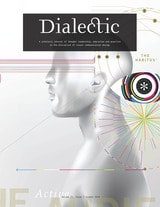
cover of Dialectic: A Scholarly Journal of Thought Leadership, Education and Practice in the Discipline of Visual Communication Design Volume I, Issue II - Fall 2017

Dialectic

A Scholarly Journal of Thought Leadership, Education and Practice in the Discipline of Visual Communication Design Volume I, Issue II - Fall 2017

Michael R. Gibson and Keith M. Owens (Editors)

Michigan Publishing Services, 2017

Dialectic is a fully open access, biannual journal devoted to the critical
examination of issues that affect design education, research,
and inquiry into their effects on the practice of design. Michigan
Publishing, the hub of scholarly publishing at the University of Michigan,
publishes Dialectic on behalf of the AIGA (American Institute of
Graphic Arts) Design Educators Community (DEC).
 
[more]
cover of Dialectic: A scholarly journal of thought leadership, education and practice in the discipline of visual communication design - Volume II, Issue I - Summer 2018

Dialectic

A scholarly journal of thought leadership, education and practice in the discipline of visual communication design - Volume II, Issue I - Summer 2018

Michael R. Gibson

Michigan Publishing Services, 2018

Dialectic seeks to publish scholarship, analytical study and criticism that will enlighten and inform a diverse audience of design educators engaged not only in classroom teaching experiences but also in differing forms of research and professional practice. The journal's advisory and editorial boards recognize that design education, along with design research and professional practice, exist in relationships that are now broadly informed by theoretical frameworks and applications of knowledge derived from the social and applied sciences, the humanities, and other professions such as business, education, information technology and media studies. The outcomes of these synergies often result in the invention, discovery, understanding, and dissemination of new knowledge, innovation, and best practices.
[more]
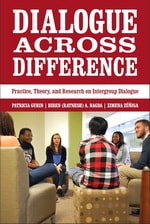
cover of Dialogue Across Difference: Practice, Theory, and Research on Intergroup Dialogue

Dialogue Across Difference

Practice, Theory, and Research on Intergroup Dialogue

Patricia Gurin

Russell Sage Foundation, 2013

Due to continuing immigration and increasing racial and ethnic inclusiveness, higher education institutions in the United States are likely to grow ever more diverse in the 21st century. This shift holds both promise and peril: Increased inter-ethnic contact could lead to a more fruitful learning environment that encourages collaboration. On the other hand, social identity and on-campus diversity remain hotly contested issues that often raise intergroup tensions and inhibit discussion. How can we help diverse students learn from each other and gain the competencies they will need in an increasingly multicultural America? Dialogue Across Difference synthesizes three years’ worth of research from an innovative field experiment focused on improving intergroup understanding, relationships and collaboration. The result is a fascinating study of the potential of intergroup dialogue to improve relations across race and gender. First developed in the late 1980s, intergroup dialogues bring together an equal number of students from two different groups – such as people of color and white people, or women and men – to share their perspectives and learn from each other. To test the possible impact of such courses and to develop a standard of best practice, the authors of Dialogue Across Difference incorporated various theories of social psychology, higher education, communication studies and social work to design and implement a uniform curriculum in nine universities across the country. Unlike most studies on intergroup dialogue, this project employed random assignment to enroll more than 1,450 students in experimental and control groups, including in 26 dialogue courses and control groups on race and gender each. Students admitted to the dialogue courses learned about racial and gender inequalities through readings, role-play activities and personal reflections. The authors tracked students’ progress using a mixed-method approach, including longitudinal surveys, content analyses of student papers, interviews of students, and videotapes of sessions. The results are heartening: Over the course of a term, students who participated in intergroup dialogues developed more insight into how members of other groups perceive the world. They also became more thoughtful about the structural underpinnings of inequality, increased their motivation to bridge differences and intergroup empathy, and placed a greater value on diversity and collaborative action. The authors also note that the effects of such courses were evident on nearly all measures. While students did report an initial increase in negative emotions – a possible indication of the difficulty of openly addressing race and gender – that effect was no longer present a year after the course. Overall, the results are remarkably consistent and point to an optimistic conclusion: intergroup dialogue is more than mere talk. It fosters productive communication about and across differences in the service of greater collaboration for equity and justice. Ambitious and timely, Dialogue Across Difference presents a persuasive practical, theoretical and empirical account of the benefits of intergroup dialogue. The data and research presented in this volume offer a useful model for improving relations among different groups not just in the college setting but in the United States as well.
[more]
cover of Digital Visual Culture: Theory and Practice

Digital Visual Culture

Theory and Practice

Edited by Anna Bentkowska-Kafel, Trish Cashen, Hazel Gardiner

Intellect Books, 2009

Digital Visual Culture presents the latest research into the relationship between theory and practice across digital media and technology in the visual arts and investigates the challenges of contemporary research and art curation, particularly in regard to new media artworks. The contributors to this volume discuss the impact of technological advances on visual art and the new art practices that are developing as a result. Many aspects of new interdisciplinary and collaborative practices are considered, such as net art and global locative environments, , and installations that are themselves performance, or games that often take place simultaneously online and in reality. Digital Visual Culture is an important addition to the ongoing discussion surrounding postmodern art practice in art and digital media.

[more]
cover of Doing What Comes Naturally: Change, Rhetoric, and the Practice of Theory in Literary & Legal Studies

Doing What Comes Naturally

Change, Rhetoric, and the Practice of Theory in Literary & Legal Studies

Stanley Fish

Duke University Press, 1989

In literary theory, the philosophy of law, and the sociology of knowledge, no issue has been more central to current debate than the status of our interpretations. Do they rest on a ground of rationality or are they subjective impositions of a merely personal point of view? In Doing What Comes Naturally, Stanley Fish refuses the dilemma posed by this question and argues that while we can never separate our judgments from the contexts in which they are made, those judgments are nevertheless authoritative and even, in the only way that matters, objective. He thus rejects both the demand for an ahistorical foundation, and the conclusion that in the absence of such a foundation we reside in an indeterminate world. In a succession of provocative and wide-ranging chapters, Fish explores the implications of his position for our understanding of legal, literary, and psychoanalytic interpretation, the nature of professional and institutional culture, and the place of reason in a world that is rhetorical through and through.
[more]