Results by title
54 books match the query 'Promise' and 2 start with d

Democracy Vouchers and the Promise of Fairer Elections in Seattle
Jennifer A. Heerwig and Brian J. McCabe
Temple University Press, 2024
In 2017, Seattle inaugurated a new way for citizens to be involved in democracy: they introduced publicly financed vouchers for voters to donate to local candidates. The innovative plan is designed to level the playing field in campaign financing. Through the vouchers, residents allocate dollars to candidates of their choice in local elections, putting political money directly in the hands of voters. The intent is to increase political participation and ameliorate the long-standing representational inequalities of private donations.
Democracy Vouchers and the Promise of Fairer Elections in Seattle critically evaluates the success and impact of this program. Jennifer Heerwig and Brian J. McCabe emphasize how local elections now attract a much wider and more diverse field of both donors and candidates. They also consider external threats to the program, from litigation about the constitutionality of a voucher program to the rise of independent expenditures.
Offering important lessons on how other cities can adopt a similar program, this compelling case study also highlights the obstacles that will likely arise in its implementation.
[more]
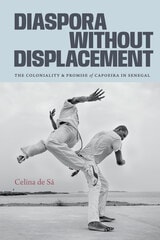
Diaspora Without Displacement
The Coloniality and Promise of Capoeira in SenegalCelina de Sá
Duke University Press, 2025
Capoeira—a game of combat primarily developed by enslaved West Central Africans—has become an icon of both Brazilian national culture and pride in the country’s diasporic African heritage. Yet the sport remains less accessible in Africa itself, overshadowed in large part by participants in the Global North. In Diaspora Without Displacement, Celina de Sá tells the story of capoeira as it "returns" to the African continent through the creative initiatives of young urban professionals in Senegal. De Sá demonstrates how a new generation of African capoeiristas are taking up their own Afro-diasporic performance tradition, effectively reframing notions of diaspora and race through their social practice. Though capoeira has largely Angolan roots and the agents of return are typically white Brazilians and Europeans, the West African practitioners de Sá documents nonetheless form an exceptional relationship to capoeira that, in turn, becomes a mode of political and social consciousness. Analyzing a capoeira network across West Africa, de Sá shows how urban West Africans use capoeira to explore the relationship between Blackness, diaspora, and African heritage.
[more]