74 books match the query 'Puerto Rico' and 3 start with d
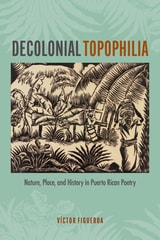
cover of Decolonial Topophilia: Nature, Place, and History in Puerto Rican Poetry

Decolonial Topophilia

Nature, Place, and History in Puerto Rican Poetry

Víctor Figueroa

Bucknell University Press, 2026

Decolonial Topophilia: Nature, Place, and History in Puerto Rican Poetry examines how four major poets—Luis Lloréns Torres, Luis Palés Matos, Juan Antonio Corretjer, and Julia de Burgos—address the ecological and human consequences of colonial domination in early twentieth-century Puerto Rico. Their poetry raises questions about the capitalist transformation of land through monocultures like sugarcane, the reduction of nature to exploitable resources, and the ties between attachment to place and nationalism. In tracing these connections, this pathbreaking book reveals how poetic visions of place can challenge colonial histories and imagine more reciprocal ways of inhabiting the world.

Published by Bucknell University Press. Distributed worldwide by Rutgers University Press.
[more]
cover of Does Business Learn?: Tax Breaks, Uncertainty, and Political Strategies

Does Business Learn?

Tax Breaks, Uncertainty, and Political Strategies

Sandra L. Suarez

University of Michigan Press, 2000
Firms in the United States have many political advantages when compared to other groups in society. They are the best-represented group in our nation's capital; they operate more Political Action Committees; and their lobbyists are among the most experienced political operatives. Yet firms are uncertain about their political power and hence about the effectiveness of their political strategies. This book deals with how firms decide which strategy to pursue among the existing alternatives when it comes to defending policies that play to their interests.
Sandra Suárez looks at the efforts of business to influence government policy in a detailed study of the efforts of major American corporations to protect the tax credit applicable to profits from investments in Puerto Rico. This rare longitudinal case-study explores the abilities of U.S. pharmaceutical and electronics companies to adapt their political strategies to a fluid and uncertain political environment. Drawing on interviews with tax lawyers, corporate lobbyists and government officials, the author follows the behavior of the same group of companies over the past twenty years.
This book advances a learning-based explanation of business political behavior, which argues that past political experience accounts for patterns of political behavior that government structures and salient issues alone cannot explain. Centered on attempts to protect an important tax break for business, the possessions tax battles provide an appropriate case for examining the value of the business learning approach.
Although written with a political science audience in mind, this book addresses issues that will resonate widely with sociologists, management researchers and students alike.
Sandra L. Suárez is Assistant Professor in the Department of Political Science, Temple University.
[more]
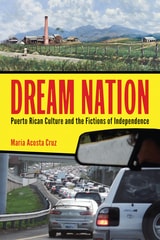
cover of Dream Nation: Puerto Rican Culture and the Fictions of Independence

Dream Nation

Puerto Rican Culture and the Fictions of Independence

Acosta Cruz, María

Rutgers University Press, 2014

Over the past fifty years, Puerto Rican voters have roundly rejected any calls for national independence. Yet the rhetoric and iconography of independence have been defining features of Puerto Rican literature and culture. In the provocative new book Dream Nation, María Acosta Cruz investigates the roots and effects of this profound disconnect between cultural fantasy and political reality.

Bringing together texts from Puerto Rican literature, history, and popular culture, Dream Nation shows how imaginings of national independence have served many competing purposes. They have given authority to the island’s literary and artistic establishment but have also been a badge of countercultural cool. These ideas have been fueled both by nostalgia for an imagined past and by yearning for a better future. They have fostered local communities on the island, and still helped define Puerto Rican identity within U.S. Latino culture.

In clear, accessible prose, Acosta Cruz takes us on a journey from the 1898 annexation of Puerto Rico to the elections of 2012, stopping at many cultural touchstones along the way, from the canonical literature of the Generación del 30 to the rap music of Tego Calderón. Dream Nation thus serves both as a testament to how stories, symbols, and heroes of independence have inspired the Puerto Rican imagination and as an urgent warning about how this culture has become detached from the everyday concerns of the island’s people.

A volume in the American Literature Initiatives series
[more]