Results by title
119 books match the query 'Race in literature' and 6 start with d
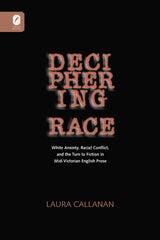
DECIPHERING RACE
WHITE ANXIETY, RACIAL CONFLICT, & THE TURN TO FICTION IN MID-VICTORIAN ENGLISH PROSELaura Callanan
The Ohio State University Press, 2005
In this manner these narratives confront the complexity, indeterminacy, and irrationality of both racial difference and the systems put in place to understand that difference. Deciphering Race unpacks this narrative turn to the aesthetic in writings by white English individuals and thus reveals the instability at the heart of cultural understanding of race and racial tropes at mid-century. This series of readings will help to see how figurative structures, while providing a bridge between different cultures and epistemologies, also reinforce a distance that keeps groups separate. Only by disentangling these structures, by addressing and unpacking our assumptions and narratives about those different from ourselves, and by understanding our deep cultural anxiety and investment in these ways of talking about one another, can we begin to create the conditions for productive, local understanding between different cultures, races, and communities.

Dark Smiles
Race and Desire in George EliotAlicia Carroll
Ohio University Press, 2002
Although George Eliot has long been described as “the novelist of the Midlands,” she often brought the outer reaches of the empire home in her work. Dark Smiles: Race and Desire in George Eliot studies Eliot’s problematic, career-long interest in representing racial and ethnic Otherness.
Placing Eliot’s diverse and wide-ranging treatment of Otherness in its contemporary context, Alicia Carroll argues that Eliot both engages and resists traditional racial and ethnic representations of Otherness. Carroll finds that Eliot, like other women writers of her time, often appropriates narratives of Otherness to explore issues silenced in mainstream Victorian culture, particularly the problem of the desirous woman. But if Otherness in Eliot’s century was usually gendered as woman and constructed as the object of white male desire, Eliot often seeks to subvert that vision. Professor Carroll demonstrates Eliot’s tendency to “exoticize” images of girlhood, vocation, and maternity in order to critique and explore gendered subjectivities. Indeed, the disruptive presence of a racial or ethnic outsider often fractures Eliot’s narratives of community, creating a powerful critique of home culture.
The consistent reliance of Eliot’s work upon racial and ethnic Otherness as a mode of cultural critique is explored here for the first time in its entirety.
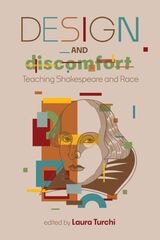
Design and Discomfort
Teaching Shakespeare and RaceEdited by Laura B. Turchi
Arizona Center for Medieval and Renaissance Studies, 2025
Design and Discomfort confronts the complexities of teaching Shakespeare in today’s classrooms, where discussions of race, bias, and historical legacies can provoke discomfort—but also transformation. Edited by Laura B. Turchi, this collection brings together educators and teaching artists who share innovative strategies for rethinking Shakespeare’s role in education.
Rather than treating Shakespeare as an untouchable authority, the contributors explore how his works can be a springboard for broader conversations about identity and justice. They advocate for performance-based and student-driven approaches that help students see themselves—their communities, their families, and their lived experiences—in the complex and seemingly distant world of Shakespeare.
This open-access volume provides both conceptual essays and practical lesson designs for educators navigating the intersections of Shakespeare and race. By embracing discomfort as part of the learning process, Design and Discomfort reframes how Shakespeare should be taught in classrooms today.
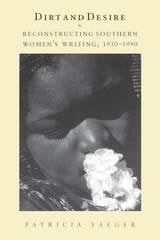
Dirt and Desire
Reconstructing Southern Women's Writing, 1930-1990Patricia Yaeger
University of Chicago Press, 2000
For Yaeger, works by black and white southern women writers reveal a shared obsession with monstrosity and the grotesque and with the strange zones of contact between black and white, such as the daily trauma of underpaid labor and the workings of racial and gender politics in the unnoticed yet all too familiar everyday. Yaeger also excavates a southern fascination with dirt—who owns it, who cleans it, and whose bodies are buried in it.
Yaeger's brilliant, theoretically informed readings of Zora Neale Hurston, Harper Lee, Carson McCullers, Toni Morrison, Flannery O'Connor, Alice Walker, and Eudora Welty (among many others) explode the mystifications of southern literary tradition and forge a new path for southern studies.
The book won the Barbara Perkins and George Perkins Award given by the Society for the Study of Narrative Literature.
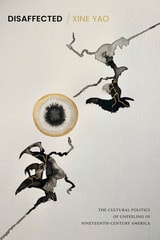
Disaffected
The Cultural Politics of Unfeeling in Nineteenth-Century AmericaXine Yao
Duke University Press, 2021
Duke University Press Scholars of Color First Book Award recipient

Diversity and Detective Fiction
Kathleen Gregory Klein
University of Wisconsin Press, 1999
Among the issues addressed are definitions of diversity; what constitutes ethnicity or race, especially in terms of multiple subjectivities; how race, gender, and ethnicity are culturally constructed; and what part is played by identity politics.