Results by title
150 books match the query 'Rural' and 9 start with d
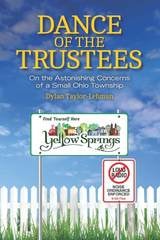
Dance of the Trustees
On the Astonishing Concerns of a Small Ohio TownshipDylan Taylor-Lehman
The Ohio State University Press, 2018
This quaint debate represents just one of many fascinating problems the trustees deal with on a daily basis. While Miami Township is small, the concerns are myriad—from cemeteries filled with unknown remains to a fire department to oversee to legal action required against properties clogged with junk. The responsibilities are doubly impressive considering no trustees have backgrounds in public office.
This book combines entertaining nonfiction vignettes with well-researched township history—including a history of religious cults and the possibility that Lee Harvey Oswald was once in town—and elucidates the processes behind an entire civic division. Dance of the Trustees documents twenty-first-century small-town life with humor, warmth, and erudition.
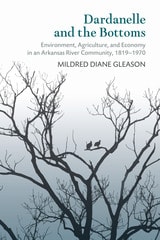
Dardanelle and the Bottoms
Environment, Agriculture, and Economy in an Arkansas River Community, 1819-1970Mildred D. Gleason
University of Arkansas Press, 2017
A reciprocal relationship between the town and the Bottoms formed the economic backbone on which the area’s well-being was balanced. The country people came to town on Saturdays to buy their groceries and supplies, to shop and take in a movie or visit the pool halls or barbershops. Merchants relied heavily on this country trade and had a long history of extending credit, keeping prices reasonable, and offering respect and appreciation to their customers.
This interdependence, stable for decades, began to unravel in the late 1940s with changes in farming, particularly the cotton industry. In Dardanelle and the Bottoms, Mildred Diane Gleason explores this complex rural/town dichotomy, revealing and analyzing key components of each area, including aspects of race, education, the cotton economy and its demise, the devastation of floods and droughts, leisure, crime, and the impact of the Great Depression.
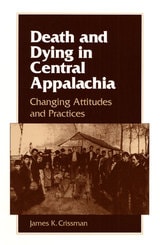
Death and Dying in Central Appalachia
Changing Attitudes and PracticesJames K. Crissman
University of Illinois Press, 1994
Written for both scholarly and general audiences, the book contains sections on the death watch, body preparation, selection or construction of a coffin or casket, digging the grave by hand, the wake, the funeral, and other topics. Crissman then demonstrates how technology and the encroachment of American society have turned these vital traditions into the disappearing practices of the past.
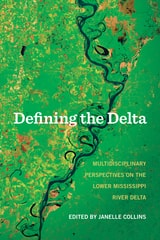
Defining the Delta
Multidisciplinary Perspectives on the Lower Mississippi River DeltaJanelle Collins
University of Arkansas Press, 2015
Here are essays examining the Delta’s physical properties, boundaries, and climate from a geologist, archeologist, and environmental historian. The Delta is also viewed through the lens of the social sciences and humanities—historians, folklorists, and others studying the connection between the land and its people, in particular the importance of agriculture and the culture of the area, especially music, literature, and food.
Every turn of the page reveals another way of seeing the seven-state region that is bisected by and dependent on the Mississippi River, suggesting ultimately that there are myriad ways of looking at, and defining, the Delta.
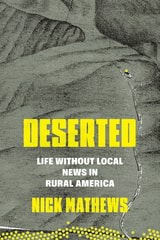
Deserted
Life Without Local News in Rural AmericaNick Mathews
University of Illinois Press, 2026
The devastation of local news organizations has left rural areas of the US marooned in information deserts. Nick Mathews offers a boots-on-the-ground examination of the human toll of local news’s erosion by the winds of de-localization and corporate indifference.
It is no secret that ownership transfers, corporate mergers, and hedge fund takeovers have relentlessly consolidated and closed local news organizations. Mathews exposes the impact of that process on journalism, journalists, and news consumers hungry for outlets that tell their stories. A fundamental breakdown within journalism itself, the abandonment of community news has left disgruntled and disconnected locals to piece together news and information themselves. Mathews draws on the personal experiences of news gatherers and consumers to illuminate why local news cannot be scaled. Mass-produced content inevitably severs ties to communities while distant ownership is indifferent to local concerns.
Nuanced and sympathetic, <i>Deserted</i> provides a vivid portrait of the people and places forsaken by journalism’s corporate owners.
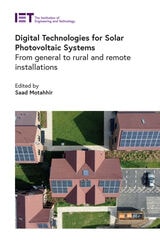
Digital Technologies for Solar Photovoltaic Systems
From general to rural and remote installationsSaad Motahhir
The Institution of Engineering and Technology, 2022
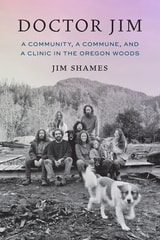
Doctor Jim
A Community, a Commune, and a Clinic in the Oregon WoodsJim Shames
Oregon State University Press, 2027
In 1973 Jim Shames, a young doctor questioning life in a country divided by the Vietnam War, learned of a counterculture community in Southern Oregon interested in establishing its own medical clinic. A recent graduate from medical school, with limited hands-on experience as a doctor, Jim found the promise and opportunity of a community in the woods, far from the turmoil of the times, appealing. In a leap of faith, he joined the back-to-the-earth movement and became a country doctor.
In the impoverished Illinois River Valley of Southern Oregon, Shames moved to Takilma and the Mystic Mountain commune. There Shames found a home, family, and fulfilling work at the Takilma People’s Clinic. It was a different world, offering an alternative journey and self-reflection. Surrounded by uninhibited friendliness, joy, and music, Doctor Jim cared for the patients of the community. Collectively the clinic treated rattlesnake bites, gunshot wounds, obstetrical complications, meningitis, cancer, and more for the residents of Southern Oregon.
Doctor Jim offers a window into communal life and the challenges of healthcare in rural Oregon. Shames highlights the struggles and rewards to be found in simple daily activities with like-minded souls sharing emotional and physical work. In reflecting on his unique medical career, Shames teaches that healing is about the intimate interaction between the patient and the doctor rather than medications or procedures. What started as an experiment evolved into a medical practice caring for a broader community beyond its counterculture brethren.

Dreamworlds of Alabama
Allen Shelton
University of Minnesota Press, 2007
“I speak in what others often hear as a strange accent. My past can’t be located. I live in Buffalo, New York, an exile from the South. But these aren’t Yankee dreams, even though my past seems like a fabrication, a dreamworld in which I’m a paper character and not a historical participant, with scars from barbed wire ripping under the pressure and flying through the air like a swarm of bees, or a horse rearing up and banging its head into mine from within, exploding my forehead.” —from the Preface
Wisteria draped on a soldier’s coffin, sent home to Alabama from a Virginia battlefield. The oldest standing house in the county, painted gray and flanked by a pecan orchard. A black steel fence tool, now perched atop a pile of books like a prehistoric bird of prey. In Dreamworlds of Alabama, Allen Shelton explores physical, historical, and social landscapes of northeastern Alabama. His homeplace near the Appalachian foothills provides the setting for a rich examination of cultural practices, a place where the language of place and things resonates with as much vitality and emotional urgency as the language of humans.
Throughout the book, Shelton demonstrates how deeply culture is inscribed in the land and in the most intimate spaces of the person—places of belonging and loss, insight and memory.
Born and raised in Jacksonville, Alabama, Allen Shelton is associate professor of sociology at Buffalo State College.
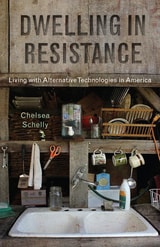
Dwelling in Resistance
Living with Alternative Technologies in AmericaSchelly, Chelsea
Rutgers University Press, 2017
Schelly portrays a wide range of residential living alternatives utilizing renewable, small-scale, de-centralized technologies. These technologies considerably change how individuals and communities interact with the material world, their natural environment, and one another. Using in depth interviews and compelling ethnographic observations, the book offers an insightful look at different communities’ practices and principles and their successful endeavors in sustainability and self-sufficiency.