Results by title
59 books match the query 'San Francisco' and 5 start with d

Dahlia's Iris
Secret Autobiography and FictionLeslie Scalapino
University of Alabama Press, 2003
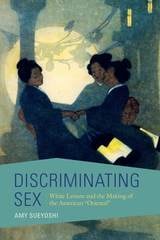
Discriminating Sex
White Leisure and the Making of the American "Oriental"Amy Sueyoshi
University of Illinois Press, 2018
Amy Sueyoshi draws on everything from newspapers to felony case files to oral histories in order to examine how whites' pursuit of gender and sexual fulfillment gave rise to racial caricatures. As she reveals, white reporters, writers, artists, and others conflated Chinese and Japanese, previously seen as two races, into one. There emerged the Oriental—a single pan-Asian American stereotype weighted with sexual and gender meaning. Sueyoshi bridges feminist, queer, and ethnic studies to show how the white quest to forge new frontiers in gender and sexual freedom reinforced—and spawned—racial inequality through the ever evolving Oriental.
Informed and fascinating, Discriminating Sex reconsiders the origins and expression of racial stereotyping in an American city.
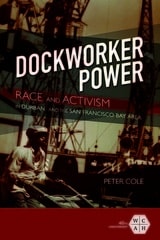
Dockworker Power
Race and Activism in Durban and the San Francisco Bay AreaPeter Cole
University of Illinois Press, 2018
Philip Taft Labor History Book Award, Labor and Working-Class History Association (LAWCHA) and the Cornell ILR School, 2019
A Black Perspectives Best Black History Book of 2018
Dockworkers have power. Often missed in commentary on today's globalizing economy, workers in the world's ports can harness their role, at a strategic choke point, to promote their labor rights and social justice causes. Peter Cole brings such overlooked experiences to light in an eye-opening comparative study of Durban, South Africa, and the San Francisco Bay Area, California. Path-breaking research reveals how unions effected lasting change in some of the most far-reaching struggles of modern times. First, dockworkers in each city drew on longstanding radical traditions to promote racial equality. Second, they persevered when a new technology--container ships--sent a shockwave of layoffs through the industry. Finally, their commitment to black internationalism and leftist politics sparked transnational work stoppages to protest apartheid and authoritarianism. Dockworker Power not only brings to light surprising parallels in the experiences of dockers half a world away from each other. It also offers a new perspective on how workers can change their conditions and world.
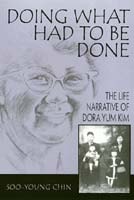
Doing What Had To Be Done
Soo-Young Chin
Temple University Press, 1999
Born in 1921, Dora, as she tells Chin her story, chronicles the shifting salience of gendered ethnic identity as she journeys through her life. Traveling through time and place, she moves from San Francisco's Chinatown -- where Koreans were a minority within a minority -- to suburban Dewey Boulevard where Dora and her family attempt to integrate into mainstream America, and where she becomes a social worker in the California State Department of Employment. As the Korean immigrant community grows in the late 1960s, Dora becomes deeply involved in community service. She remembers teaching English to senior citizens and preparing them for their naturalization exams, finding jobs for the younger Koreans, and founding a community center and meals program for seniors.
A detailed and inspiring lens through which to view Korean American history, Dora's life journey echoes the changing spaces of the American social landscape. And the grace and ease with which Dora just "does what has to be done" shows us the importance of everyday acts in making a difference.
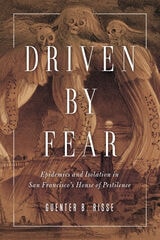
Driven by Fear
Epidemics and Isolation in San Francisco's House of PestilenceGuenter B. Risse
University of Illinois Press, 2015
Filling a significant gap in contemporary scholarship, Driven by Fear looks at the past to offer critical lessons for our age of bioterror threats and emerging infectious diseases.