Results by title
65 books match the query 'Security' and 4 start with d
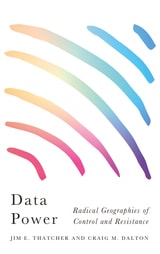
Data Power
Radical Geographies of Control and ResistanceJim E. Thatcher
Pluto Press, 2021
In recent years, popular media has inundated audiences with sensationalized headlines recounting data breaches, new forms of surveillance and other dangers of our digital age. Despite their regularity, such accounts treat each case as unprecedented and unique. This book proposes a radical rethinking of the history, present and future of our relations with the digital, spatial technologies that increasingly mediate our everyday lives.
From smartphones to surveillance cameras, to navigational satellites, these new technologies offer visions of integrated, smooth and efficient societies, even as they directly conflict with the ways users experience them. Recognizing the potential for both control and liberation, the authors argue against both acquiescence to and rejection of these technologies.
Through intentional use of the very systems that monitor them, activists from Charlottesville to Hong Kong are subverting, resisting and repurposing geographic technologies. Using examples as varied as writings on the first telephones to the experiences of a feminist collective for migrant women in Spain, the authors present a revolution of everyday technologies. In the face of the seemingly inevitable circumstances, these technologies allow us to create new spaces of affinity, and a new politics of change.

Data Security in Cloud Computing
Vimal Kumar
The Institution of Engineering and Technology, 2017

Demanding Justice and Security
Indigenous Women and Legal Pluralities in Latin AmericaSieder, Rachel
Rutgers University Press, 2017
Featuring chapters on Bolivia, Colombia, Ecuador, Guatemala, and Mexico, the contributors to Demanding Justice and Security include both leading researchers and community activists. From Kichwa women in Ecuador lobbying for the inclusion of specific clauses in the national constitution that guarantee their rights to equality and protection within indigenous community law, to Me’phaa women from Guerrero, Mexico, battling to secure justice within the Inter-American Court of Human Rights for violations committed in the context of militarizing their home state, this book is a must-have for anyone who wants to understand the struggle of indigenous women in Latin America.

Digital Authority
How Algorithms Shape Human Obedience and TrustDaan Weggemans
Central European University Press, 2027