Results by title
135 books match the query 'Self-help' and 8 start with d
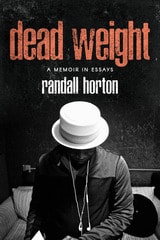
Dead Weight
A Memoir in EssaysRandall Horton
Northwestern University Press, 2022
The memoir begins with a conversation between Horton and Ralph Ellison’s Invisible Man statue in New York City. Their imagined dialogue examines the psychological impact of racism on Black men and boys, including Horton’s separation from his mother, immediately after his birth, in a segregated Alabama hospital. From his current life as a professor and prison reformer, Horton looks back on his experiences as a drug smuggler and trafficker during the 1980s–1990s as well as the many obstacles he faced after his release. He also examines the lasting impact of his drug activity on those around him, reflecting on the allure of economic freedom and the mental escapism that cocaine provided, an allure so strong that both sellers and users were willing to risk prison. Horton shares historical context and vivid details about people caught in the war on drugs who became unsuspecting protagonists in somebody else’s melodrama.
Lyrical and gripping, Dead Weight reveals the lifelong effects of one man’s incarceration on his psyche, his memories, and his daily experience of American society.

Discovering the Laws of Life
Sir John Templeton
Templeton Press, 2009

Distilling Hope
12 Stories to Distill the 12 StepsBeth Ohlsson
Parkhurst Brothers, Inc., 2017
“Old stories are universal and want to be told. To bring those stories out into the world as a vehicle for navigating sobriety and recovery is a glorious thing.
I was hired to be an addictions counselor for the therapeutic community at the Frederick County Adult Detention Center. Susan Gordon encouraged me to tell them stories. I thought she was crazy, but I trusted her judgment and told them stories. The impact those stories had on those men changed my life. I worked in addictions for 15 years, taking those stories with me to very agency in which I worked. The women at the Center 4 Clean Start in Salisbury, MD were every bit as receptive to story as the men who were in jail.”
--Beth Ohlsson
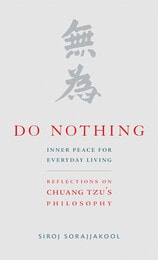
Do Nothing
Peace for Everyday Living: Reflections on Chuang Tzu's PhilosophySiroj Sorajjakool
Templeton Press, 2009
"Words," writes Chuang Tzu, "are for catching ideas; once you've caught the idea, you can forget the words." In Do Nothing, author Siroj Sorajjakool lends us some of his insightful words to help us all "catch" the provocative ideas of one of China's most important literary and philosophical giants—one who emerged at a time when China had several such giants philosophizing on Tao or "the Way."
Though his thinking dates back to the fourth century, Chuang Tzu's Tao has profound implications for our modern lives. He welcomes an existence that is radically removed from the image of normalcy that society often projects, wherein the individual must always strive for more, always seek greater productivity, and always try to better him or herself and his or her place in life. Chuang Tzu would posit that the definitions of normalcy, success, and happiness are arbitrarily assigned and that our rigid and unquestioning adherence to these so-called "norms" leads to existential restlessness and unease. Instead of striving, he would say, be still. Instead of acquiring, embrace nothingness. Instead of seeking to understand the limitlessness of the universe during your brief and extremely limited existence, enjoy the wonder of it.
Siroj Sorajjakool suggests that when we can embrace nothingness, we undergo a spiritual transformation that liberates us to see more clearly and truly find ourselves. He offers a very personal exploration of Chuang Tzu's Tao, first in its historical and literary context, and then in the context of our twenty-first century existence. What emerges is a liberating and highly readable meditation on the many lessons we can "catch" from Chuang Tzu on how we view our aspirations, our joys and sorrows, our successes and failures, and what it means to be a worthwhile person.
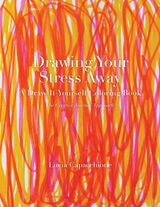
Drawing Your Stress Away
A Draw-It-Yourself Coloring BookLucia Capacchione
Ohio University Press, 2017
Drunk the Night Before
An Anatomy of IntoxicationMarty Roth
University of Minnesota Press, 2005
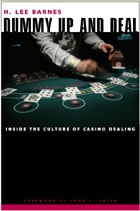
Dummy Up And Deal
Inside The Culture Of Casino DealingH. Lee Barnes
University of Nevada Press, 2011
The glitter and excitement that tourists associate with casinos is only a facade. To the gaming industry's front-line employees, its dealers, the casino is a far less glamorous environment, a workplace full of emotional tension, physical and mental demands, humor and pathos. Author H. Lee Barnes, who spent many years as a dealer in some of Las Vegas's best-known casinos, shows us this world from the point of view of the table-games dealer. Told in the voices of dozens of dealers, male and female, young and old, Dummy Up and Deal takes us to the dealer's side of the table. We observe the "breaking in" that constitutes a dealer's training, where the hands learn the motions of the game while the mind undergoes the requisite hardening to endure long hours of concentration and the demands of often unreasonable and sometimes abusive players. We discover how dealers are hired and assigned to shifts and tables, how they interact with each other and with their supervisors, and how they deal with players—the winners and the losers, the "Sweethearts" and the "Dragon Lady," the tourists looking for a few thrills and the mobsters showing off their "juice." We observe cheaters on both sides of the table and witness the exploits of such high-rollers as Frank Sinatra and Colonel Parker, Elvis's manager. And we learn about the dealers' lives after-hours, how some juggle casino work with family responsibilities while others embrace the bohemian lifestyle of the Strip and sometimes lose themselves to drugs, drink, or sex. It's a life that invites cynicism and bitterness, that can erode the soul and deaden the spirit. But the dealer's life can also offer moments of humor, encounters with generous and kindly players, moments of pride or humanity or professional solidarity. Barnes writes with the candor of a keen observer of his profession, someone who has seen it all—many times—but has never lost his capacity to wonder, to sympathize, or to laugh. Dummy Up and Deal is a colorful insider's view of the casino industry, a fascinating glimpse behind the glitter into the real world of the casino worker.
Duped
Truth-Default Theory and the Social Science of Lying and DeceptionTimothy R. Levine
University of Alabama Press, 2020
Unmasking the science of deception—and why truth wins by default.
From the advent of fake news to climate-science denial and Bernie Madoff’s appeal to investors, people can be astonishingly gullible. Some people appear authentic and sincere even when the facts discredit them, and many people fall victim to conspiracy theories and economic scams that should be dismissed as obviously ludicrous. This happens because of a near-universal human tendency to operate within a mindset that can be characterized as a “truth-default.” We uncritically accept most of the messages we receive as “honest.” We all are perceptually blind to deception. We are hardwired to be duped. The question is, can anything be done to militate against our vulnerability to deception without further eroding the trust in people and social institutions that we so desperately need in civil society?
Timothy R. Levine’s Duped: Truth-Default Theory and the Social Science of Lying and Deception recounts a decades-long program of empirical research that culminates in a new theory of deception—truth-default theory. This theory holds that the content of incoming communication is typically and uncritically accepted as true, and most of the time, this is good. Truth-default allows humans to function socially. Further, because most deception is enacted by a few prolific liars, the so called “truth-bias” is not really a bias after all. Passive belief makes us right most of the time, but the catch is that it also makes us vulnerable to occasional deceit.
Levine’s research on lie detection and truth-bias has produced many provocative new findings over the years. He has uncovered what makes some people more believable than others and has discovered several ways to improve lie-detection accuracy. In Duped, Levine details where these ideas came from, how they were tested, and how the findings combine to produce a coherent new understanding of human deception and deception detection.