Results by title
254 books match the query 'Sex' and 10 start with d
Dance, Sex, and Gender
Signs of Identity, Dominance, Defiance, and DesireJudith Lynne Hanna
University of Chicago Press, 1988
Dangerous Ideas on Campus
Sex, Conspiracy, and Academic Freedom in the Age of JFKMatthew C. Ehrlich
University of Illinois Press, 2021
In 1960, University of Illinois professor Leo Koch wrote a public letter condoning premarital sex. He was fired. Four years later, a professor named Revilo Oliver made white supremacist remarks and claimed there was a massive communist conspiracy. He kept his job.
Matthew Ehrlich revisits the Koch and Oliver cases to look at free speech, the legacy of the 1960s, and debates over sex and politics on campus. The different treatment of the two men marked a fundamental shift in the understanding of academic freedom. Their cases also embodied the stark divide over beliefs and values--a divide that remains today. Ehrlich delves into the issues behind these academic controversies and places the events in the context of a time rarely associated with dissent, but in fact a harbinger of the social and political upheavals to come.
An enlightening and entertaining history, Dangerous Ideas on Campus illuminates how the university became a battleground for debating America's hot-button issues.
Dangerous Liaisons
Sex and Love in the Segregated SouthCharles F. Robinson II
University of Arkansas Press, 2003
In the tumultuous decades after the Civil War, as the southern white elite reclaimed power, “racial mixing” was the central concern of segregationists who strove to maintain “racial purity.” Segregation—and race itself—was based on the idea that interracial sex posed a biological threat to the white race. In this groundbreaking study, Charles Robinson examines how white southerners enforced anti-miscegenation laws. His findings challenge conventional wisdom, documenting a pattern of selective prosecution under which interracial domestic relationships were punished even more harshly than transient sexual encounters. Robinson shows that the real crime was to suggest that black and white individuals might be equals, a notion which undermined the legitimacy of the economic, political, and social structure of white male supremacy.
Robinson examines legal cases from across the South, considering both criminal prosecutions brought by states and civil disputes over marital and family assets. He also looks at U.S. Supreme Court decisions, debates in state legislatures, comments in the U.S. Congressional Record, and newspaper editorials. He not only shows the hardening of racial categories but assesses the attitudes of African Americans about anti-miscegenation laws and intermarriage. The epilogue concerns “The Demise of Anti-miscegenation Law” including the case of Richard and Mildred Loving.
Dangerous Liaisons vividly documents the regulation of intimacy and its fundamental role in the construction of race.
Defining Deviance
Sex, Science, and Delinquent Girls, 1890-1960Michael A. Rembis
University of Illinois Press, 2013
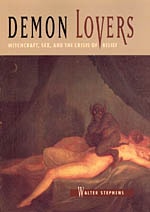
Demon Lovers
Witchcraft, Sex, and the Crisis of BeliefWalter Stephens
University of Chicago Press, 2002
As Walter Stephens demonstrates in Demon Lovers, it was not Hausmännin or other so-called witches who were obsessive about sex with demons—instead, a number of devout Christians, including trained theologians, displayed an uncanny preoccupation with the topic during the centuries of the "witch craze." Why? To find out, Stephens conducts a detailed investigation of the first and most influential treatises on witchcraft (written between 1430 and 1530), including the infamous Malleus Maleficarum (Hammer of Witches).
Far from being credulous fools or mindless misogynists, early writers on witchcraft emerge in Stephens's account as rational but reluctant skeptics, trying desperately to resolve contradictions in Christian thought on God, spirits, and sacraments that had bedeviled theologians for centuries. Proof of the physical existence of demons—for instance, through evidence of their intercourse with mortal witches—would provide strong evidence for the reality of the supernatural, the truth of the Bible, and the existence of God. Early modern witchcraft theory reflected a crisis of belief—a crisis that continues to be expressed today in popular debates over angels, Satanic ritual child abuse, and alien abduction.
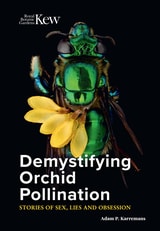
Demystifying Orchid Pollination
Stories of Sex, Lies and ObsessionAdam P. Karremans
Royal Botanic Gardens, Kew, 2023
Demystifying Orchid Pollination explores the fascinating history of orchids and the means by which they reproduce. Adam P. Karremans reveals orchids’ hidden secrets, highlights the key role of pollinators in securing the survival of these delicate plants, and provides past and present scientific knowledge that challenges common beliefs about orchid reproduction. Demystifying Orchid Pollination celebrates biodiversity while stressing the importance of further ecological study and advocating for increased conservation efforts and thorough research and development.
Desired States
Sex, Gender, and Political Culture in ChileLessie Jo Frazier
Rutgers University Press, 2020
Desiring China
Experiments in Neoliberalism, Sexuality, and Public CultureLisa Rofel
Duke University Press, 2007
Drawing on her research over the past two decades among urban residents and rural migrants in Hangzhou and Beijing, Rofel analyzes the meanings that individuals attach to various public cultural phenomena and what their interpretations say about their understandings of post-socialist China and their roles within it. She locates the first broad-based public debate about post-Mao social changes in the passionate dialogues about the popular 1991 television soap opera Yearnings. She describes how the emergence of gay identities and practices in China reveals connections to a transnational network of lesbians and gay men at the same time that it brings urban/rural and class divisions to the fore. The 1999–2001 negotiations over China’s entry into the World Trade Organization; a controversial women’s museum; the ways that young single women portray their longings in relation to the privations they imagine their mothers experienced; adjudications of the limits of self-interest in court cases related to homoerotic desire, intellectual property, and consumer fraud—Rofel reveals all of these as sites where desiring subjects come into being.
Desiring Freedom
Counter-Imaginaries of Work, Sex, and Family After West Indian EmancipationKaneesha Cherelle Parsard
University of Chicago Press, 2026
A groundbreaking account of concepts of freedom in West Indian literature and visual culture.
Desiring Freedom examines post-emancipation West Indian literature and visual culture to ask how they reimagine freedom. Ranging from emancipation in the 1830s to the arrival of independence in the 1960s, Kaneesha Cherelle Parsard analyzes a literary and visual repertoire through which West Indians and Britons cast doubt on wage labor and domesticity as freedom. Whereas freedom was traditionally conceived around narratives of the self-governing individual, Parsard unearths a diverse range of materials—fiction, poetry, painting, photography, imperial correspondence, social scientific discourse, and economic history—in which this plot breaks down, finding practices of freedom in hoarding, pleasure-seeking, hustling, and siphoning.
Parsard focuses on conceptions of freedom in Trinidad, British Guiana, and Jamaica. Along the way, she shows how indentured Indian women’s jewelry reveals contradictions in imperial capital, studies the short fiction of a 1930s Trinidadian literary collective called the Beacon group to reveal how women find both profit and pleasure in their affairs, and offers a fascinating reading of C. L. R. James’s only novel, Minty Alley—including a little-known alternative ending. In a key methodological contribution, Parsard develops proposition as a critical tool, drawing on its many valences—a sexual advance, a contract before its signing, and, in philosophy, the act of saying “this is how things stand.” Parsard’s own propositions show that West Indian culture offers new ways of seeing the relationships among race, labor, capital, gender, and sexuality after emancipation.

Dirty Jokes and Bawdy Songs
The Uncensored Life of Gershon LegmanSusan G. Davis
University of Illinois Press, 2019