Results by title
52 books match the query 'Social medicine' and 3 start with d

Diagnosis, Therapy, and Evidence
Conundrums in Modern American MedicineGrob, Gerald N
Rutgers University Press, 2010

Differences in Medicine
Unraveling Practices, Techniques, and BodiesMarc Berg and Annemarie Mol, eds.
Duke University Press, 1998
Combining theoretical work with interviews and direct observation of the activities and interactions of doctors, nurses, technicians, and patients, the contributors to this volume provide comparative studies of specific cases. Individual chapters explore topics such as the contested domain of fetal surgery in a California hospital, the construction of gender identity before transsexual surgery in Germany, and differences in the treatment and definition of pain by two clinics in France. Differences in Medicine advances earlier studies on medicine’s social diversity and regional variations to expose significant differences in the presumptions and decisions that affect patients’ lives, and marks a dramatic development in both the study of medicine and in science studies generally.
Revealing the ways in which the bodies and lives of people are constructed as medical objects by practitioners, technologies, and textbooks, this collection calls for and initiates new, more textured investigations and theories of the body in medicine and the practice of science. It will open new discussions among medical and healthcare professionals as well as scholars in medical anthropology, science studies, sociology, philosophy, and the history of medicine.
Contributors. Isabelle Baszanger, Marc Berg, Geoffrey C. Bowker, Monica J. Casper, Charis M. Cussins, Nicolas Dodier, Stefan Hirschauer, Annemarie Mol, Vicky Singleton, Susan Leigh Star, Stefan Timmermans, Dick Willems
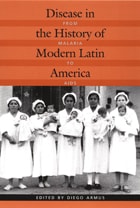
Disease in the History of Modern Latin America
From Malaria to AIDSDiego Armus, ed.
Duke University Press, 2003
Based on the idea that the meanings of sickness—and health—are contestable and subject to controversy, Disease in the History of Modern Latin America displays the richness of an interdisciplinary approach to social and cultural history. Examining diseases in Mexico, Brazil, Argentina, Colombia, Peru, and Bolivia, the contributors explore the production of scientific knowledge, literary metaphors for illness, domestic public health efforts, and initiatives shaped by the agendas of international agencies. They also analyze the connections between ideas of sexuality, disease, nation, and modernity; the instrumental role of certain illnesses in state-building processes; welfare efforts sponsored by the state and led by the medical professions; and the boundaries between individual and state responsibilities regarding sickness and health. Diego Armus’s introduction contextualizes the essays within the history of medicine, the history of public health, and the sociocultural history of disease.
Contributors. Diego Armus, Anne-Emanuelle Birn, Kathleen Elaine Bliss, Ann S. Blum, Marilia Coutinho, Marcus Cueto, Patrick Larvie, Gabriela Nouzeilles, Diana Obregón, Nancy Lays Stepan, Ann Zulawski