501 books match the query 'South' and 9 start with d

cover of Daemons Are Forever: Contacts and Exchanges in the Eurasian Pandemonium

Daemons Are Forever

Contacts and Exchanges in the Eurasian Pandemonium

David Gordon White

University of Chicago Press, 2021
A richly illustrated tapestry of interwoven studies spanning some six thousand years of history, Dæmons Are Forever is at once a record of archaic contacts and transactions between humans and protean spirit beings—dæmons—and an account of exchanges, among human populations, of the science of spirit beings: dæmonology. Since the time of the Indo-European migrations, and especially following the opening of the Silk Road, a common dæmonological vernacular has been shared among populations ranging from East and South Asia to Northern Europe. In this virtuoso work of historical sleuthing, David Gordon White recovers the trajectories of both the “inner demons” cohabiting the bodies of their human hosts and the “outer dæmons” that those same humans recognized each time they encountered them in their enchanted haunts: sylvan pools, sites of geothermal eruptions, and dark forest groves. Along the way, he invites his readers to reconsider the potential and promise of the historical method in religious studies, suggesting that a “connected histories” approach to Eurasian dæmonology may serve as a model for restoring history to its proper place at the heart of the discipline of the history of religions.
[more]
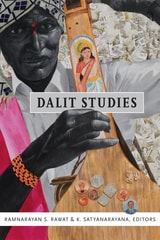
cover of Dalit Studies

Dalit Studies

Ramnarayan S. Rawat and K. Satyanarayana, editors

Duke University Press, 2016
The contributors to this major intervention into Indian historiography trace the strategies through which Dalits have been marginalized as well as the ways Dalit intellectuals and leaders have shaped emancipatory politics in modern India. Moving beyond the anticolonialism/nationalism binary that dominates the study of India, the contributors assess the benefits of colonial modernity and place humiliation, dignity, and spatial exclusion at the center of Indian historiography. Several essays discuss the ways Dalits used the colonial courts and legislature to gain minority rights in the early twentieth century, while others highlight Dalit activism in social and religious spheres. The contributors also examine the struggle of contemporary middle-class Dalits to reconcile their caste and class, intercaste tensions among Sikhs, and the efforts by Dalit writers to challenge dominant constructions of secular and class-based citizenship while emphasizing the ongoing destructiveness of caste identity. In recovering the long history of Dalit struggles against caste violence, exclusion, and discrimination, Dalit Studies outlines a new agenda for the study of India, enabling a significant reconsideration of many of the Indian academy's core assumptions.
 

Contributors: D. Shyam Babu, Laura Brueck, Sambaiah Gundimeda, Gopal Guru, Rajkumar Hans, Chinnaiah Jangam, Surinder Jodhka, P. Sanal Mohan, Ramnarayan Rawat, K. Satyanarayana

[more]
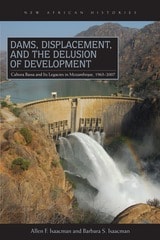
cover of Dams, Displacement, and the Delusion of Development: Cahora Bassa and Its Legacies in Mozambique, 1965–2007

Dams, Displacement, and the Delusion of Development

Cahora Bassa and Its Legacies in Mozambique, 1965–2007

Allen F. Isaacman

Ohio University Press, 2013

Cahora Bassa Dam on the Zambezi River, built in the early 1970s during the final years of Portuguese rule, was the last major infrastructure project constructed in Africa during the turbulent era of decolonization. Engineers and hydrologists praised the dam for its technical complexity and the skills required to construct what was then the world’s fifth-largest mega-dam. Portuguese colonial officials cited benefits they expected from the dam—from expansion of irrigated farming and European settlement, to improved transportation throughout the Zambezi River Valley, to reduced flooding in this area of unpredictable rainfall. “The project, however, actually resulted in cascading layers of human displacement, violence, and environmental destruction. Its electricity benefited few Mozambicans, even after the former guerrillas of FRELIMO (Frente de Libertação de Moçambique) came to power; instead, it fed industrialization in apartheid South Africa.” (Richard Roberts)

This in-depth study of the region examines the dominant developmentalist narrative that has surrounded the dam, chronicles the continual violence that has accompanied its existence, and gives voice to previously unheard narratives of forced labor, displacement, and historical and contemporary life in the dam’s shadow.
[more]
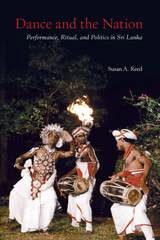
cover of Dance and the Nation: Performance, Ritual, and Politics in Sri Lanka

Dance and the Nation

Performance, Ritual, and Politics in Sri Lanka

Susan A. Reed

University of Wisconsin Press, 2010

Around the globe, dances that originate in village, temple, and court rituals have been adapted and transformed to carry secular meanings and serve new national purposes. In stage performances, dance competitions, and festivals worldwide, dance has become an emblem of ethnicity and an index of national identity. But what are the “backstage” stories of those dances chosen to bear such meanings, and what have been the consequences for their communities of origin? In Dance and the Nation, Susan A. Reed brings to light the complexities of aesthetic politics in a multi-faceted exploration and analysis of Kandyan dance in Sri Lanka.
    As the national dance of Sri Lanka, Kandyan dance is identified with the majority Sinhala ethnic group and heavily supported by the state. Derived from the kohomba kankariya—an elaborate village ritual performed by men of the hereditary drummer caste—the dance was adopted by the state as a symbol of traditional Sinhala culture in the post-independence period. When state officials introduced the dance into the school curriculum, it was opened to individuals of all castes, and high-caste women have emerged as prominent teachers and performers. Reed’s evocative account traces the history and consequences of this transition from ritual to stage, situating the dance in relation to postcolonial nationalism and ethnic politics and emphasizing the voices and perspectives of the hereditary dancers and of women performers.
    Although Kandyan dance is related to other south Asian dance forms, it is unique, distinguished by an elegant, energetic style, and lively displays of acrobatics and agility. The companion DVD includes unparalleled footage of this vibrant dance in ritual, stage, and training contexts, and features the most esteemed performers of the Kandyan region.
Special Citation book award, Society for Dance History Scholars

Winner, Outstanding Publication Award, Congress on Research in Dance

[more]
cover of David Duke and the Politics of Race in the South

David Duke and the Politics of Race in the South

John C. Kuzenski

Vanderbilt University Press, 1995
A thought-provoking examination of the constituencies and the impact of one of the most controversial political figures of our time. Journalists have thoroughly documented David Duke's rise to prominence in Louisiana politics, but until now, few intensive analyses of the Duke phenomenon have been undertaken. This new collection identifies the significant junctures of Duke's political career, from its earliest beginnings to his recent campaigns for governor, the Senate, and the Presidency. Through a variety of methods and approaches, the contributors to this work advance our understanding of what made this former Ku Klux Klan member a significant political force, and of how and why he very nearly succeeded in his attempts to gain higher office.
[more]
cover of Democracy against Development: Lower-Caste Politics and Political Modernity in Postcolonial India

Democracy against Development

Lower-Caste Politics and Political Modernity in Postcolonial India

Jeffrey Witsoe

University of Chicago Press, 2013

Hidden behind the much-touted success story of India’s emergence as an economic superpower is another, far more complex narrative of the nation’s recent history, one in which economic development is frequently countered by profoundly unsettling, and often violent, political movements. In Democracy against Development, Jeffrey Witsoe investigates this counter-narrative, uncovering an antagonistic relationship between recent democratic mobilization and development-oriented governance in India.
            
Witsoe looks at the history of colonialism in India and its role in both shaping modern caste identities and linking locally powerful caste groups to state institutions, which has effectively created a postcolonial patronage state. He then looks at the rise of lower-caste politics in one of India’s poorest and most populous states, Bihar, showing how this increase in democratic participation has radically threatened the patronage state by systematically weakening its institutions and disrupting its development projects. By depicting democracy and development as they truly are in India—in tension—Witsoe reveals crucial new empirical and theoretical insights about the long-term trajectory of democratization in the larger postcolonial world. 

[more]
cover of Dockside Reading: Hydrocolonialism and the Custom House

Dockside Reading

Hydrocolonialism and the Custom House

Isabel Hofmeyr

Duke University Press, 2022

In Dockside Reading Isabel Hofmeyr traces the relationships among print culture, colonialism, and the ocean through the institution of the British colonial Custom House. During the late nineteenth and early twentieth centuries, dockside customs officials would leaf through publications looking for obscenity, politically objectionable materials, or reprints of British copyrighted works, often dumping these condemned goods into the water. These practices, echoing other colonial imaginaries of the ocean as a space for erasing incriminating evidence of the violence of empire, informed later censorship regimes under apartheid in South Africa. By tracking printed matter from ship to shore, Hofmeyr shows how literary institutions like copyright and censorship were shaped by colonial control of coastal waters. Set in the environmental context of the colonial port city, Dockside Reading explores how imperialism colonizes water. Hofmeyr examines this theme through the concept of hydrocolonialism, which puts together land and sea, empire and environment.
[more]
cover of Doctoring Traditions: Ayurveda, Small Technologies, and Braided Sciences

Doctoring Traditions

Ayurveda, Small Technologies, and Braided Sciences

Projit Bihari Mukharji

University of Chicago Press, 2016

Like many of the traditional medicines of South Asia, Ayurvedic practice transformed dramatically in the later nineteenth and early twentieth centuries. With Doctoring Tradition, Projit Bihari Mukharji offers a close look at that recasting, upending the widely held yet little-examined belief that it was the result of the introduction of Western anatomical knowledge and cadaveric dissection.
 
Rather, Mukharji reveals, what instigated those changes were a number of small technologies that were introduced in the period by Ayurvedic physicians, men who were simultaneously Victorian gentlemen and members of a particular Bengali caste. The introduction of these devices, including thermometers, watches, and microscopes, Mukharji shows, ultimately led to a dramatic reimagining of the body. By the 1930s, there emerged a new Ayurvedic body that was marked as distinct from a biomedical body. Despite the protestations of difference, this new Ayurvedic body was largely compatible with it. The more irreconcilable elements of the old Ayurvedic body were then rendered therapeutically indefensible and impossible to imagine in practice. The new Ayurvedic medicine was the product not of an embrace of Western approaches, but of a creative attempt to develop a viable alternative to the Western tradition by braiding together elements drawn from internally diverse traditions of the West and the East.
[more]
cover of Document Raj: Writing and Scribes in Early Colonial South India

Document Raj

Writing and Scribes in Early Colonial South India

Bhavani Raman

University of Chicago Press, 2012

Historians of British colonial rule in India have noted both the place of military might and the imposition of new cultural categories in the making of Empire, but Bhavani Raman, in Document Raj, uncovers a lesser-known story of power: the power of bureaucracy. Drawing on extensive archival research in the files of the East India Company’s administrative offices in Madras, she tells the story of a bureaucracy gone awry in a fever of documentation practices that grew ever more abstract—and the power, both economic and cultural, this created.
 
In order to assert its legitimacy and value within the British Empire, the East India Company was diligent about record keeping. Raman shows, however, that the sheer volume of their document production allowed colonial managers to subtly but substantively manipulate records for their own ends, increasingly drawing the real and the recorded further apart. While this administrative sleight of hand increased the company’s reach and power within the Empire, it also bolstered profoundly new orientations to language, writing, memory, and pedagogy for the officers and Indian subordinates involved. Immersed in a subterranean world of delinquent scribes, translators, village accountants, and entrepreneurial fixers, Document Raj maps the shifting boundaries of the legible and illegible, the legal and illegitimate, that would usher India into the modern world.
[more]