Results by title
70 books match the query 'Spanish' and 3 start with d
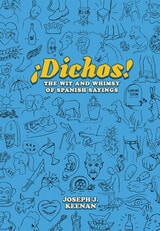
Dichos! The Wit and Whimsy of Spanish Sayings
By Joseph J. Keenan
University of Texas Press, 2019
One of the most challenging—and entertaining—aspects of learning another language is the idiom. Those quirky phrases, steeped in metaphor and colorful cultural references, enliven conversation and make your cross-cultural communication familiar, fun, and meaningful. ¡Dichos! (Sayings) brings us a vibrant compendium of both age-old and brand-new expressions from across Latin America, compiled by the language enthusiast whose Breaking Out of Beginner’s Spanish transformed thousands of readers’ interactions with the Spanish language.
¡Dichos! is divided into thematic sections covering topics ranging from games and relaxation to politics, macho men, and Mondays. Spanish speakers can also use the book to identify the spot-on/best slangy English equivalent for a Spanish-language idiom. Packed with gems like La barba me huele a tigre, y yo mismo me tengo miedo (My beard smells of tiger, and I’m even afraid of myself) and Para todo mal, mezcal; para todo bien, también (For everything bad, mezcal; for everything good, likewise), this book is the ultimate tool for taking your language skills to the next level as you navigate nuance with humor and linguistic agility.
Dichos! The Wit and Whimsy of Spanish Sayings
By Joseph J. Keenan
University of Texas Press, 2019
One of the most challenging—and entertaining—aspects of learning another language is the idiom. Those quirky phrases, steeped in metaphor and colorful cultural references, enliven conversation and make your cross-cultural communication familiar, fun, and meaningful. ¡Dichos! (Sayings) brings us a vibrant compendium of both age-old and brand-new expressions from across Latin America, compiled by the language enthusiast whose Breaking Out of Beginner’s Spanish transformed thousands of readers’ interactions with the Spanish language.
¡Dichos! is divided into thematic sections covering topics ranging from games and relaxation to politics, macho men, and Mondays. Spanish speakers can also use the book to identify the spot-on/best slangy English equivalent for a Spanish-language idiom. Packed with gems like La barba me huele a tigre, y yo mismo me tengo miedo (My beard smells of tiger, and I’m even afraid of myself) and Para todo mal, mezcal; para todo bien, también (For everything bad, mezcal; for everything good, likewise), this book is the ultimate tool for taking your language skills to the next level as you navigate nuance with humor and linguistic agility.
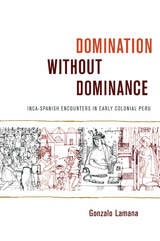
Domination without Dominance
Inca-Spanish Encounters in Early Colonial PeruGonzalo Lamana
Duke University Press, 2008
Lamana’s redefinition of the order of things reveals that, contrary to the conquerors’ accounts, what the Spanairds achieved was a “domination without dominance.” This conclusion undermines common ideas of Spanish (and Western) superiority. It shows that casting order as a by-product of military action rests on a pervasive fallacy: the translation of military superiority into cultural superiority. In constant dialogue with critical thinking from different disciplines and traditions, Lamana illuminates how this new interpretation of the conquest of the Incas revises current understandings of Western colonialism and the emergence of still-current global configurations.