Results by title
93 books match the query 'Special Interest' and 4 start with d
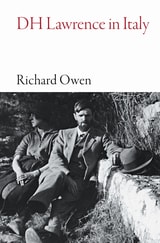
DH Lawrence in Italy
Richard Owen
Haus Publishing, 2014
November 1925: In search of health and sun, the writer D. H. Lawrence arrives on the Italian Riviera with his wife, Frieda, and is exhilarated by the view of the sparkling Mediterranean from his rented villa, set amid olives and vines. But over the next six months, Frieda will be fatally attracted to their landlord, a dashing Italian army officer. This incident of infidelity influenced Lawrence to write two short stories, “Sun” and “The Virgin and the Gypsy,” in which women are drawn to earthy, muscular men, both of which prefigured his scandalous novel Lady Chatterley’s Lover.
In DH Lawrence in Italy, Owen reconstructs the drama leading up to the creation of one of the most controversial novels of all time by drawing on the unpublished letters and diaries of Rina Secker, the Anglo-Italian wife of Lawrence’s publisher. In addition to telling the story of the origins of Lady Chatterley, DH Lawrence in Italy explores Lawrence’s passion for all things Italian, tracking his path to the Riviera from Lake Garda to Lerici, Abruzzo, Capri, Sicily, and Sardinia.
In DH Lawrence in Italy, Owen reconstructs the drama leading up to the creation of one of the most controversial novels of all time by drawing on the unpublished letters and diaries of Rina Secker, the Anglo-Italian wife of Lawrence’s publisher. In addition to telling the story of the origins of Lady Chatterley, DH Lawrence in Italy explores Lawrence’s passion for all things Italian, tracking his path to the Riviera from Lake Garda to Lerici, Abruzzo, Capri, Sicily, and Sardinia.
[more]
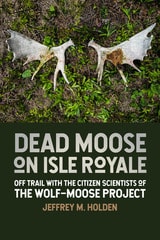
Dead Moose on Isle Royale
Off Trail with the Citizen Scientists of the Wolf-Moose ProjectJeffrey M Holden
Michigan State University Press, 2025
Isle Royale in Michigan is one of the most remote and pristine of all the U.S. national parks, and it is the site of the world’s longest-running predator–prey study. Every summer, Jeffrey M. Holden leads groups of citizen scientists on week-long expeditions to search for dead moose. Those intrepid enough to join him backpacking off trail in Isle Royale’s rugged beauty face challenges from treacherous weather conditions, to wildlife, primitive backcountry camping, traveling through swamps and wetlands, and backpacks that grow heavier with bones every time a new dead moose is found. Sometimes the moose they find are long dead, with only a scattering of bones remaining. Sometimes they are freshly departed, rotted, stinking, and covered with thousands of bloodthirsty ticks. Scientists use the bones, photos, and data they collect to reconstruct the moose population through the years, correlating it against other data on wolves, weather, and ticks. This book provides a fascinating look into the day-to-day realities of backpacking in the wilderness, while featuring the extraordinary scientific discoveries of the Wolf-Moose Project itself and highlighting the role and rewards for volunteers in this extraordinary endeavor. This is a must read for anyone who is interested in off-trail hiking, becoming a citizen scientist, or exploring America’s least-visited national park.
[more]
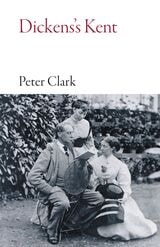
Dickens's Kent
Peter Clark
Haus Publishing, 2024
A geographical narrative of Charles Dickens’s life in Kent.
Few novelists have written so intimately about a city as Charles Dickens wrote about London, but he was intimately connected to Kent more than any other part of Britain. Perhaps Kent meant more to him than the capital. He had an idyllic childhood in Chatham and Kent features in his first works of fiction, Sketches by Boz and The Pickwick Papers, and in his favorite novel, David Copperfield. In his last ten years, he wrote two novels with strong Kentish themes, Great Expectations and The Mystery of Edwin Drood. He had his honeymoon outside Gravesend and often spent the summer months in Broadstairs. In 1856, he bought Gad’s Hill Place, near Rochester, and died there in 1870.
Dickens’s Kent begins with the description of a walk from London to Dickens's main residence, Gad’s Hill Place, before taking the reader to areas in Kent most closely associated with his life and work: the Medway Towns and their surroundings, Thanet and East Kent, and finally Staplehurst, the scene of the railway accident that nearly killed him.
[more]

Dickens's London
Peter Clark
Haus Publishing, 2012
Marking the 150th anniversary of Charles Dickens’s death, Dickens’s London leads us in the footsteps of the author through this beloved city. Few novelists have written so intimately about a place as Dickens wrote about London, and, from a young age, his near-photographic memory rendered his experiences there both significant and in constant focus. Virginia Woolf maintained that “we remodel our psychological geography when we read Dickens,” as he produces “characters who exist not in detail, not accurately or exactly, but abundantly in a cluster of wild yet extraordinarily revealing remarks.” The most enduring “character” Dickens was drawn back to throughout his novels was London itself, in all its aspects, from the coaching inns of his early years to the taverns and watermen of the Thames. These were the constant cityscapes of his life and work.
In five walks through central London, Peter Clark explores “The First Suburbs”—Camden Town, Chelsea, Greenwich, Hampstead, Highgate and Limehouse—as they feature in Dickens’s writing and illuminates the settings of Dickens’s life and his greatest works of journalism and fiction. Describing these storied spaces of today’s central London in intimate detail, Clark invites us to experience the city as it was known to Dickens and his characters. These walks take us through the locations and buildings that he interacted with and wrote about, creating an imaginative reconstruction of the Dickensian world that has been lost to time.
In five walks through central London, Peter Clark explores “The First Suburbs”—Camden Town, Chelsea, Greenwich, Hampstead, Highgate and Limehouse—as they feature in Dickens’s writing and illuminates the settings of Dickens’s life and his greatest works of journalism and fiction. Describing these storied spaces of today’s central London in intimate detail, Clark invites us to experience the city as it was known to Dickens and his characters. These walks take us through the locations and buildings that he interacted with and wrote about, creating an imaginative reconstruction of the Dickensian world that has been lost to time.
[more]