Results by title
94 books match the query 'Techniques' and 5 start with d

DJing in New York
Learning Processes of Underground Club DJsEva J. Egolf
Intellect Books, 2025
DJing in New York offers a rare, behind-the-scenes look at how underground Electronic Dance Music DJs in New York learn their craft, build careers, and navigate the ever-shifting world of nightlife.
Through immersive research, Eva J. Egolf reveals how DJing is more than a technical skill—it’s a deeply social process, rooted in friendships, enculturation, and access to professional networks. From honing beatmatching techniques to navigating the politics of club culture, these DJs rely on community as much as individual talent. Situating DJ learning within broader conversations on race, gender, and LGBTQ+ identities, this book expands our understanding of popular music education and the role of electronic music in shaping urban cultural history. It will be an illuminating resource for music educators, scholars of EDM and club culture, and those fascinated by the intersection of music, identity, and underground nightlife.

Dear Dirt Doctor
Questions Answered the Natural WayBy Howard Garrett
University of Texas Press, 2003
Howard Garrett has converted gardeners throughout Texas and beyond to gardening the natural way without chemical fertilizers and toxic pesticides. In this revised and updated edition of The Dirt Doctor's Guide to Organic Gardening, he uses a question-and-answer format to present a wealth of new information on organic gardening, landscaping, pest control, and natural living. The book also incorporates valuable feedback and suggestions from gardeners who've successfully used Howard's methods.

Differences in Medicine
Unraveling Practices, Techniques, and BodiesMarc Berg and Annemarie Mol, eds.
Duke University Press, 1998
Combining theoretical work with interviews and direct observation of the activities and interactions of doctors, nurses, technicians, and patients, the contributors to this volume provide comparative studies of specific cases. Individual chapters explore topics such as the contested domain of fetal surgery in a California hospital, the construction of gender identity before transsexual surgery in Germany, and differences in the treatment and definition of pain by two clinics in France. Differences in Medicine advances earlier studies on medicine’s social diversity and regional variations to expose significant differences in the presumptions and decisions that affect patients’ lives, and marks a dramatic development in both the study of medicine and in science studies generally.
Revealing the ways in which the bodies and lives of people are constructed as medical objects by practitioners, technologies, and textbooks, this collection calls for and initiates new, more textured investigations and theories of the body in medicine and the practice of science. It will open new discussions among medical and healthcare professionals as well as scholars in medical anthropology, science studies, sociology, philosophy, and the history of medicine.
Contributors. Isabelle Baszanger, Marc Berg, Geoffrey C. Bowker, Monica J. Casper, Charis M. Cussins, Nicolas Dodier, Stefan Hirschauer, Annemarie Mol, Vicky Singleton, Susan Leigh Star, Stefan Timmermans, Dick Willems
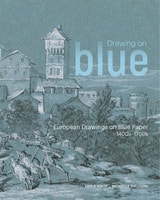
Drawing on Blue
European Drawings on Blue Paper, 1400s–1700sEdina Adam
J. Paul Getty Trust, The, 2024
The rich history of blue paper, from the late fifteenth to the mid-eighteenth centuries, illuminates themes of transcultural interchange, international trade, and global reach. Through the examination of significant works, this volume investigates considerations of supply, use, economics, and innovative creative practice. How did the materials necessary for the production of blue paper reach artistic centers? How were these materials produced and used in various regions? Why did they appeal to artists, and how did they impact artistic practice and come to be associated with regional artistic identities? How did commercial, political, and cultural relations, and the mobility of artists, enable the dispersion of these materials and related techniques? Bringing together the work of the world’s leading specialists, this striking publication is destined to become essential reading on the history, materials, and techniques of drawings executed on blue paper.

Dyeing with the Earth
Textiles, Tradition, and Sustainability in Contemporary JapanCharlotte Linton
Duke University Press, 2025